

Bitez 208 | 34
Spatial Permeability and the Ontology of Negative Space:
A Residential Cluster Configuration
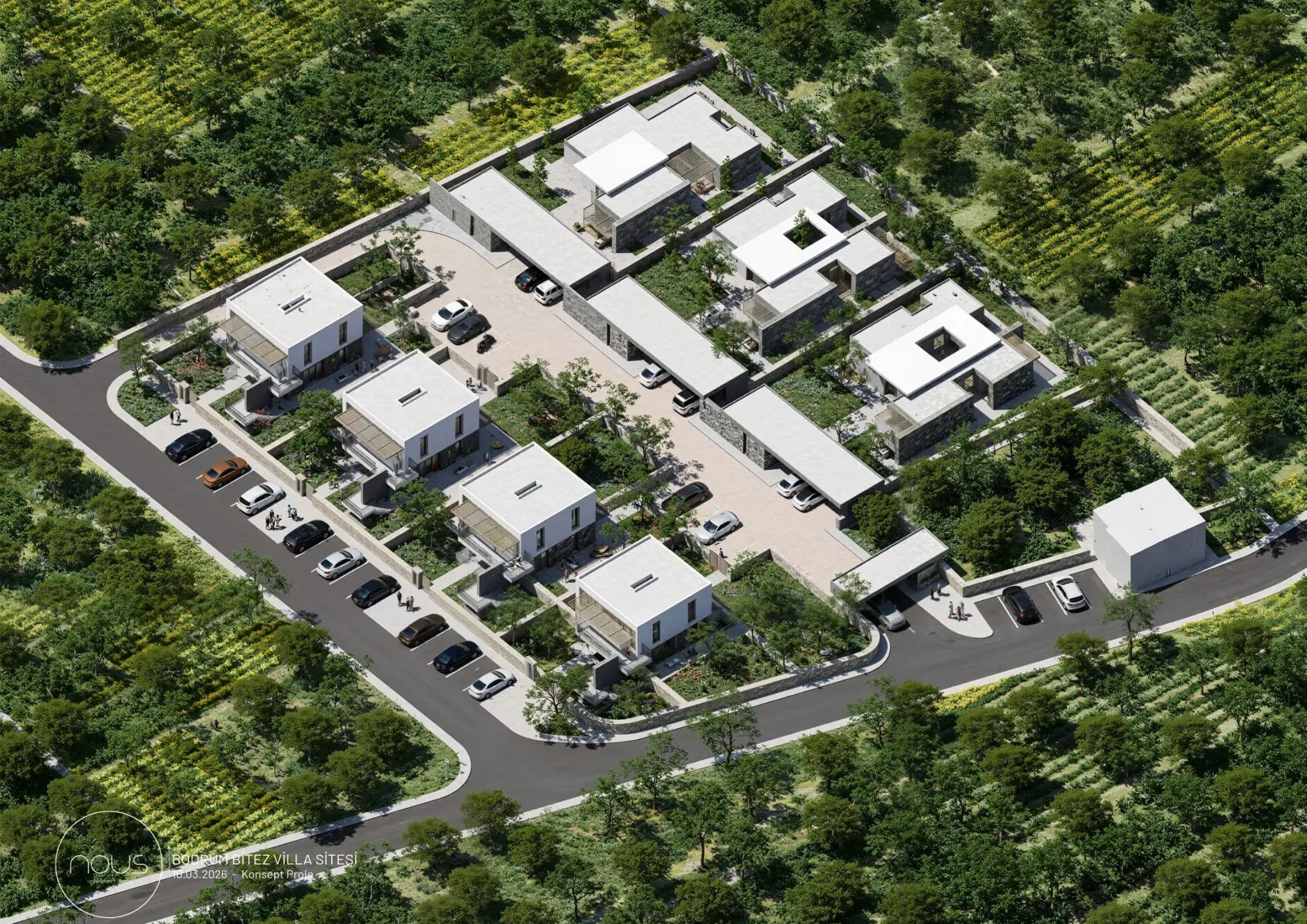
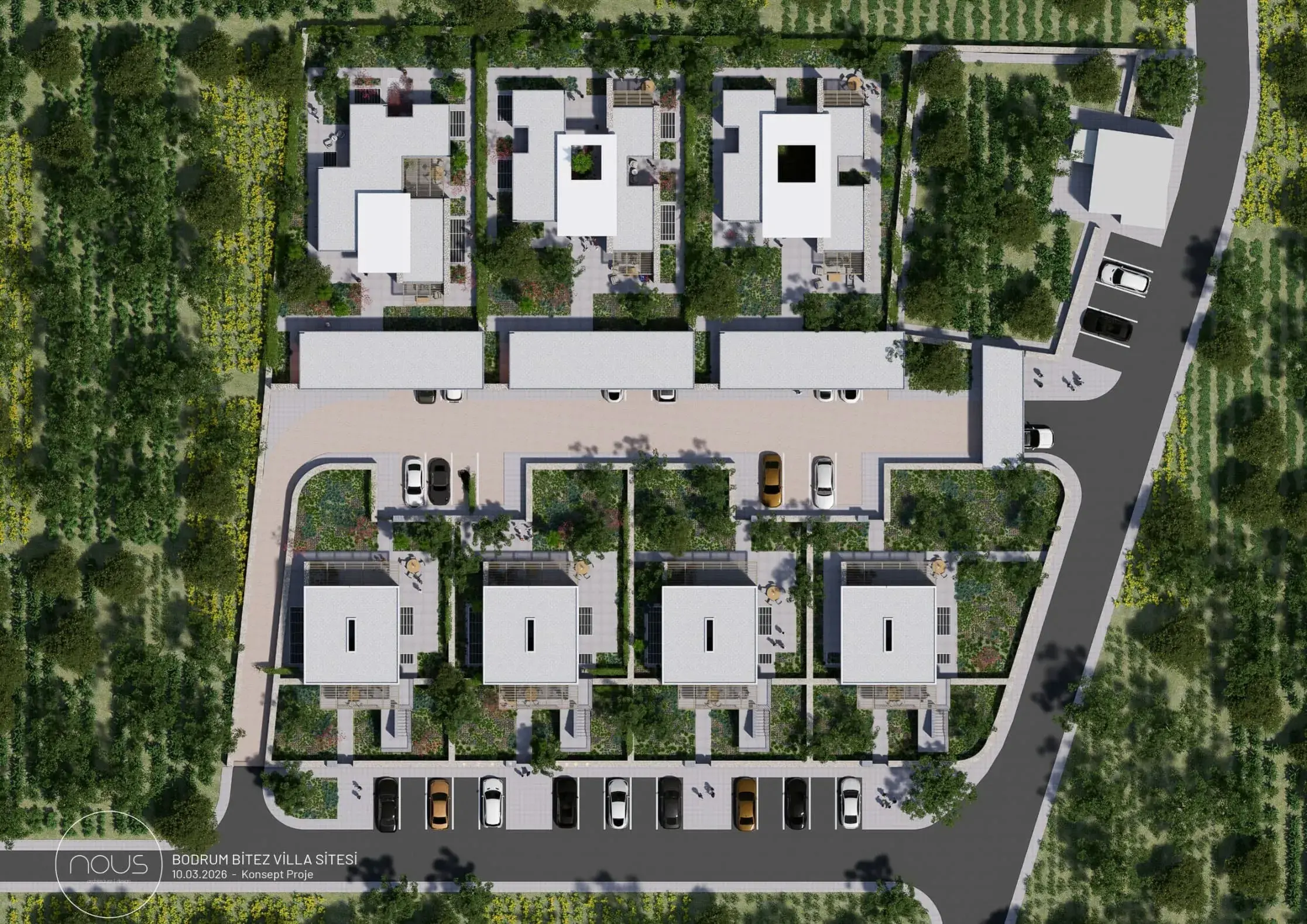
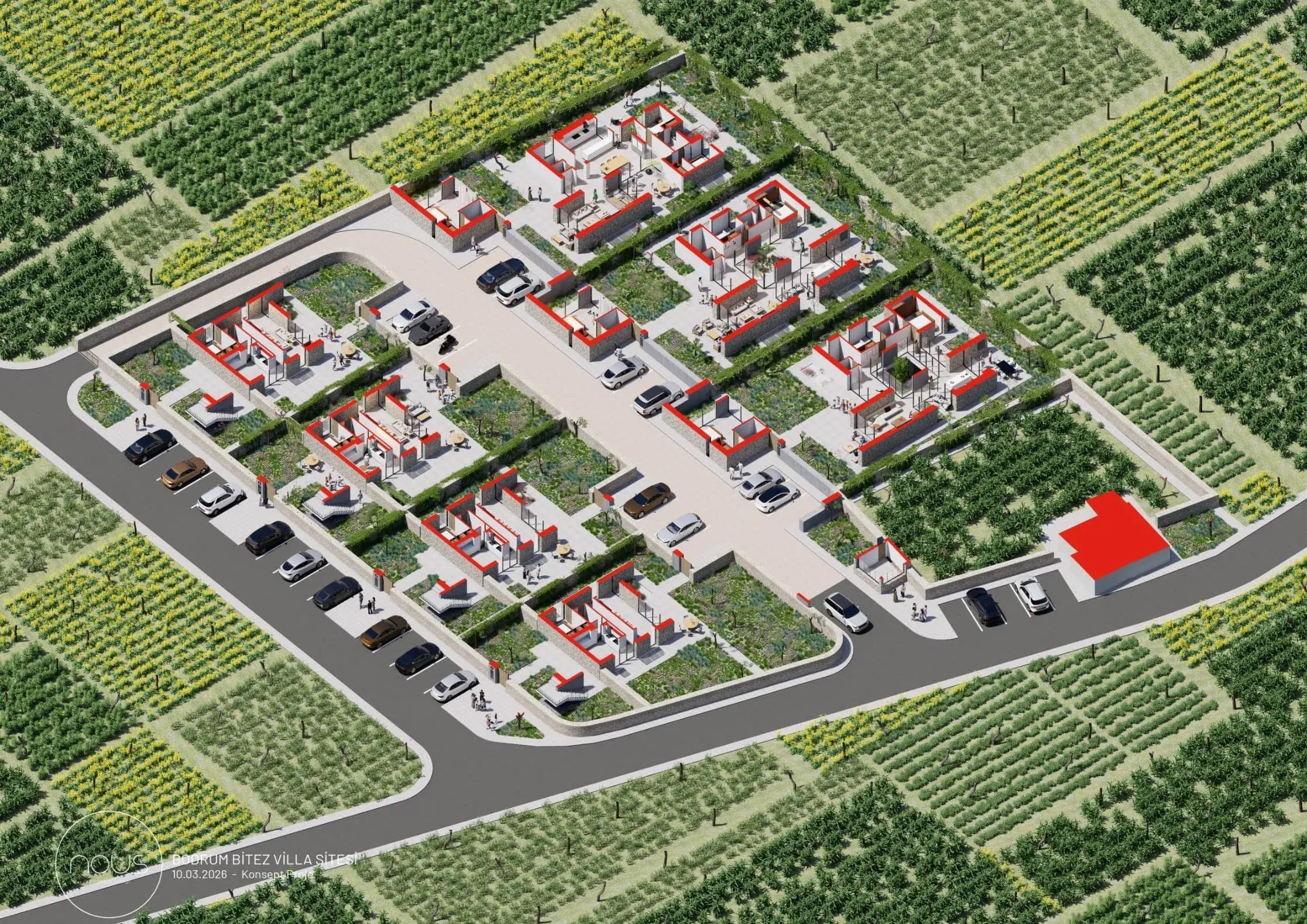
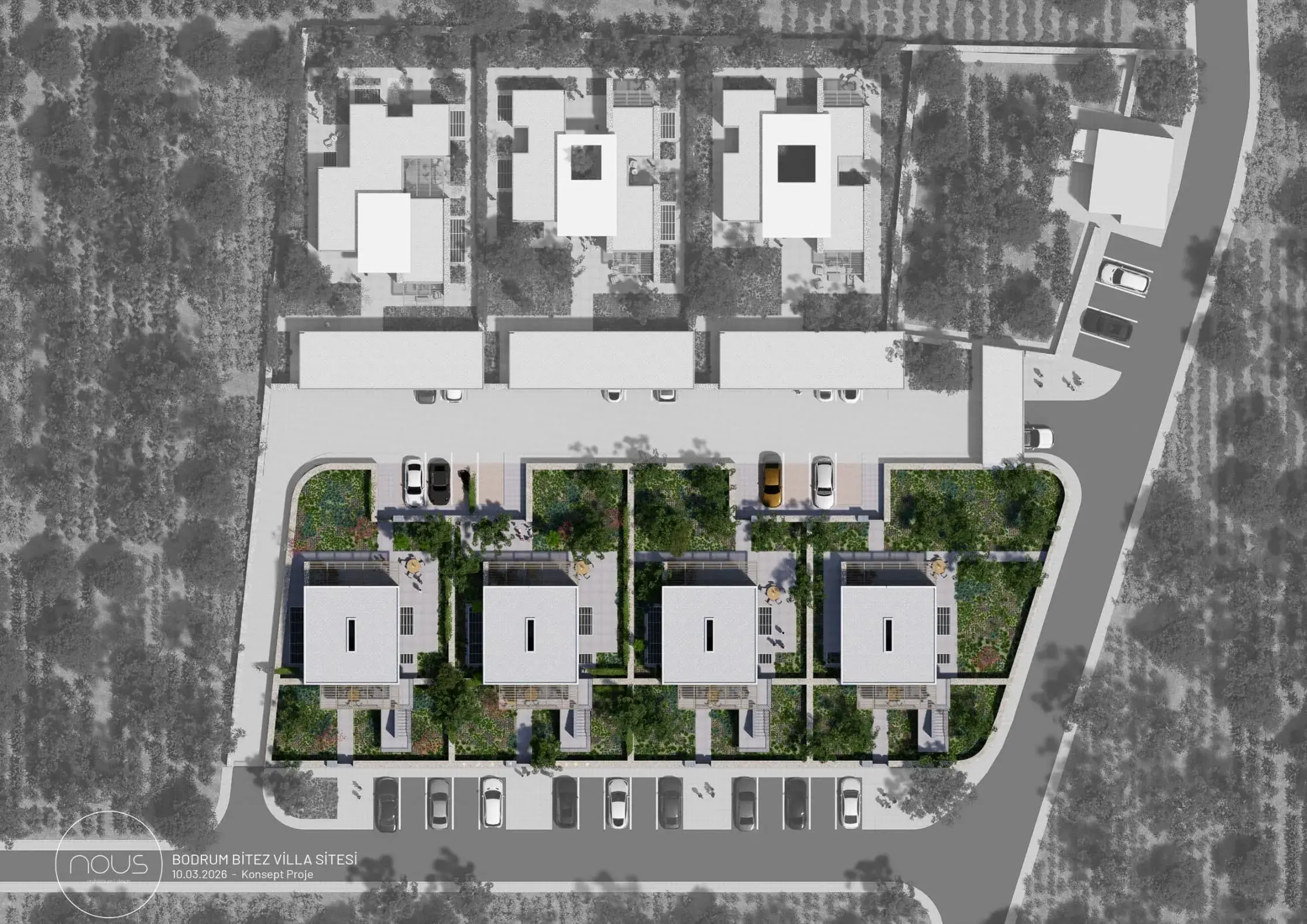
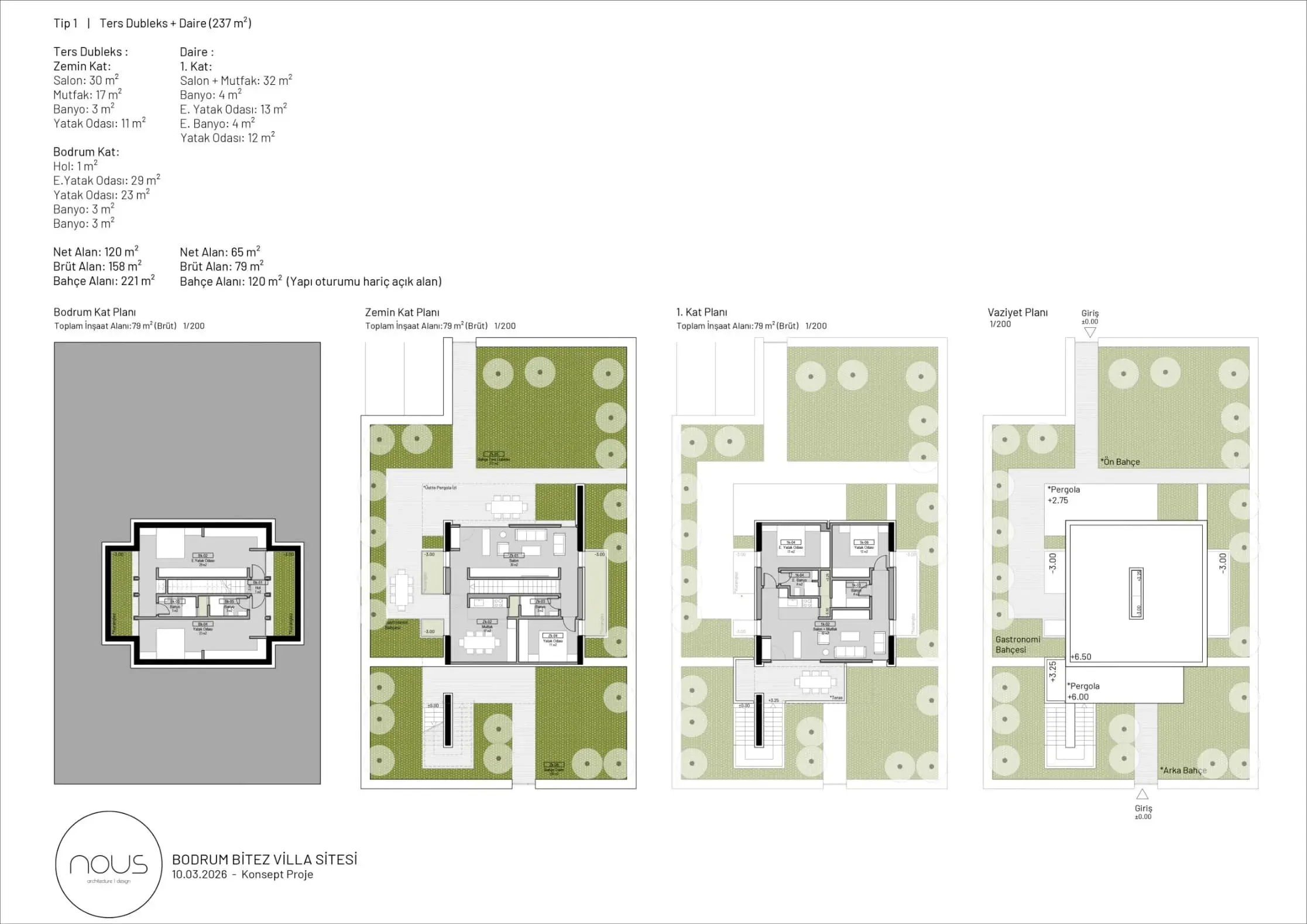
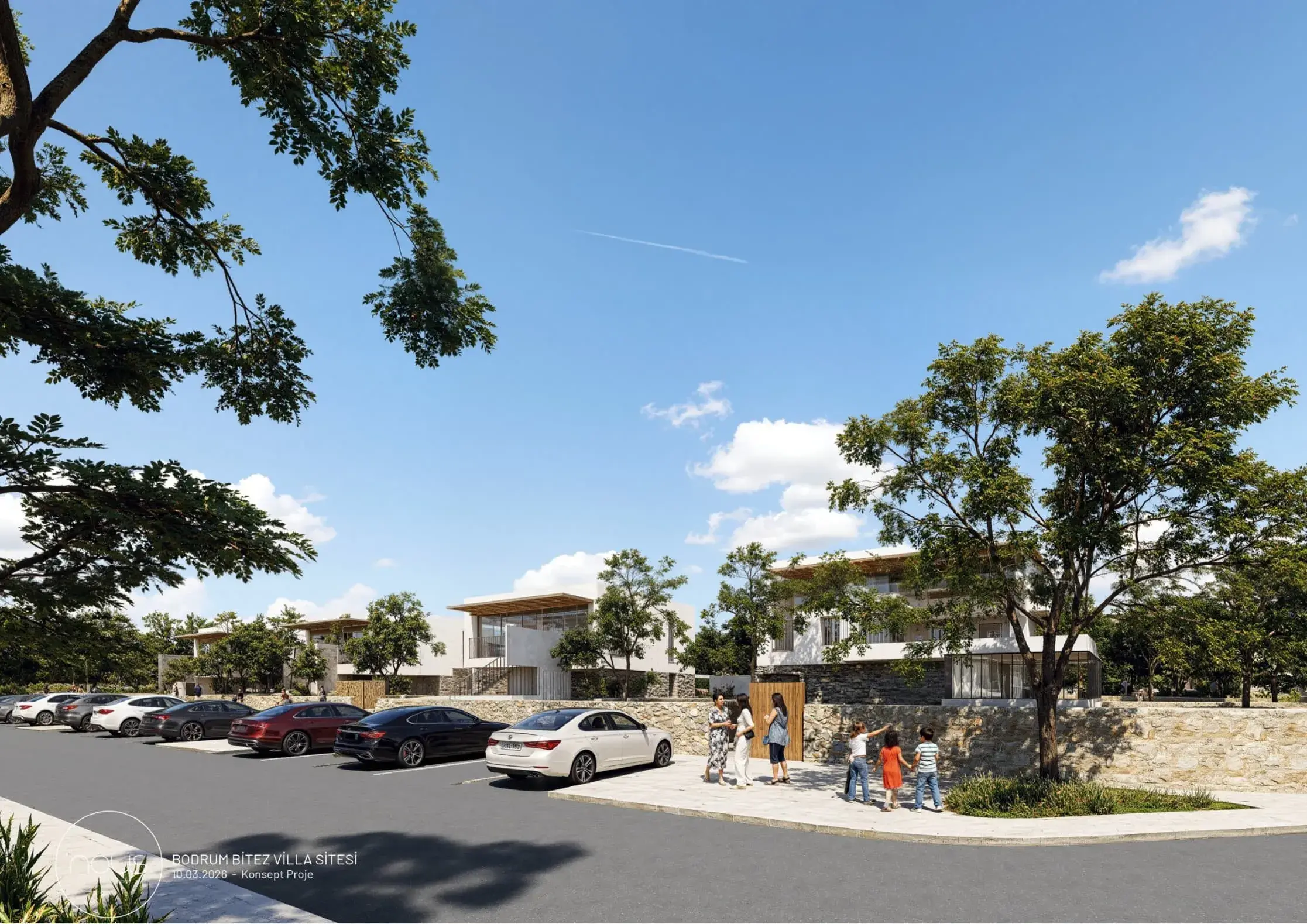
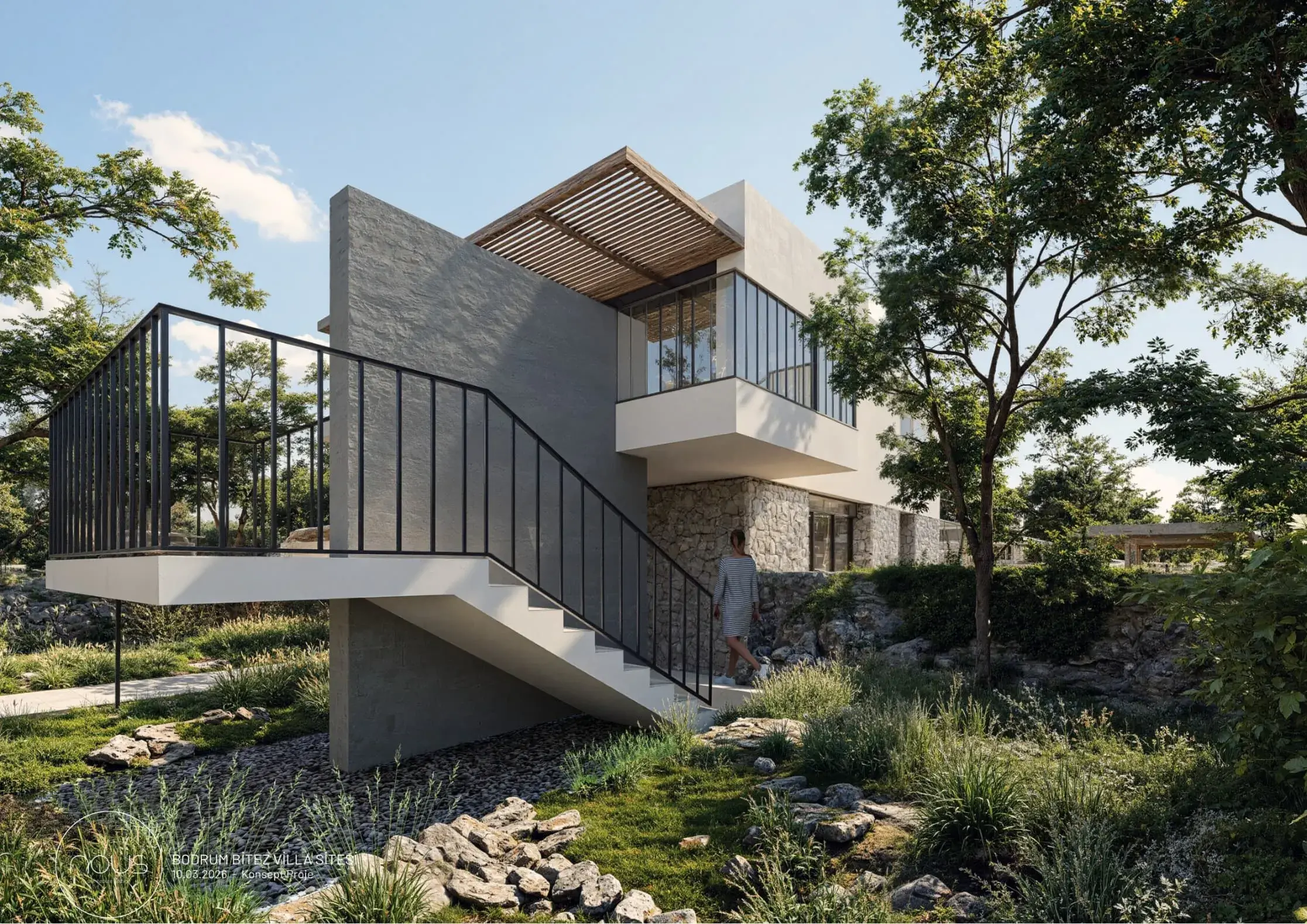
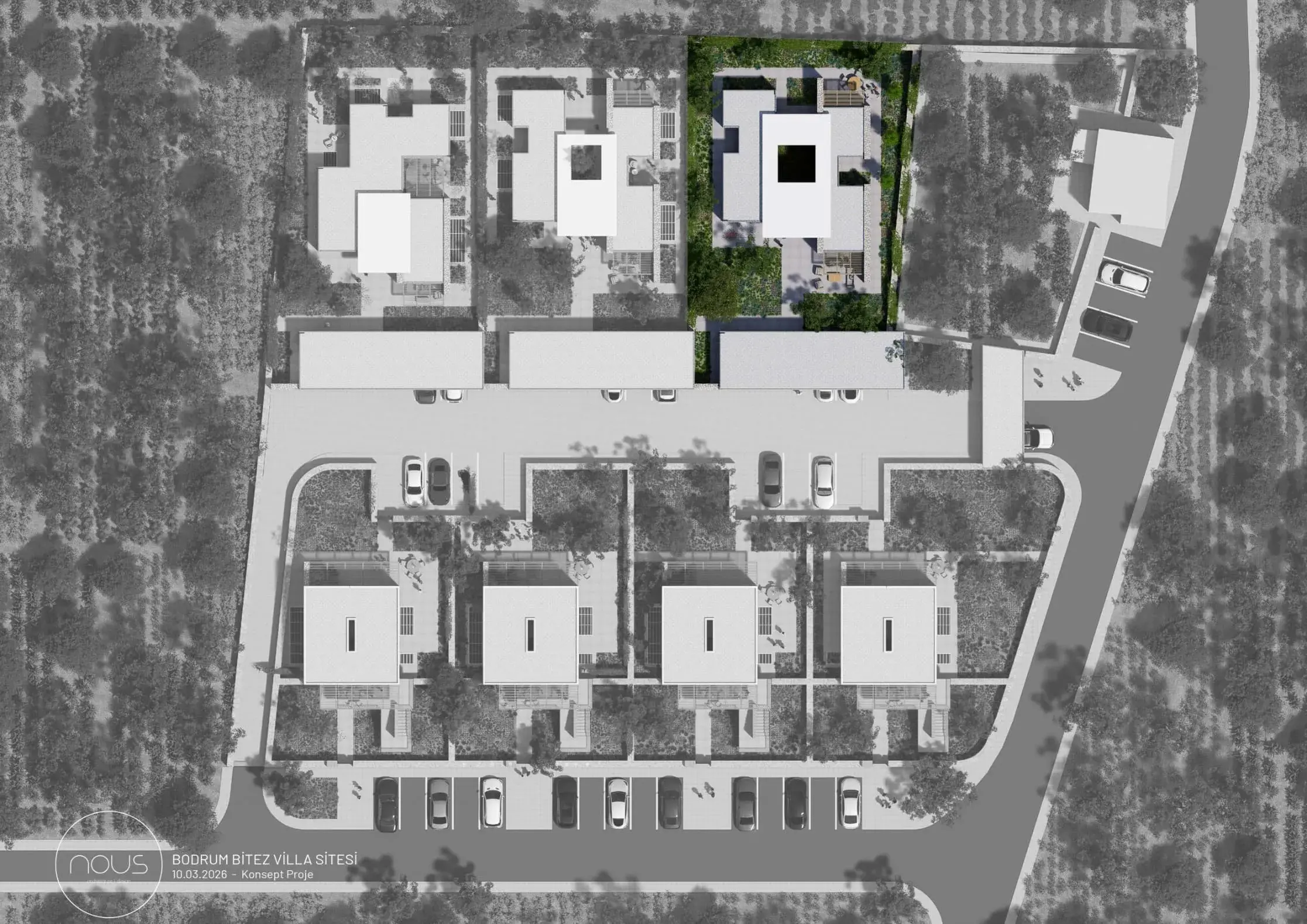
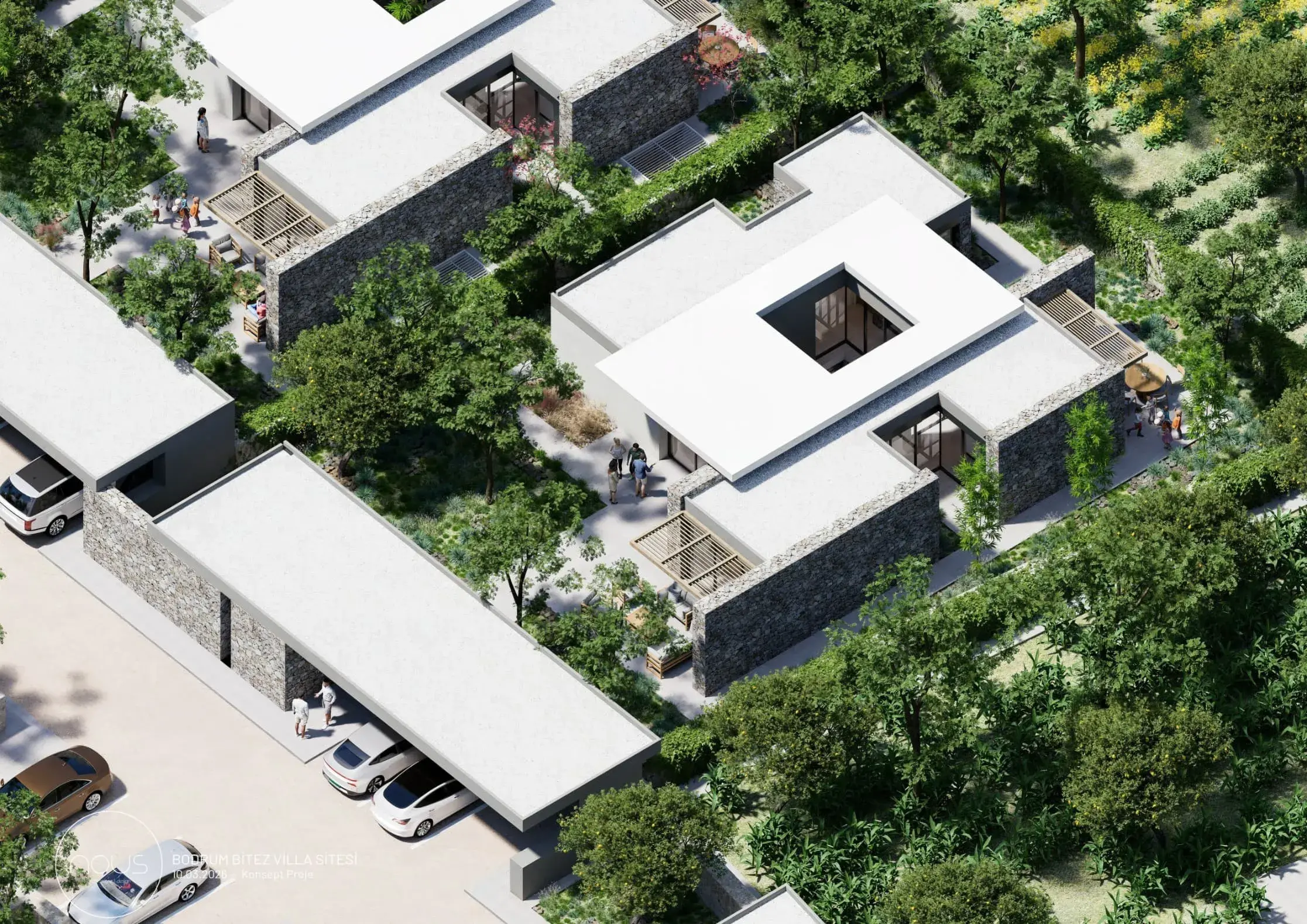
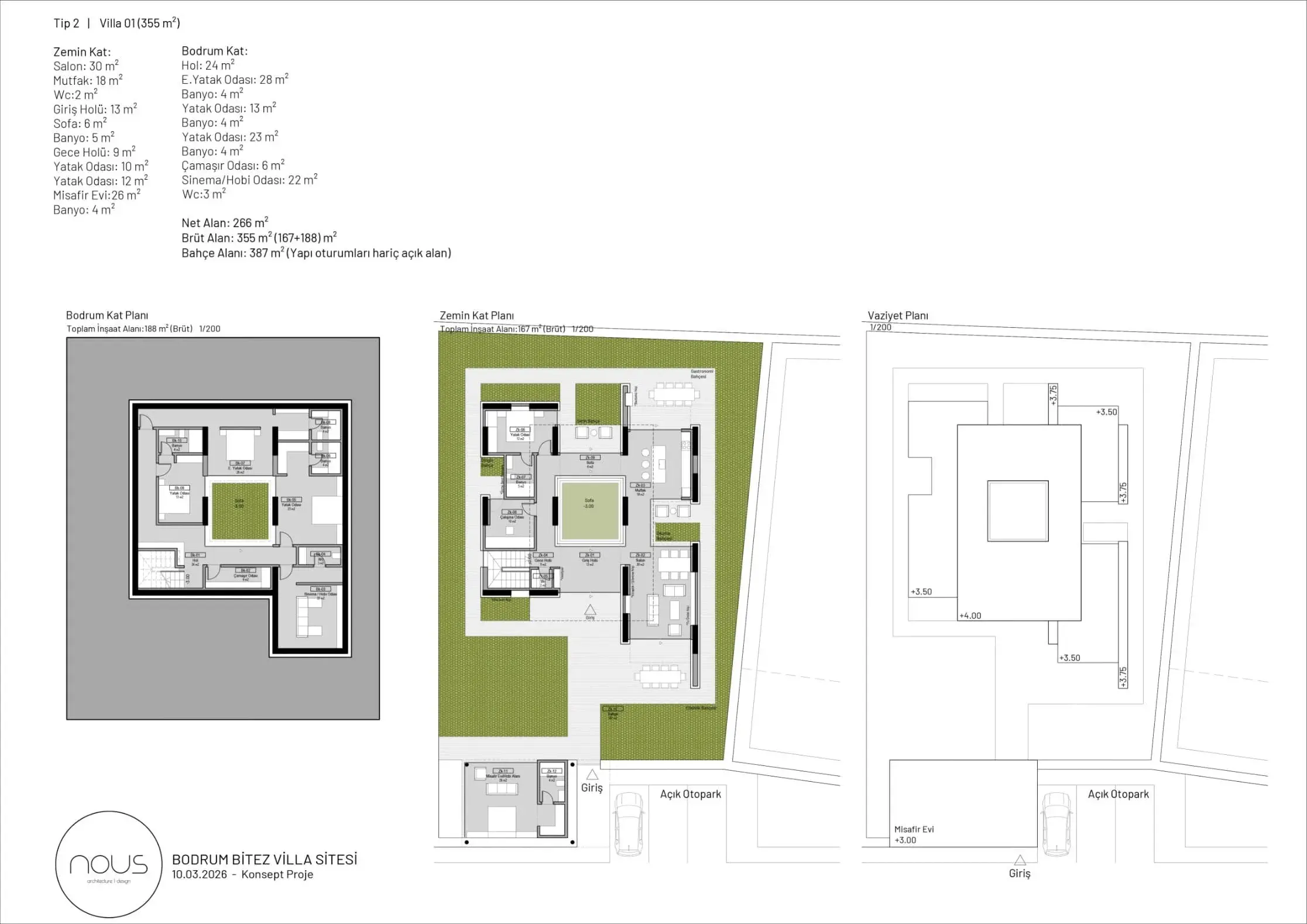
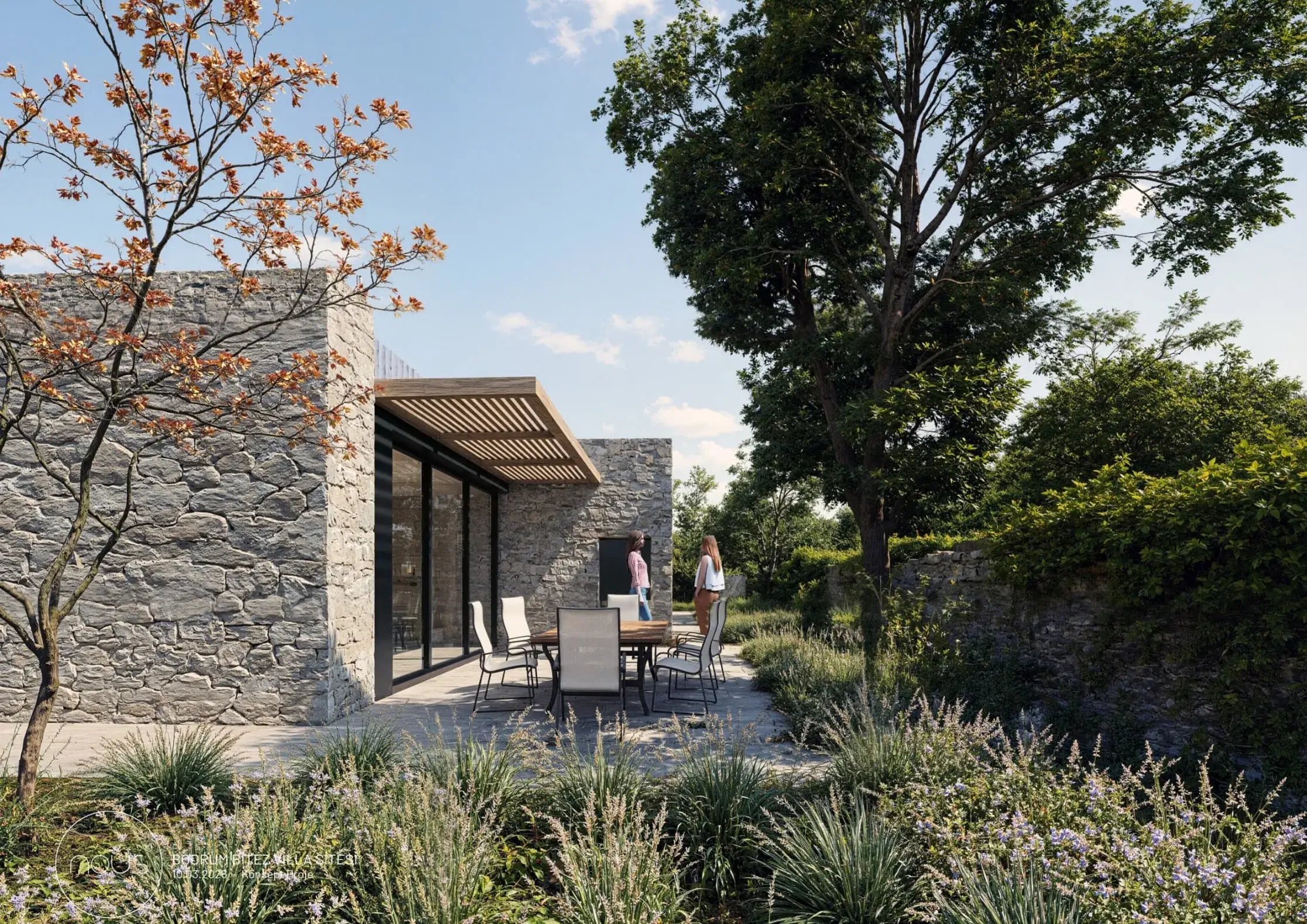
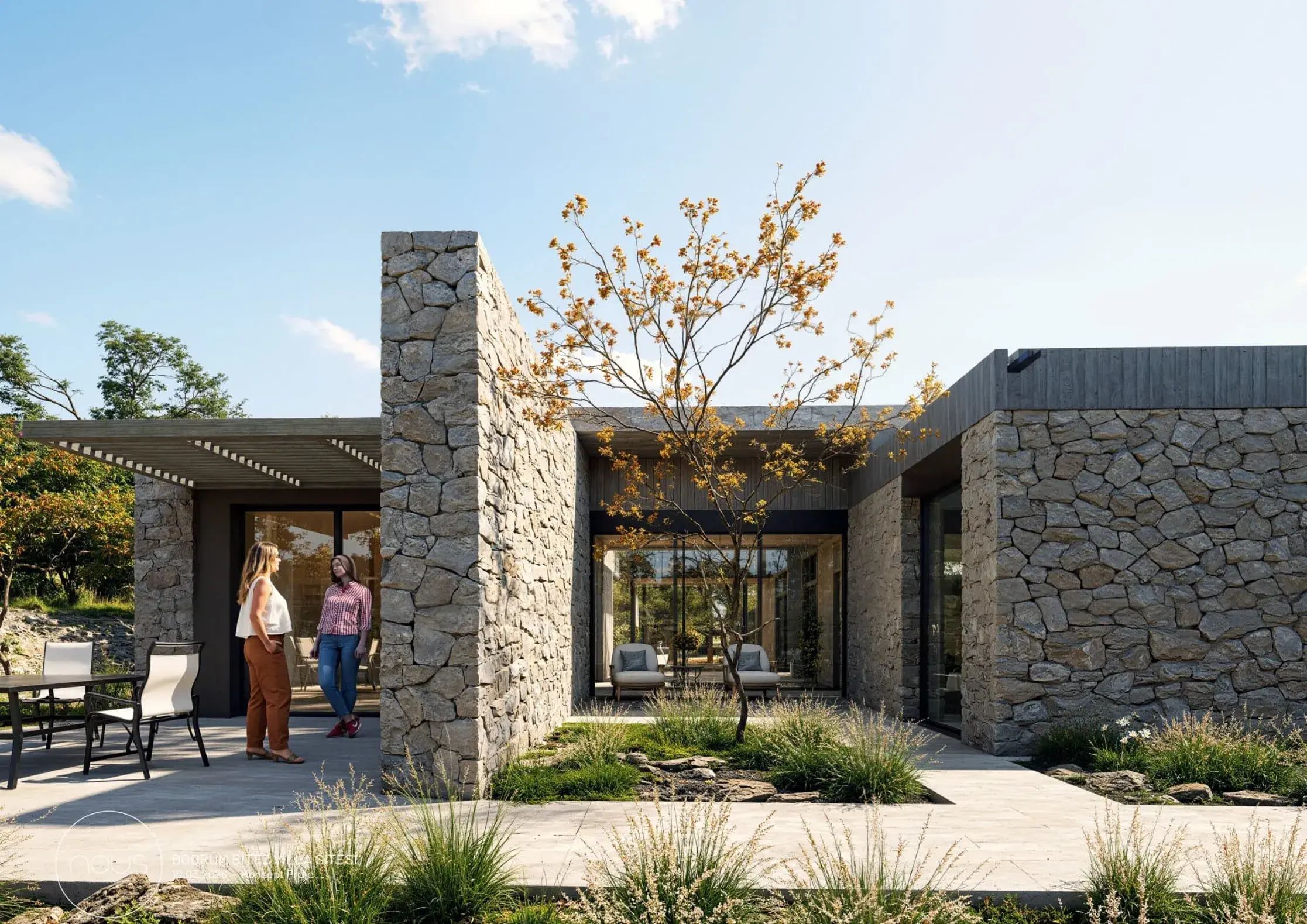
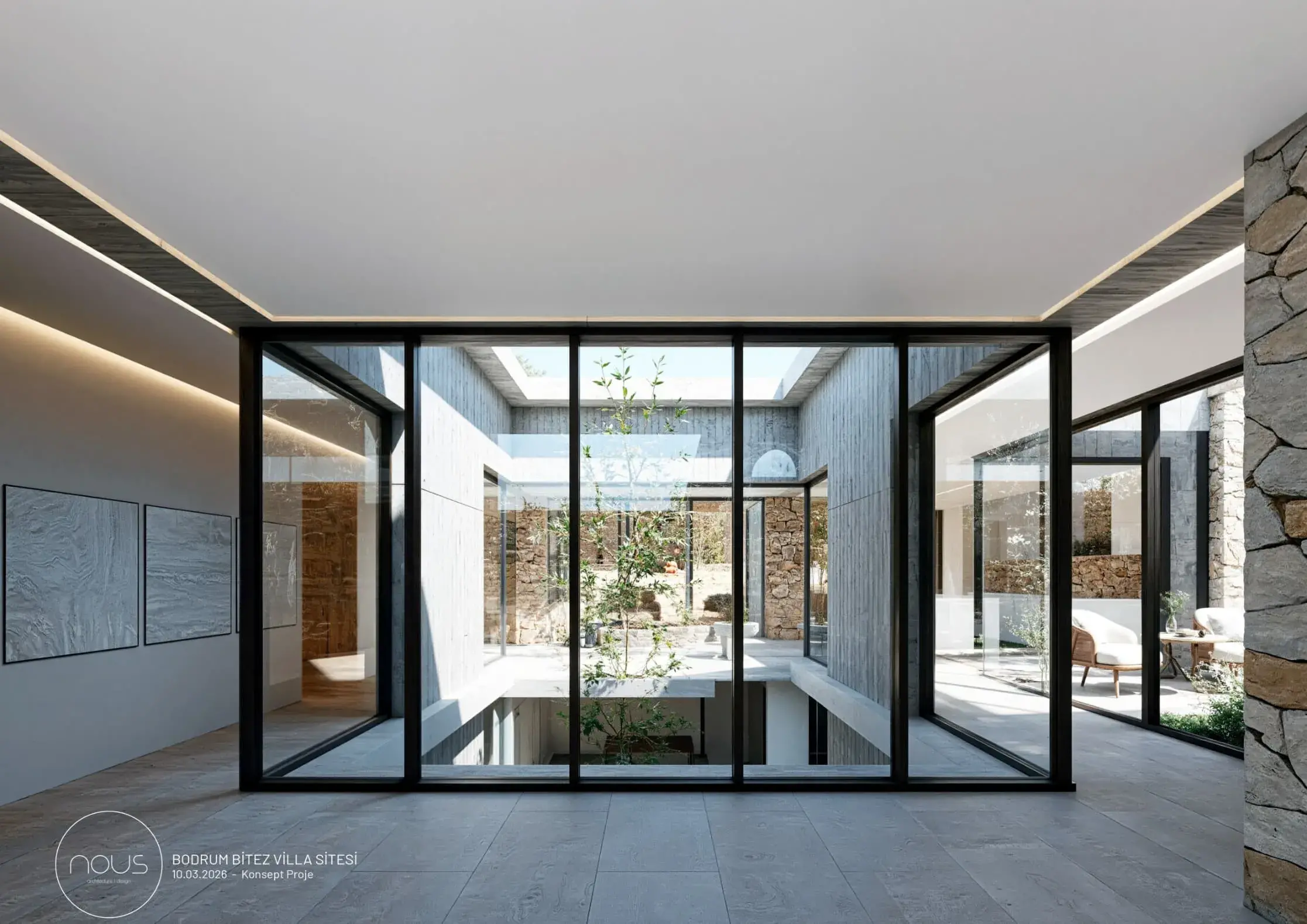
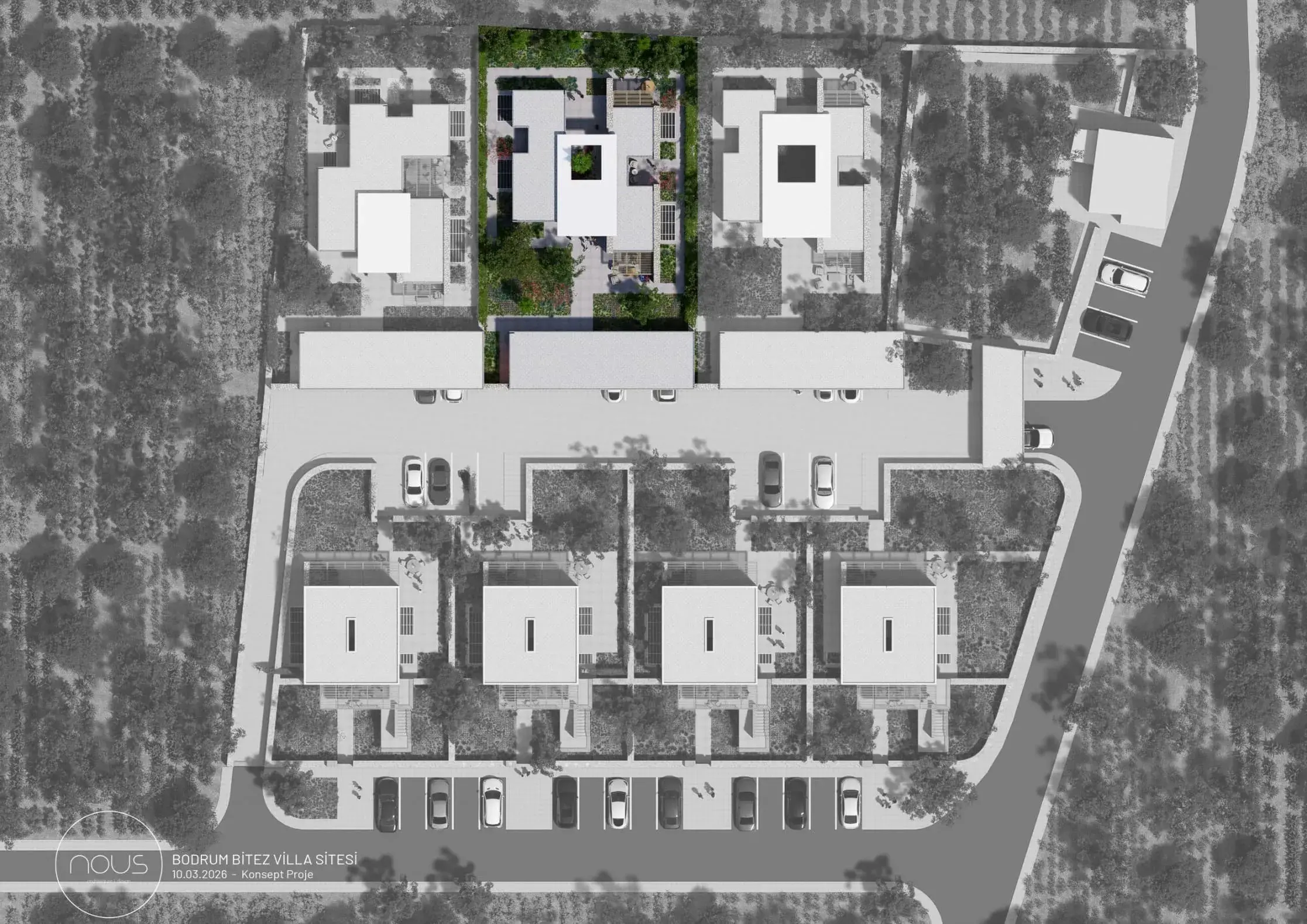
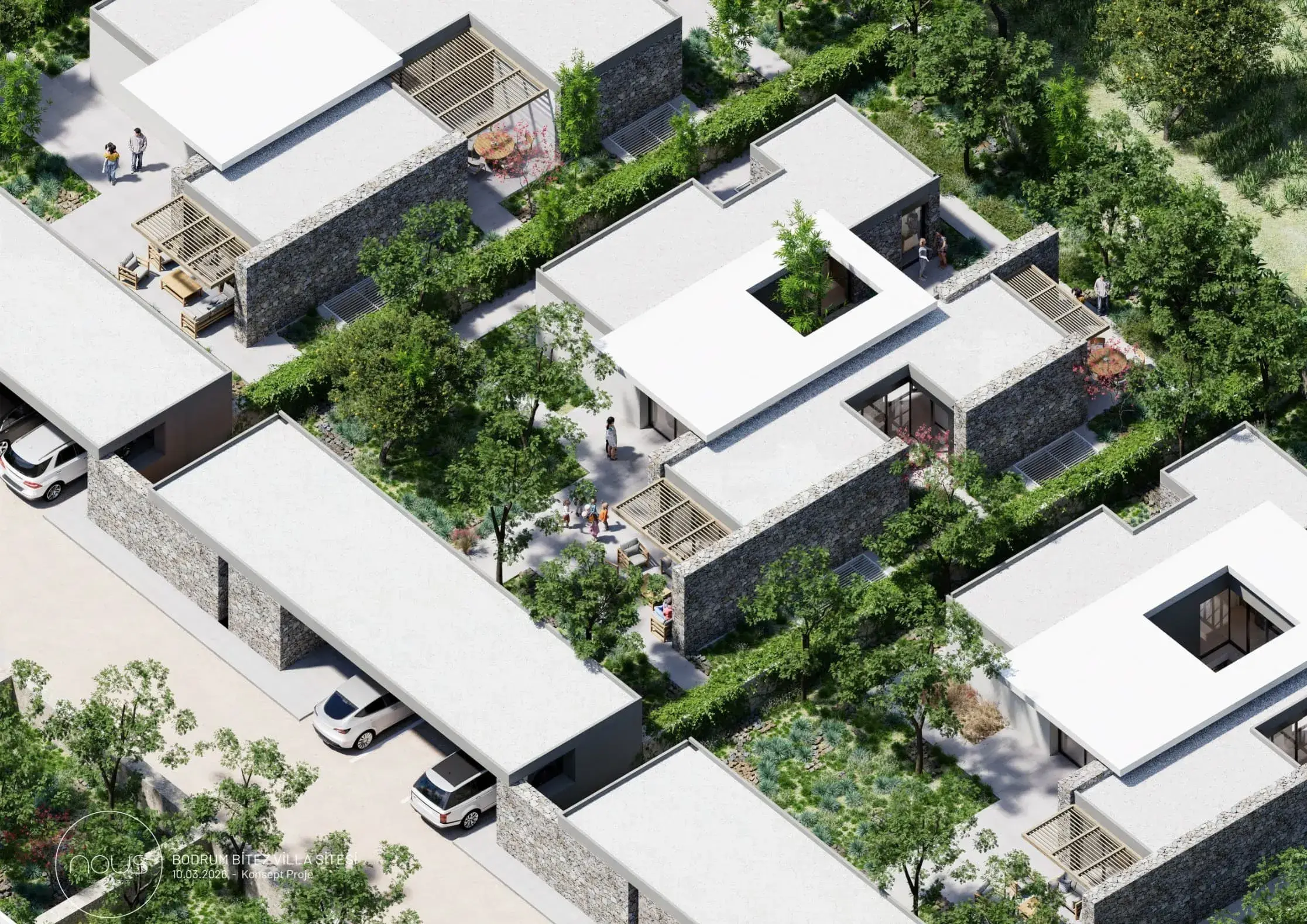
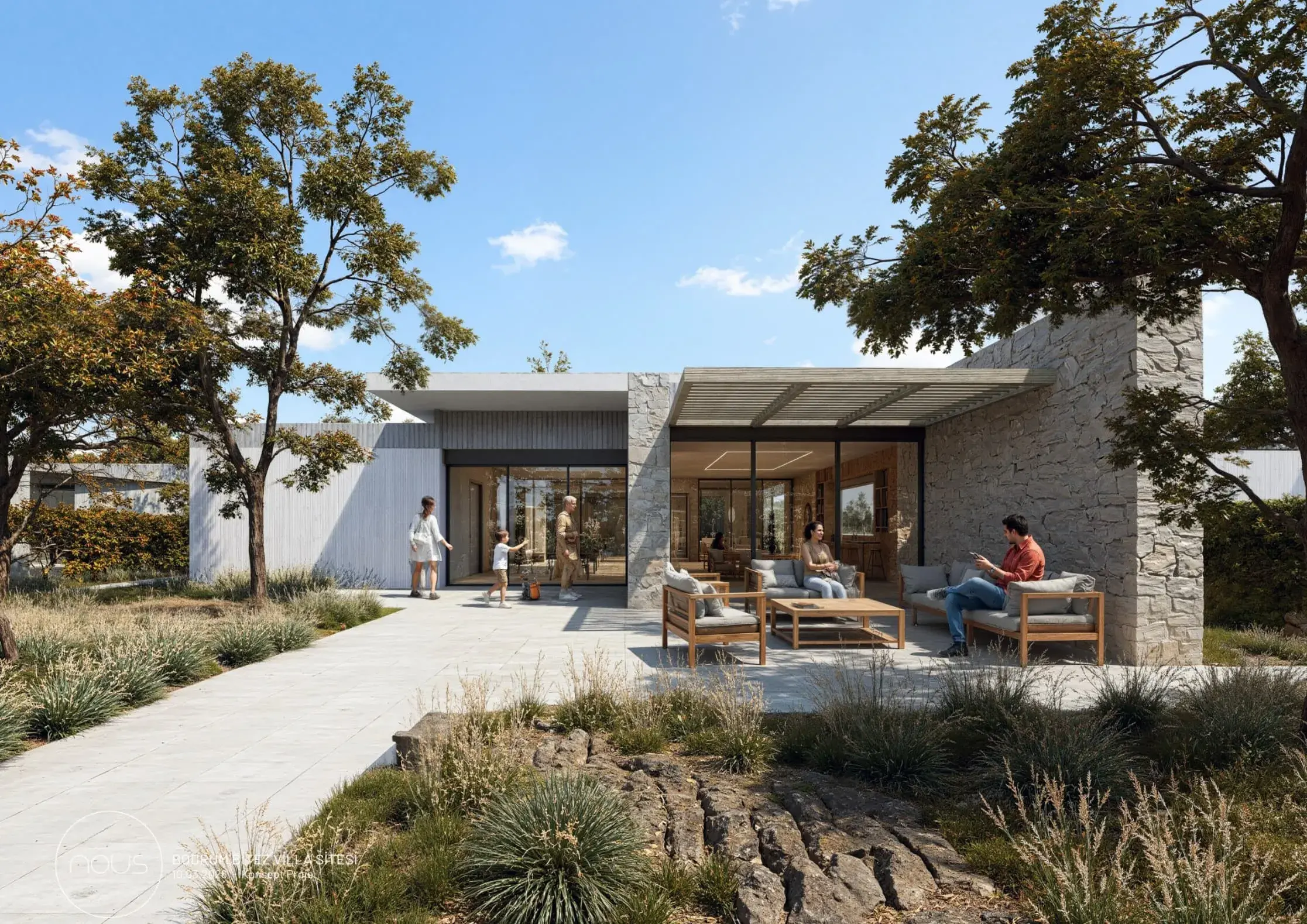
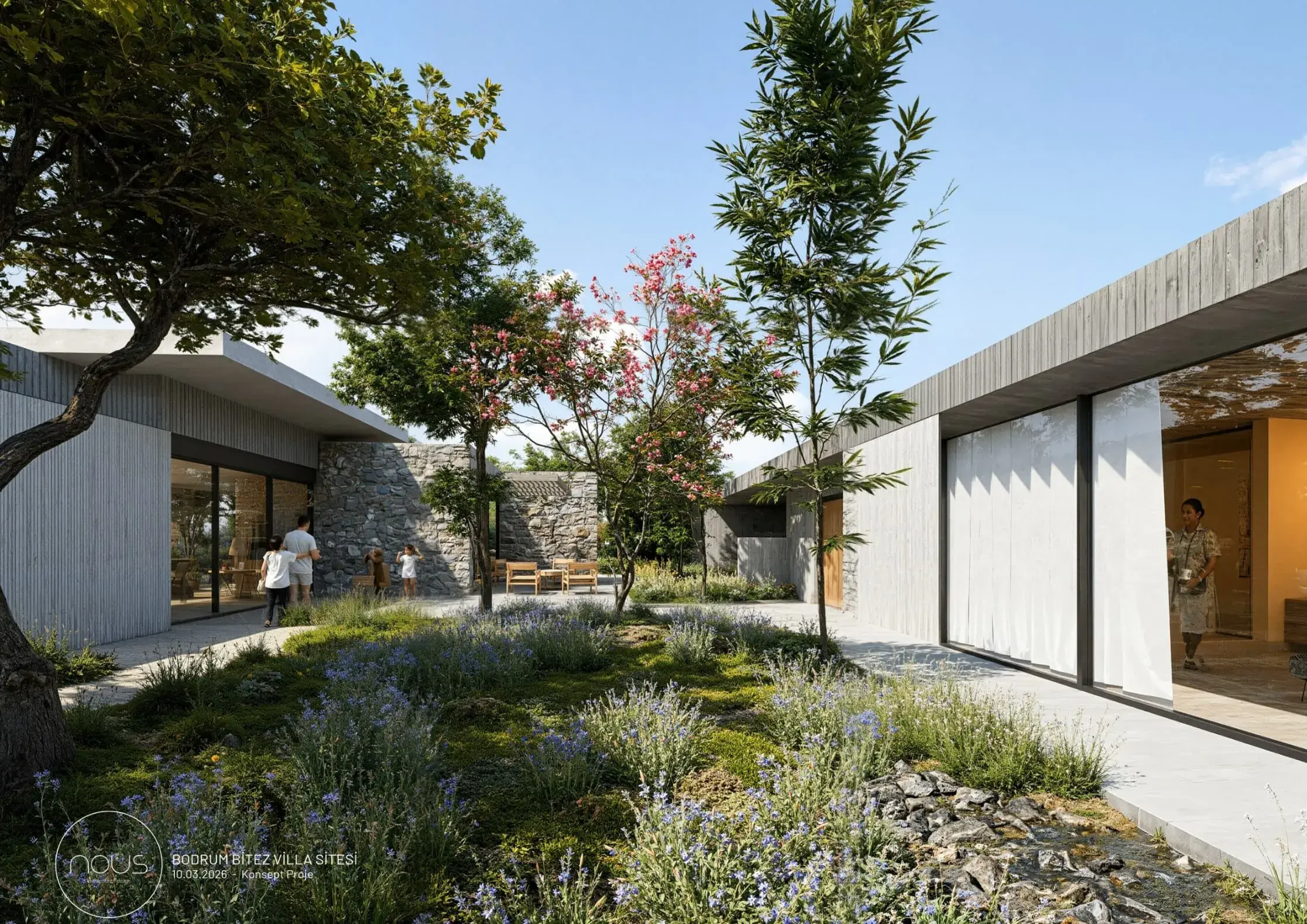
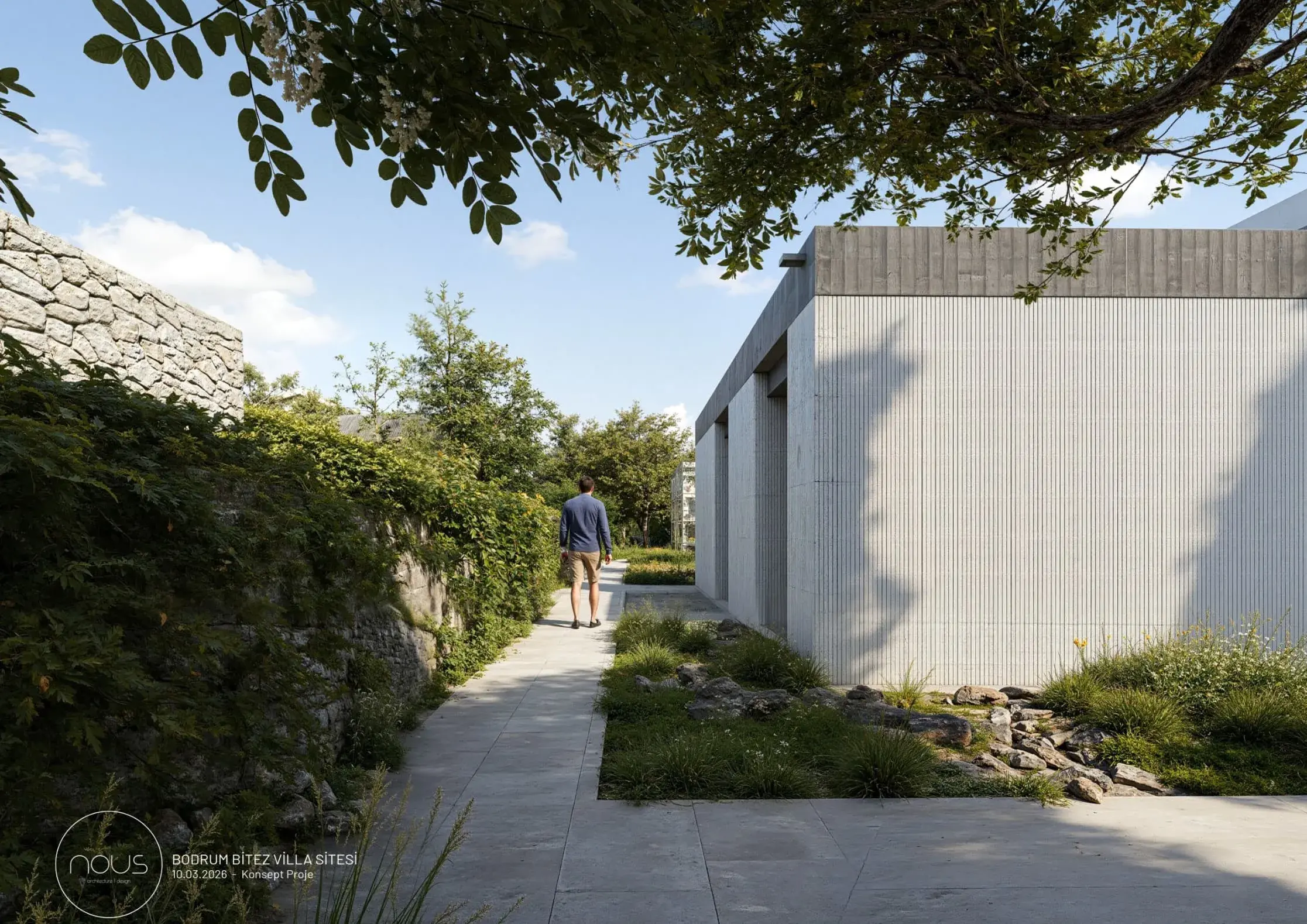
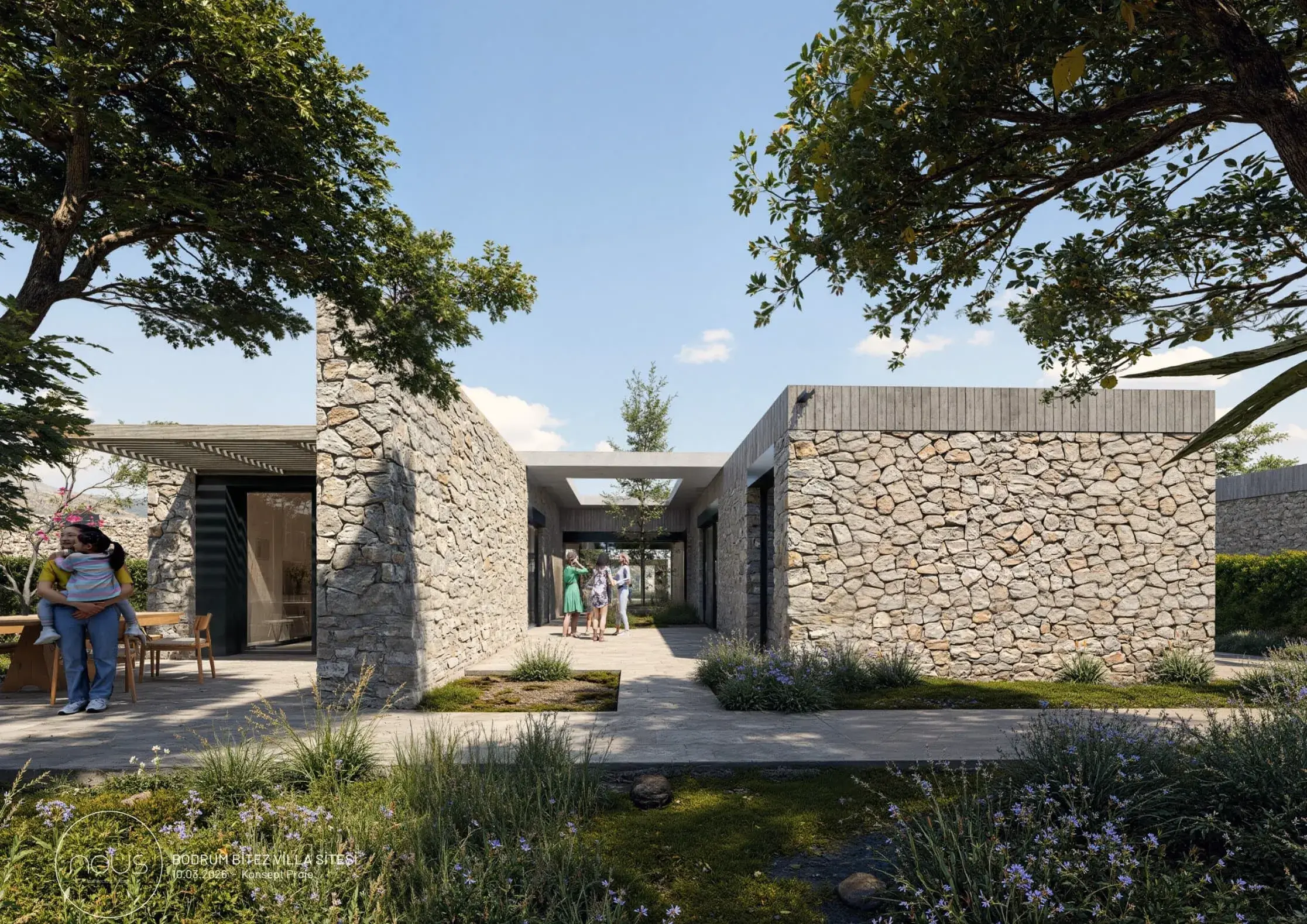
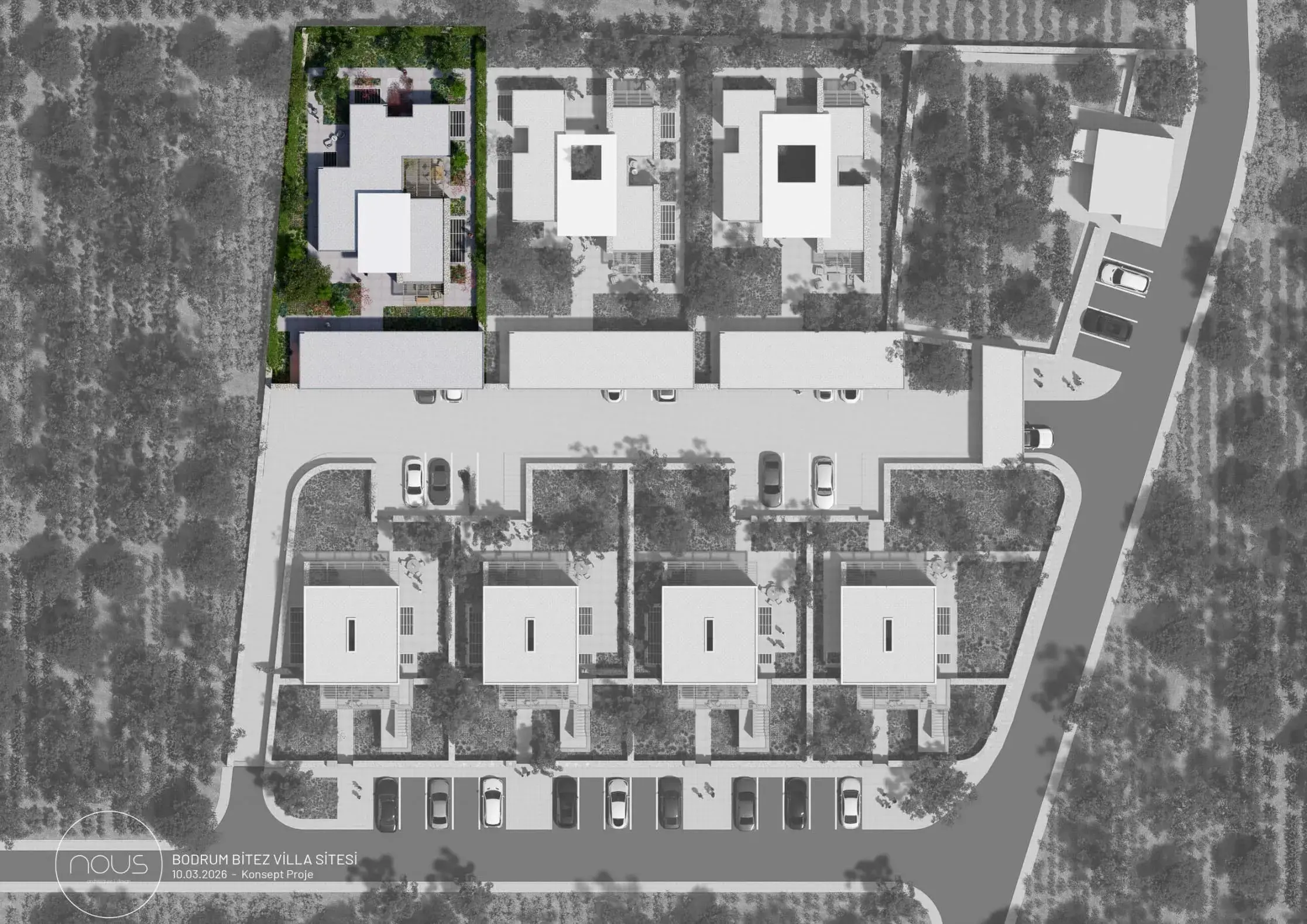
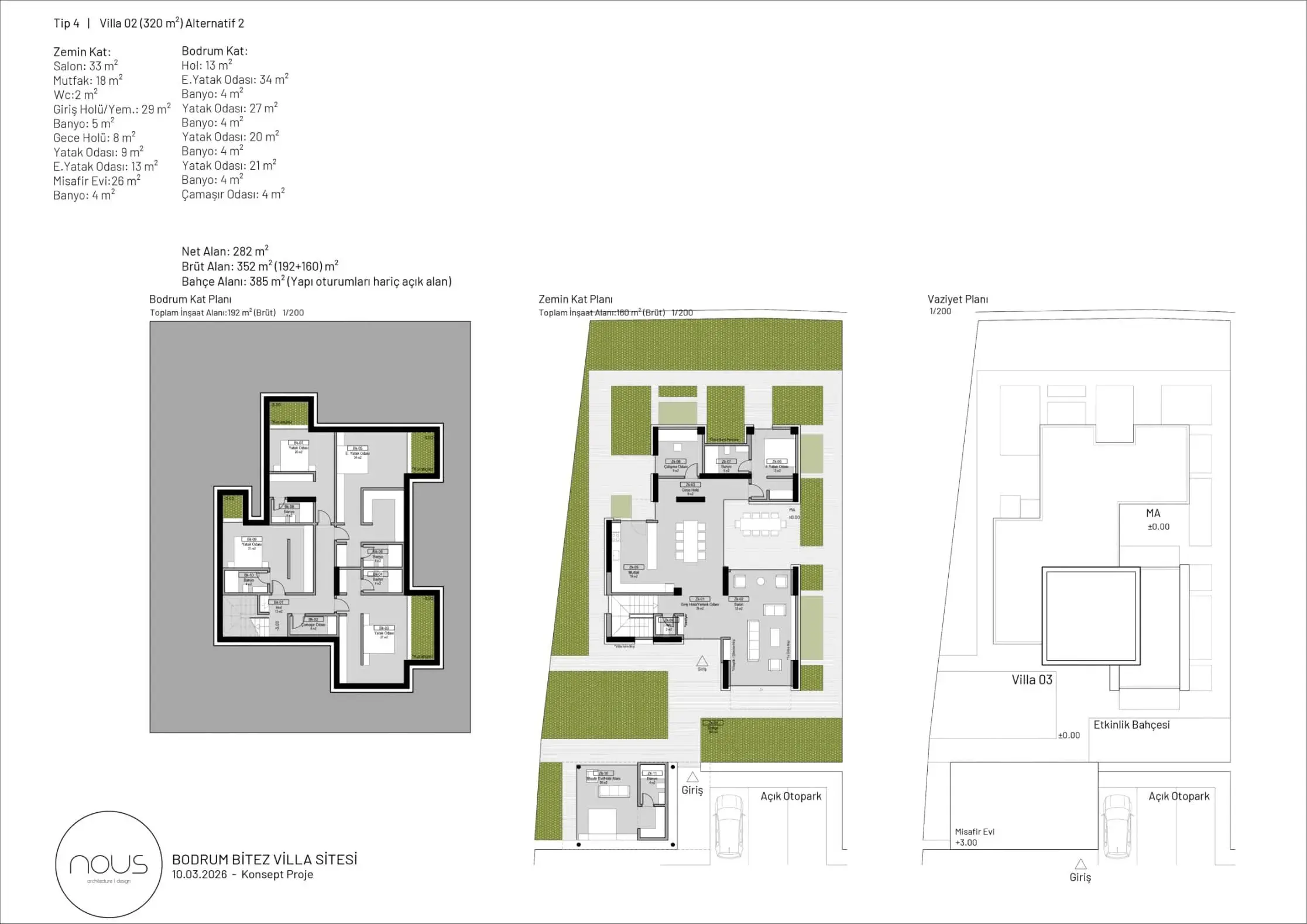
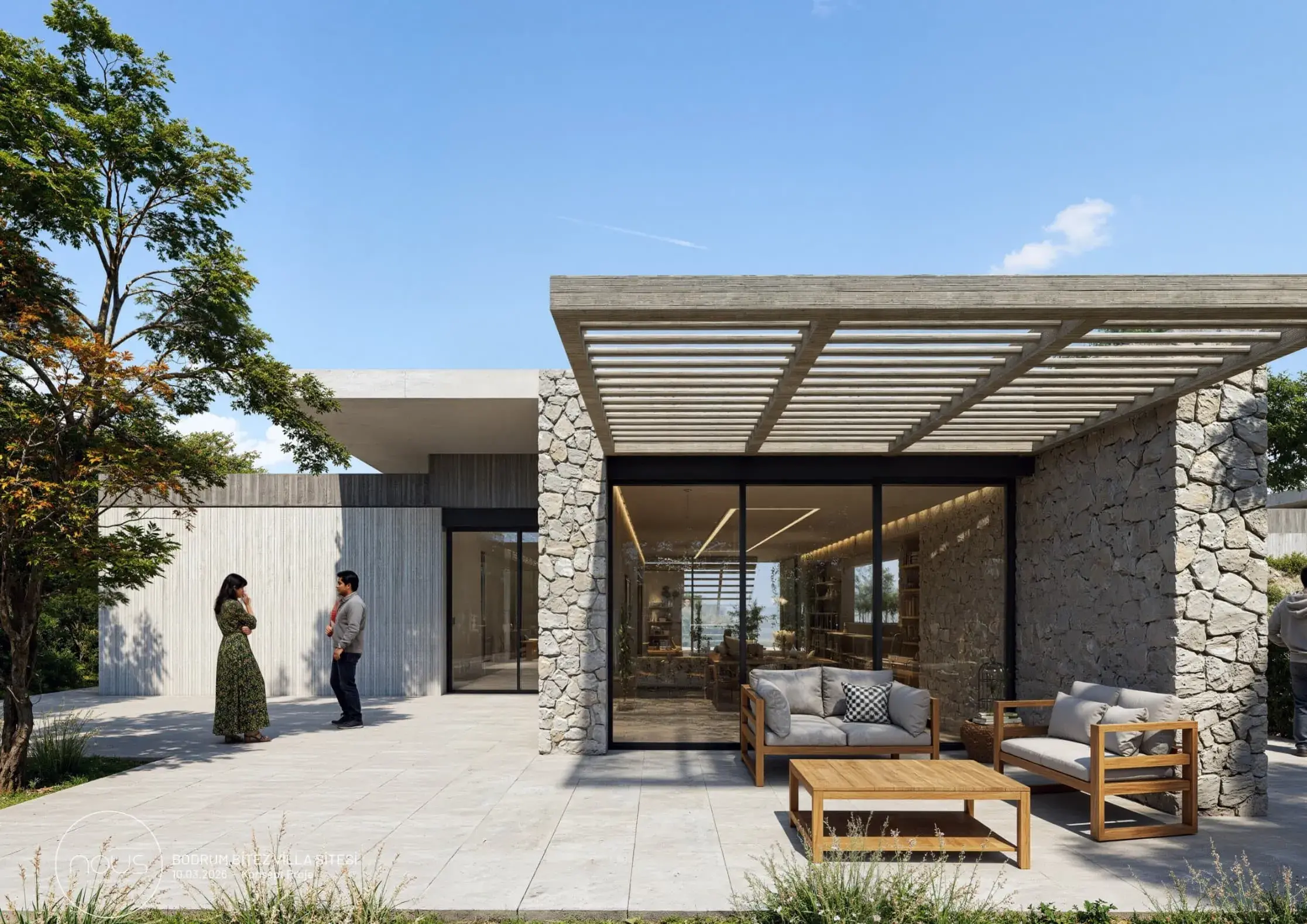
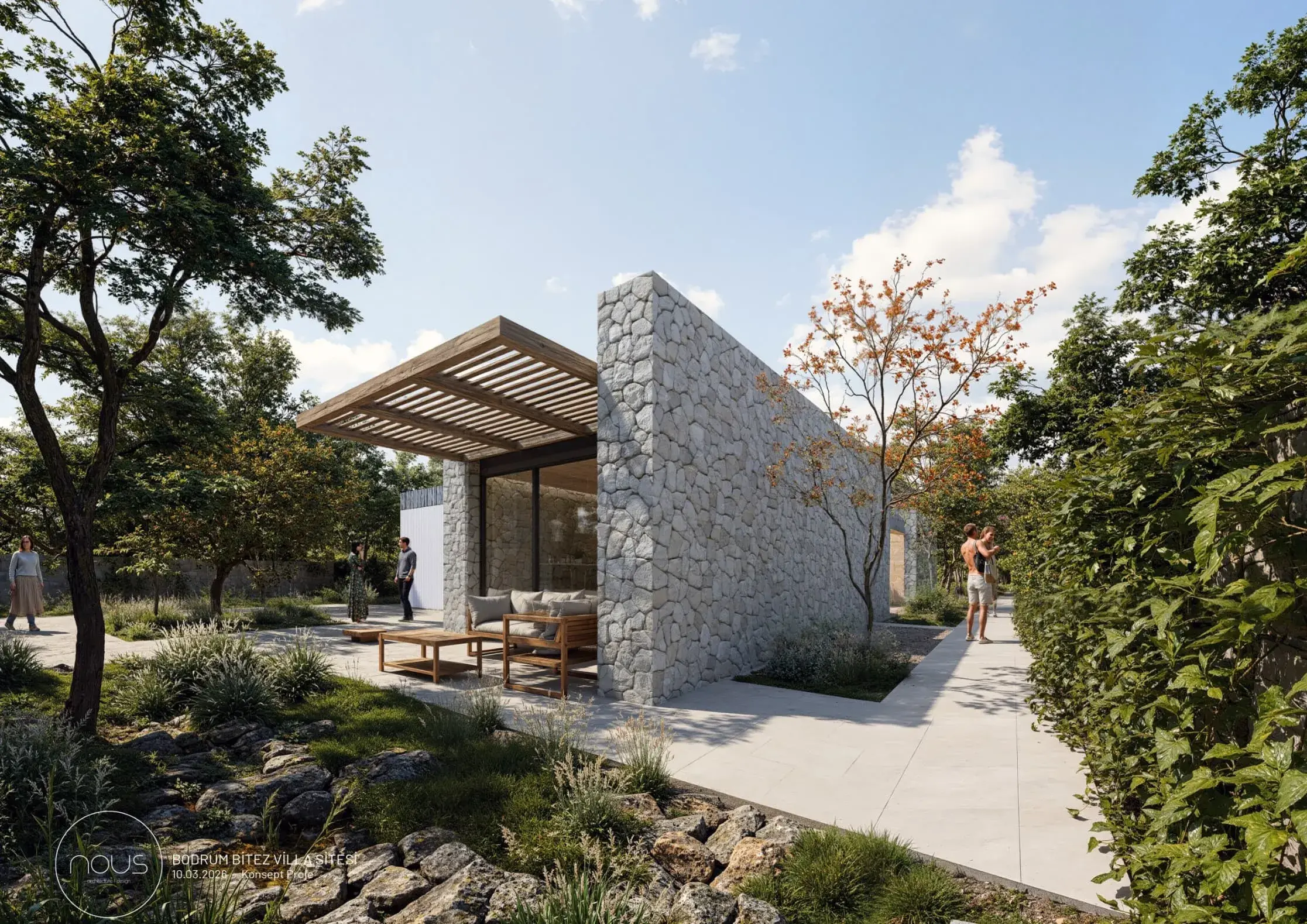
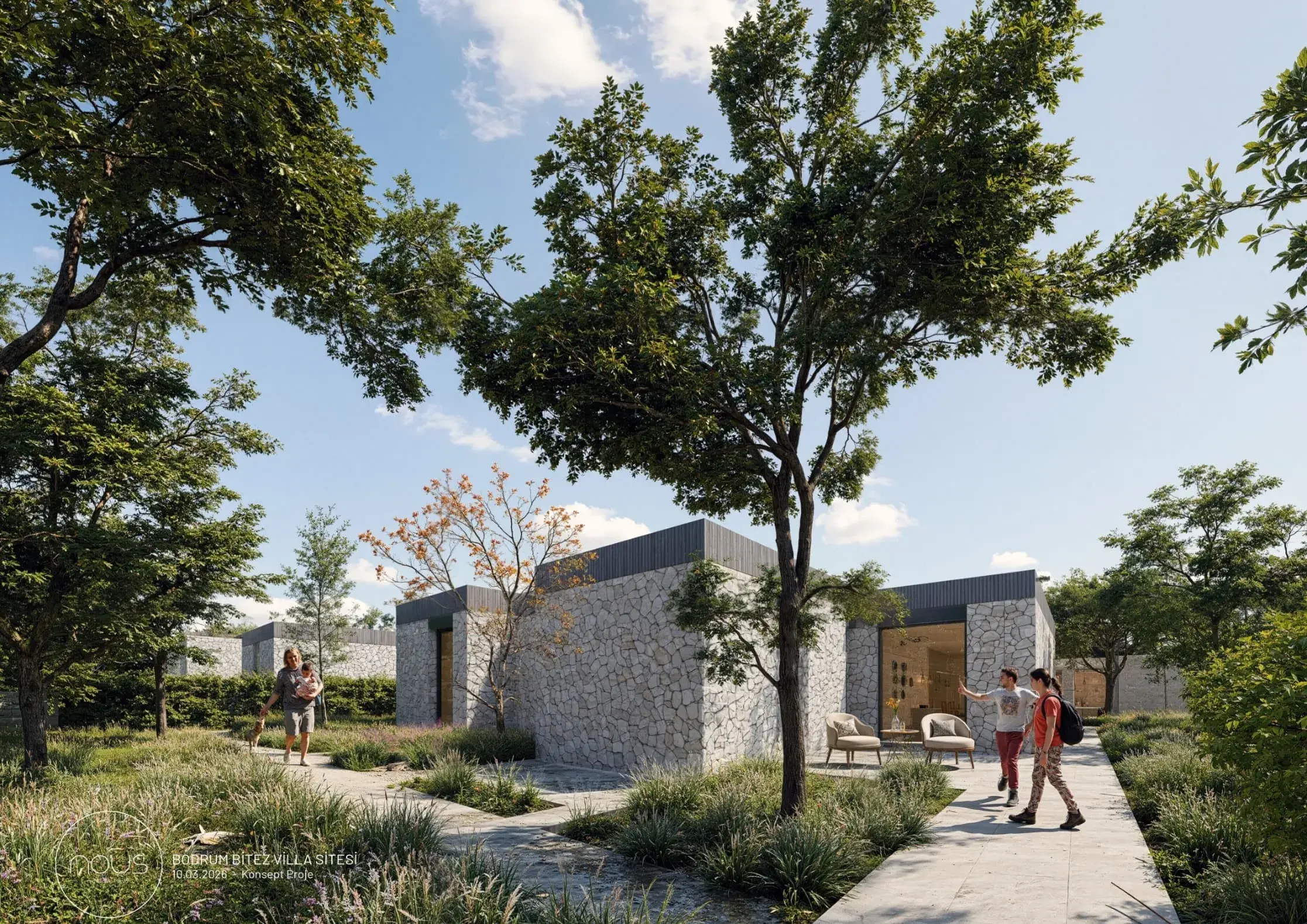
This residential cluster design is founded upon a morphology centered on “negative space,” shifting the structural mass from being a dominant figure to a state where the natural landscape gains a fluid continuity within the architectural fabric. While the volumes gain presence at their point of tectonic contact with the topography, the voids between these masses transform into interstitial areas—spaces that allow the greenery to seep through and redefine the environment. In this context, the primary element of the design is not the “solid” mass, but rather the voids articulated through conscious design decisions.
Liminal Spaces and Climatic Fluidity
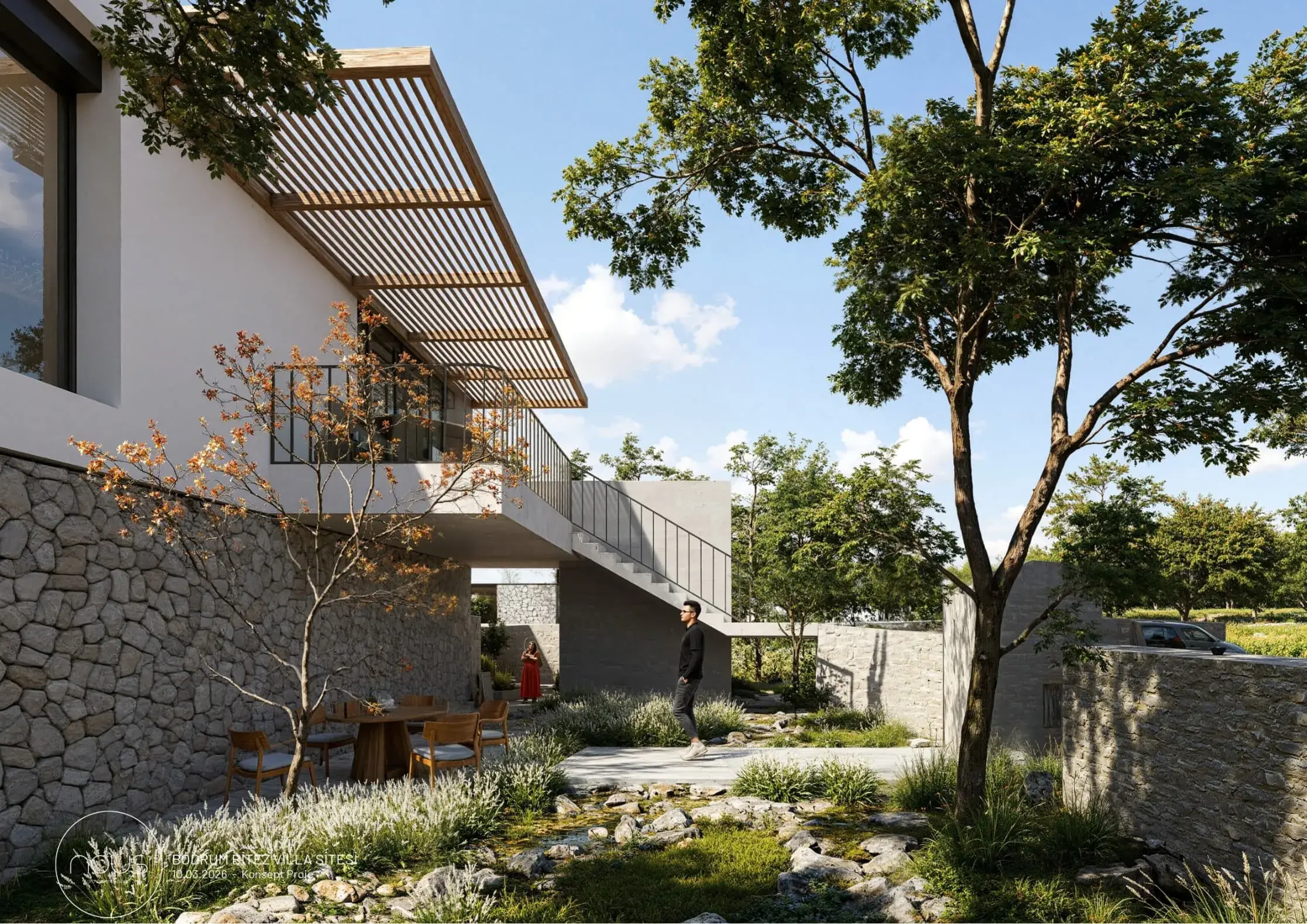
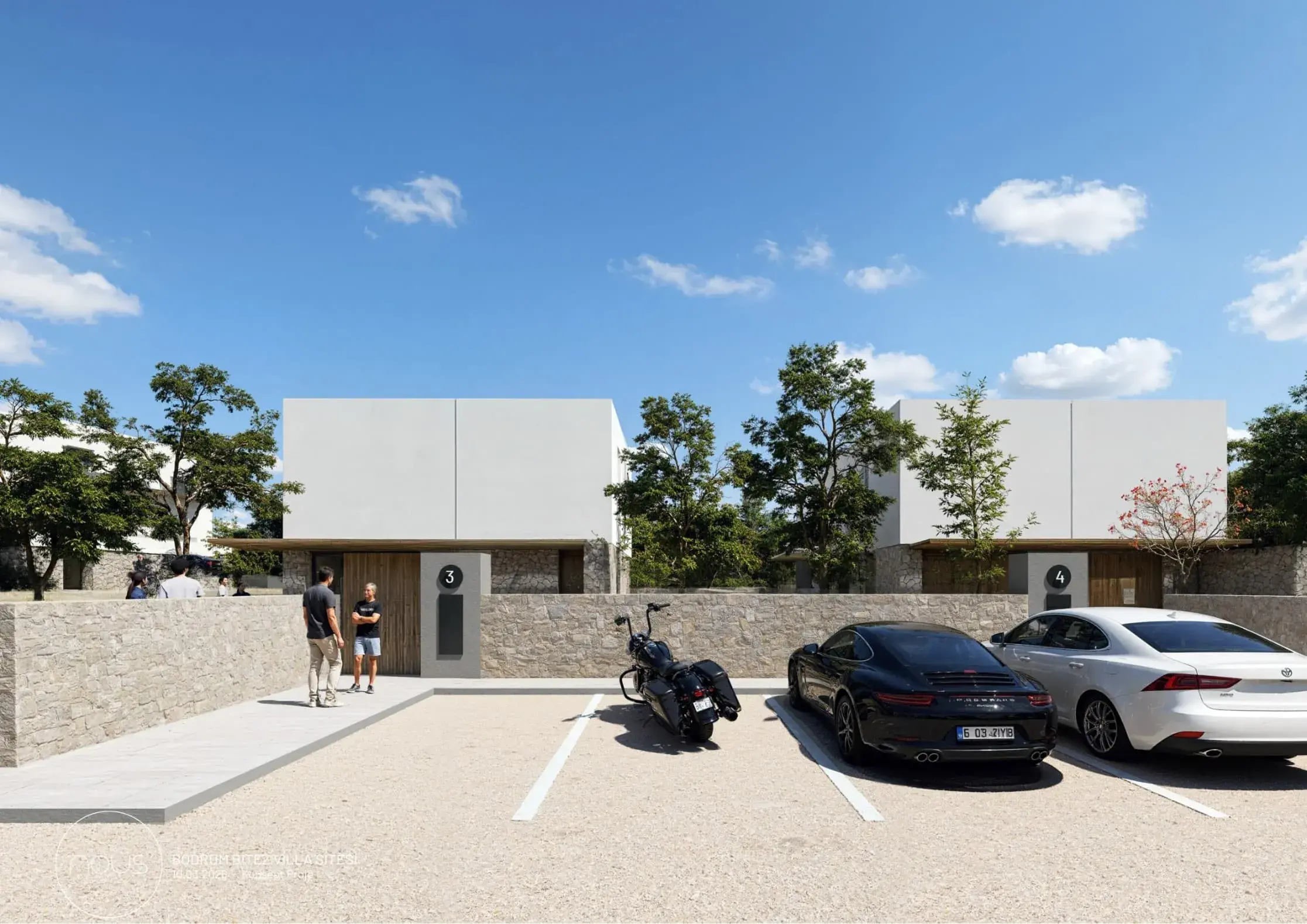
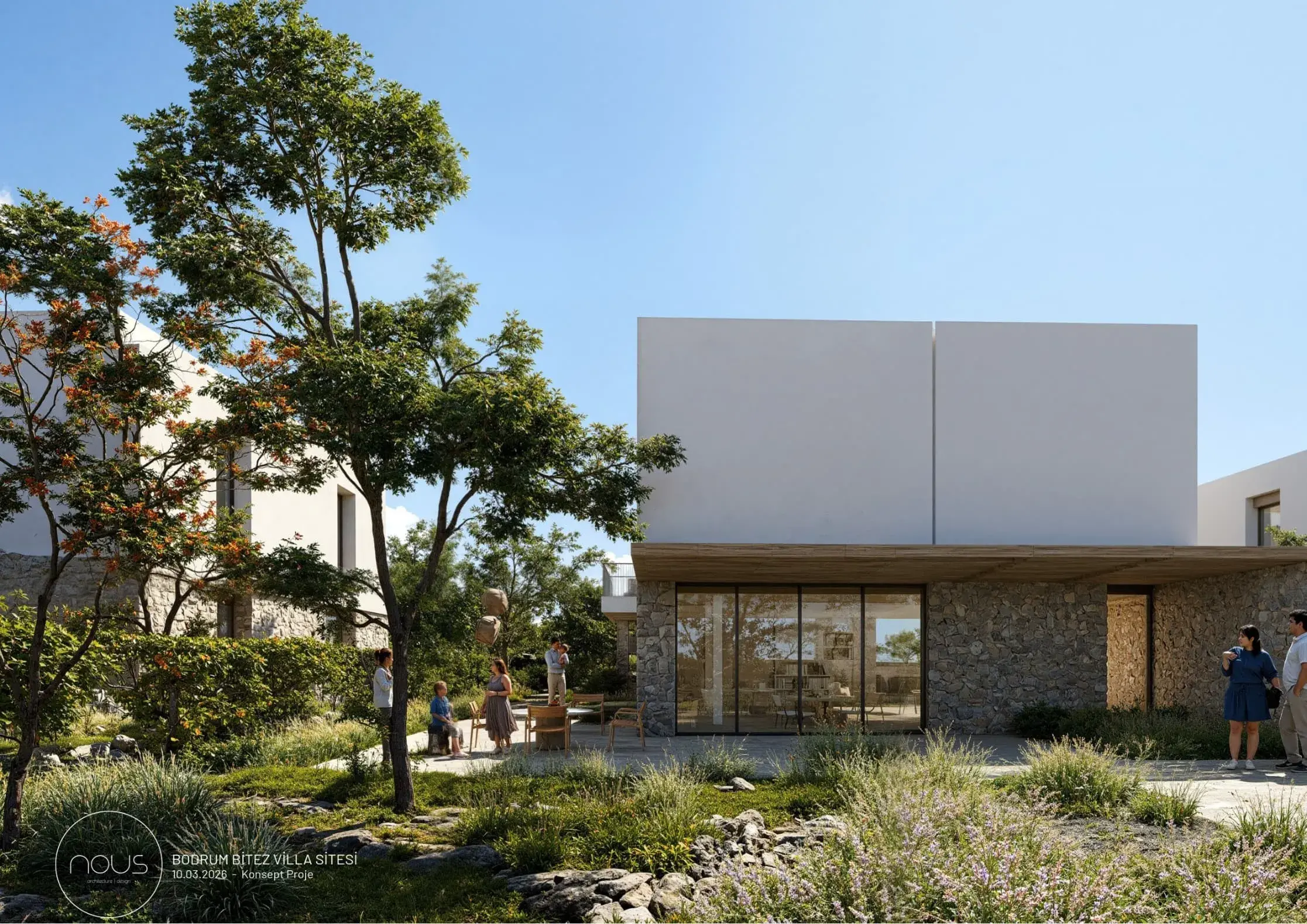
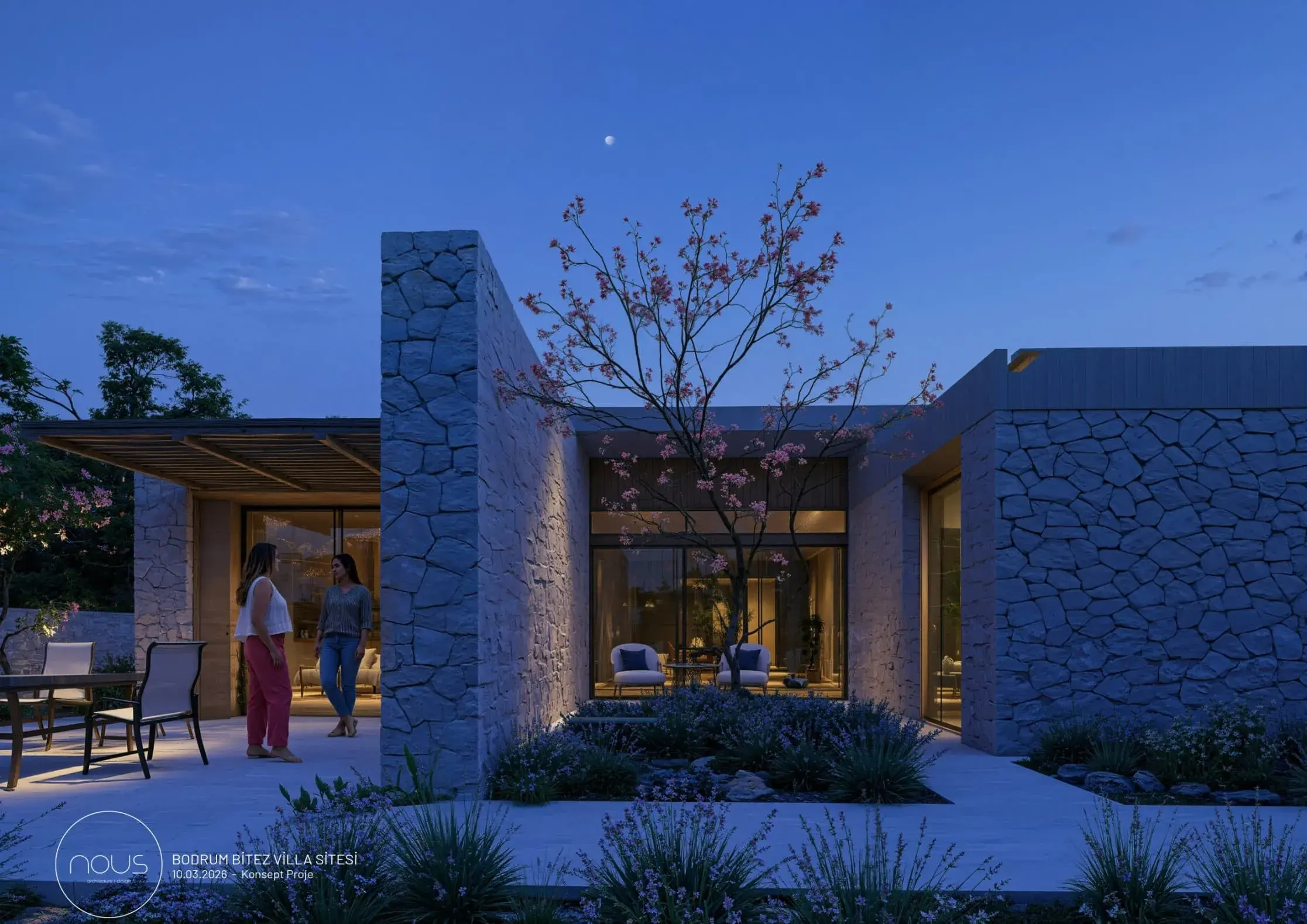
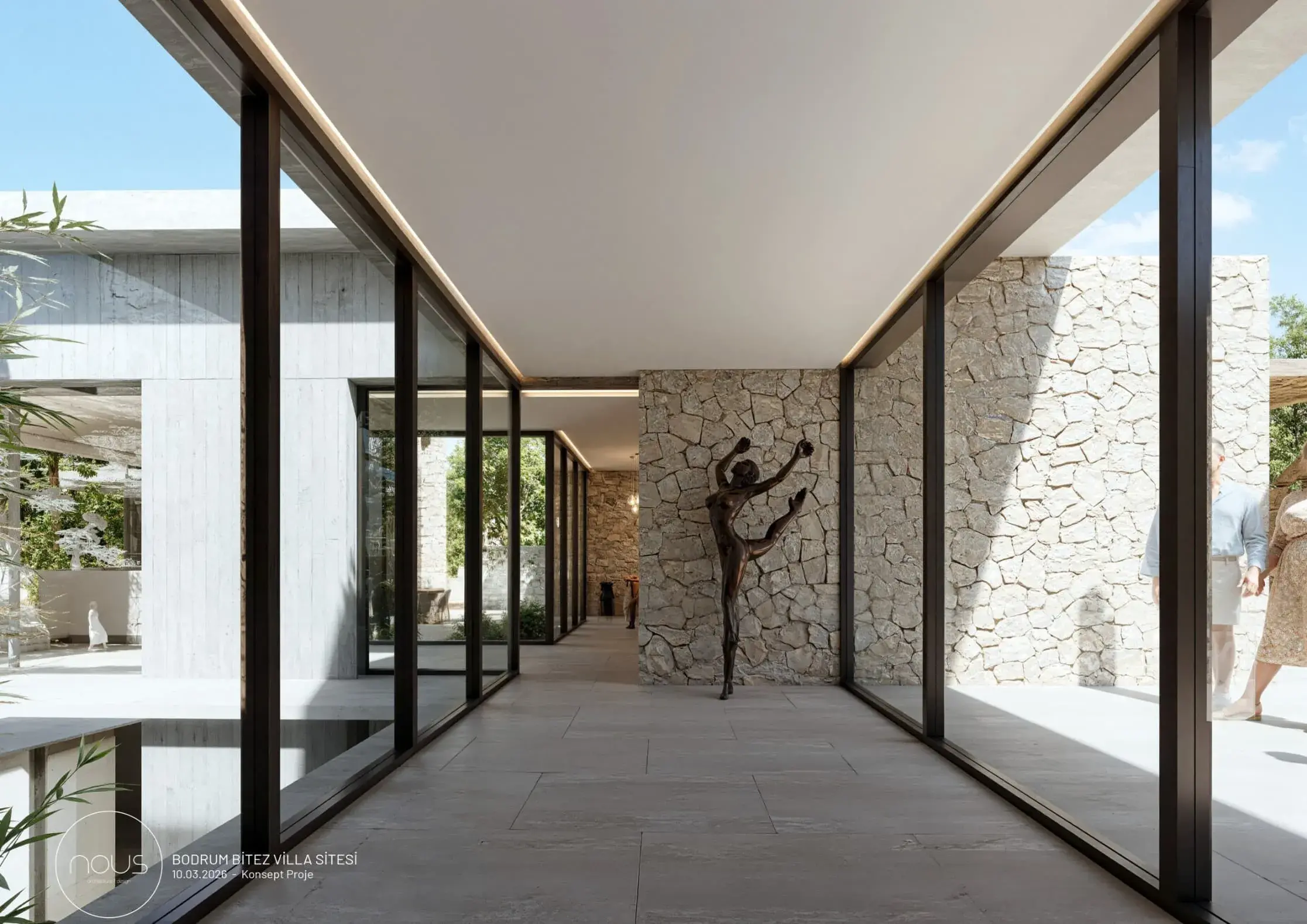
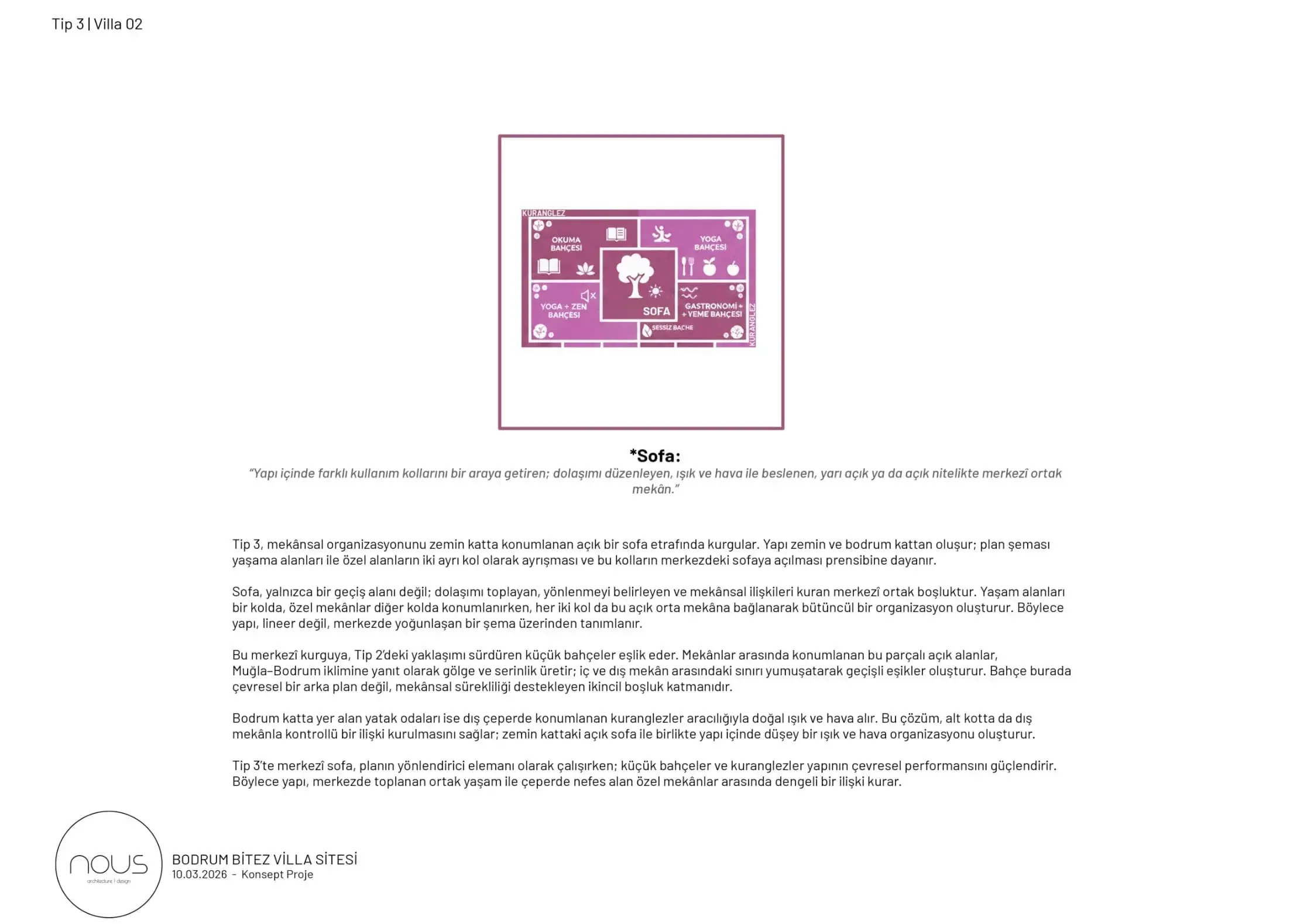
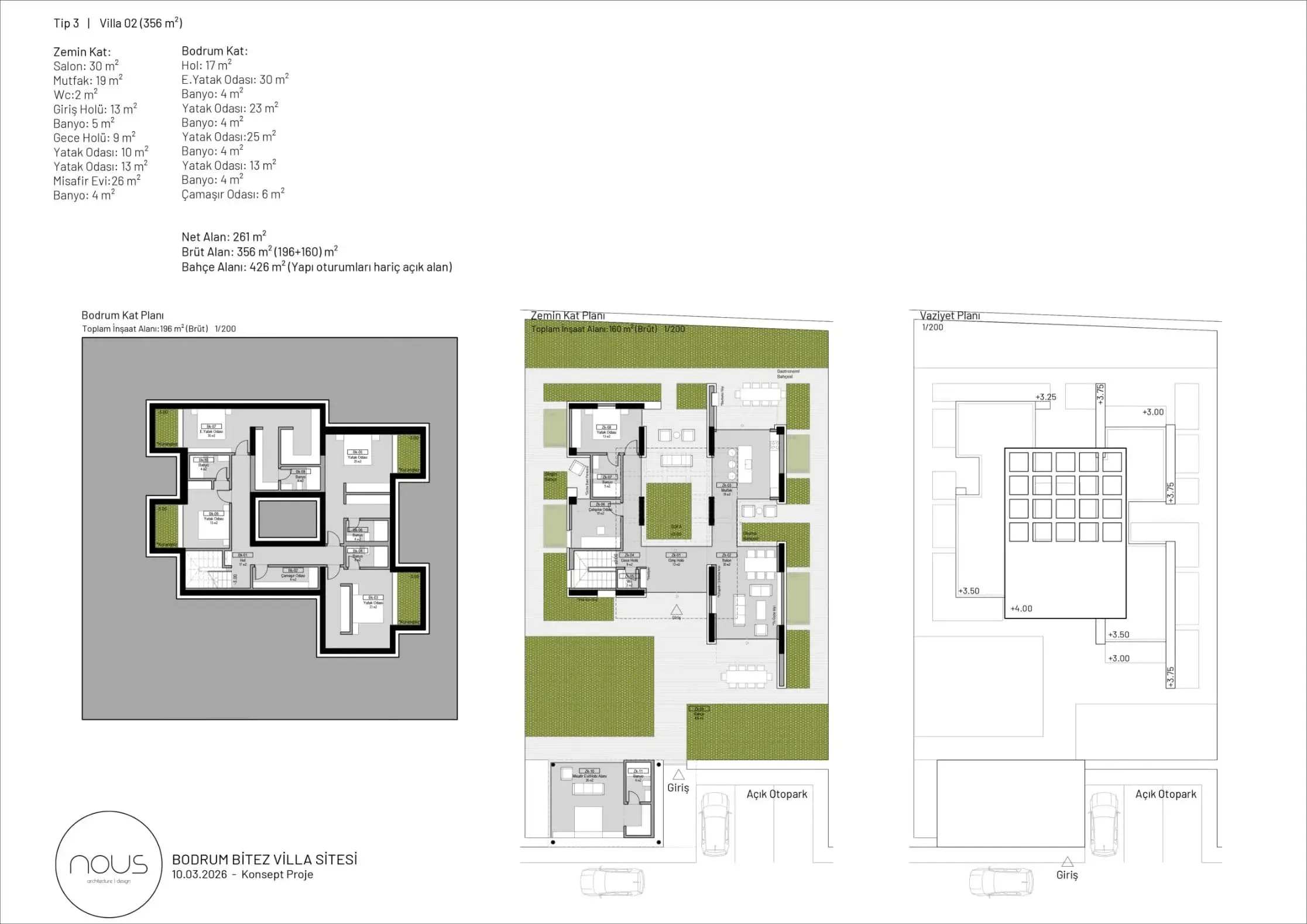
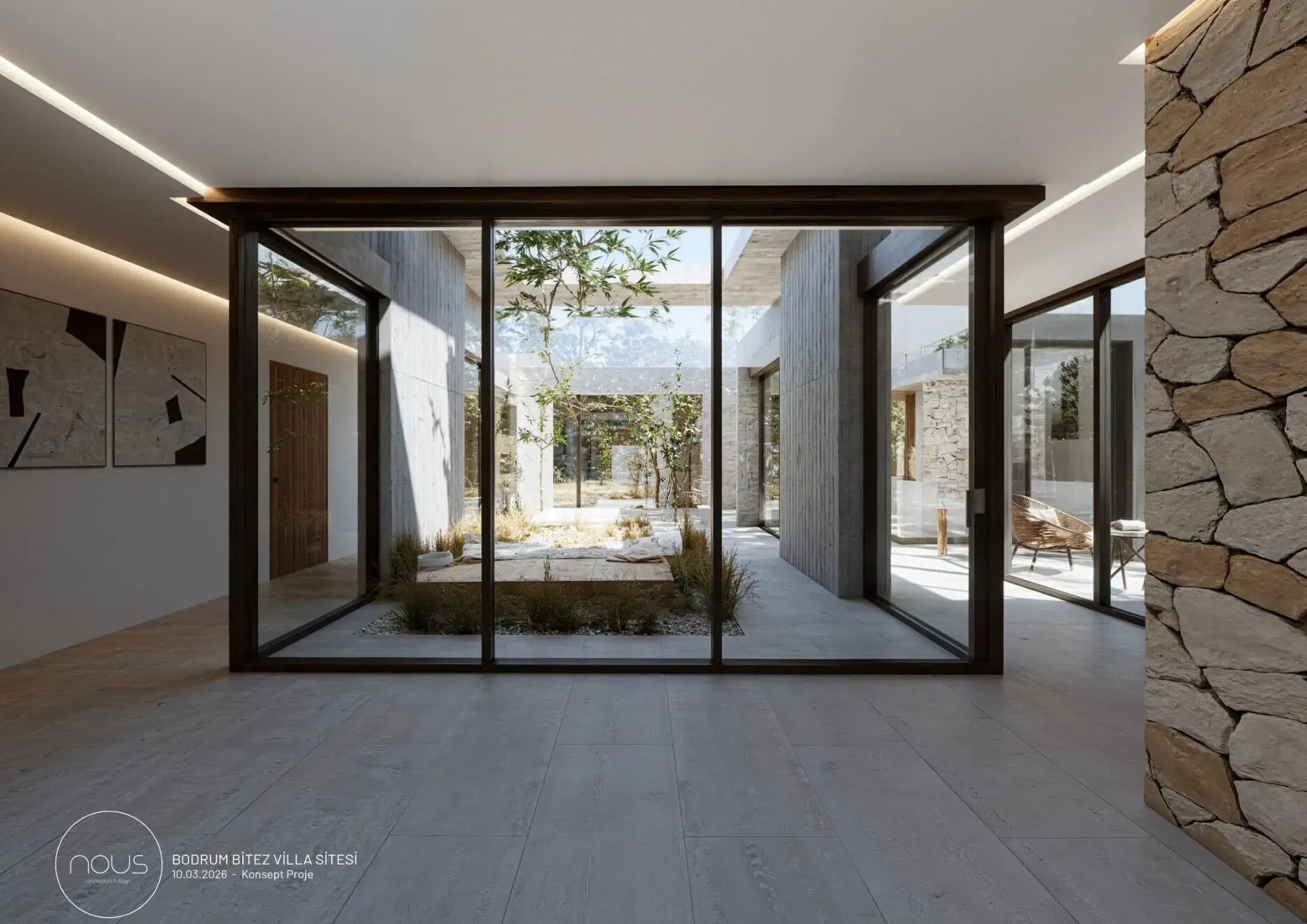
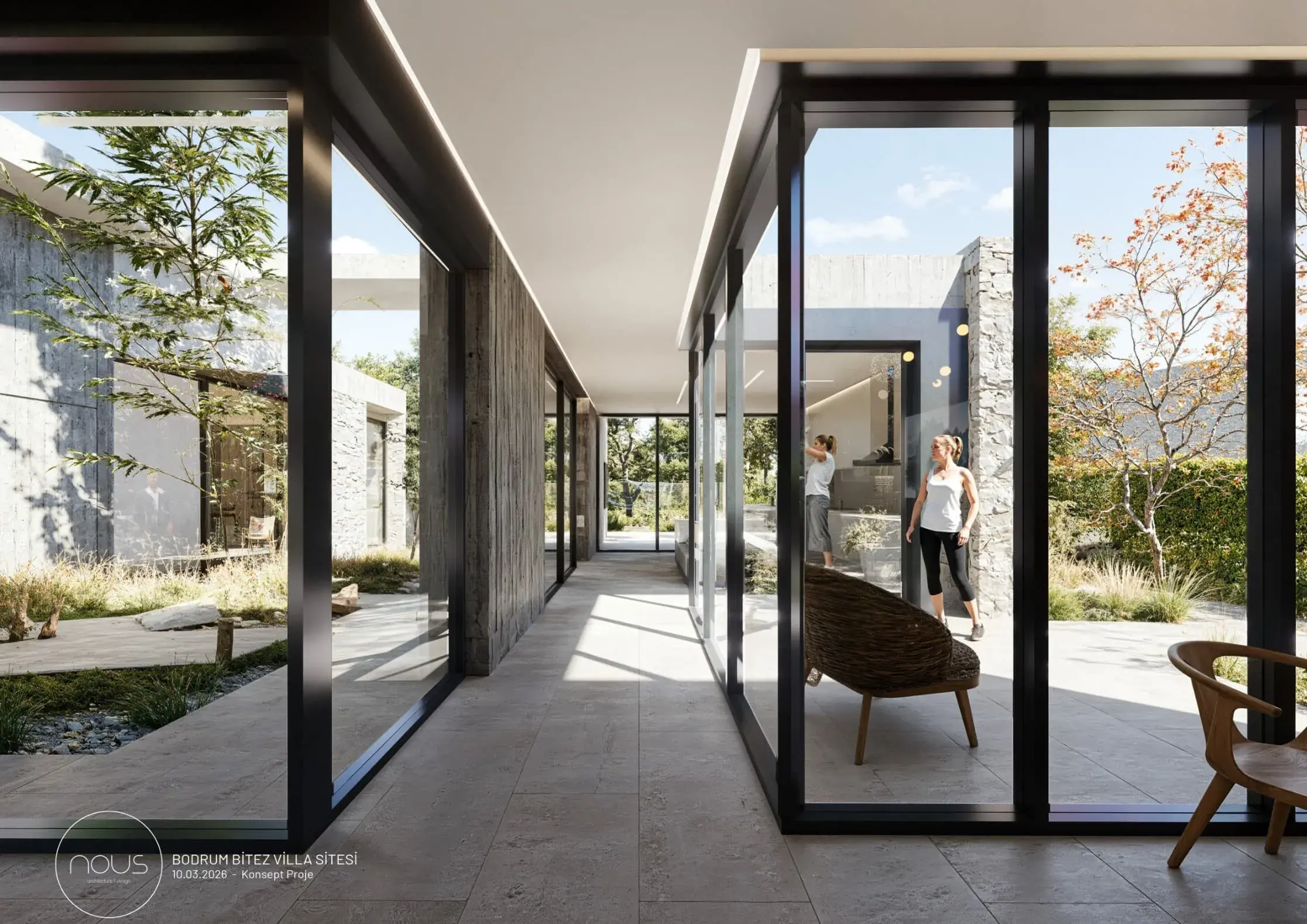
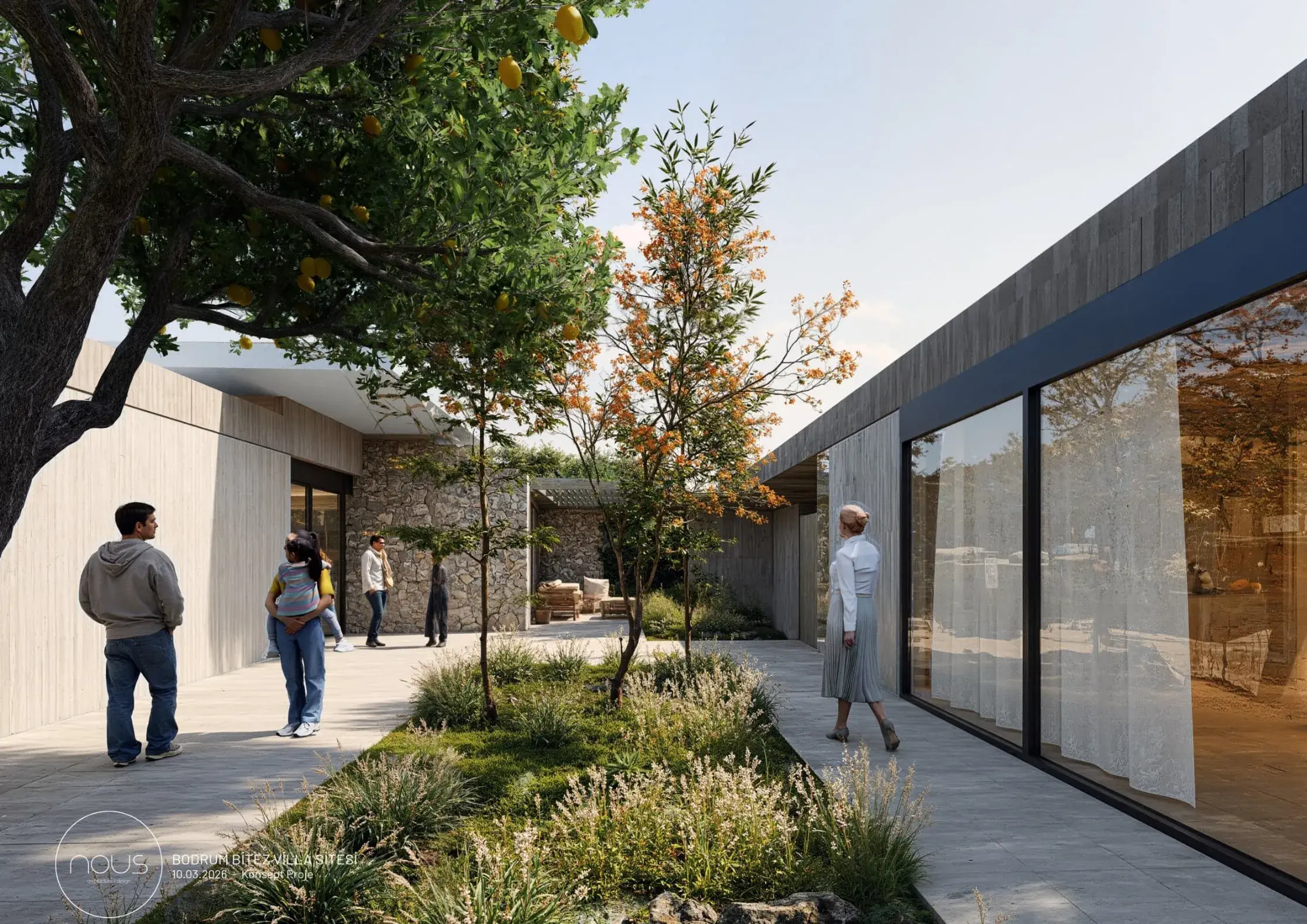
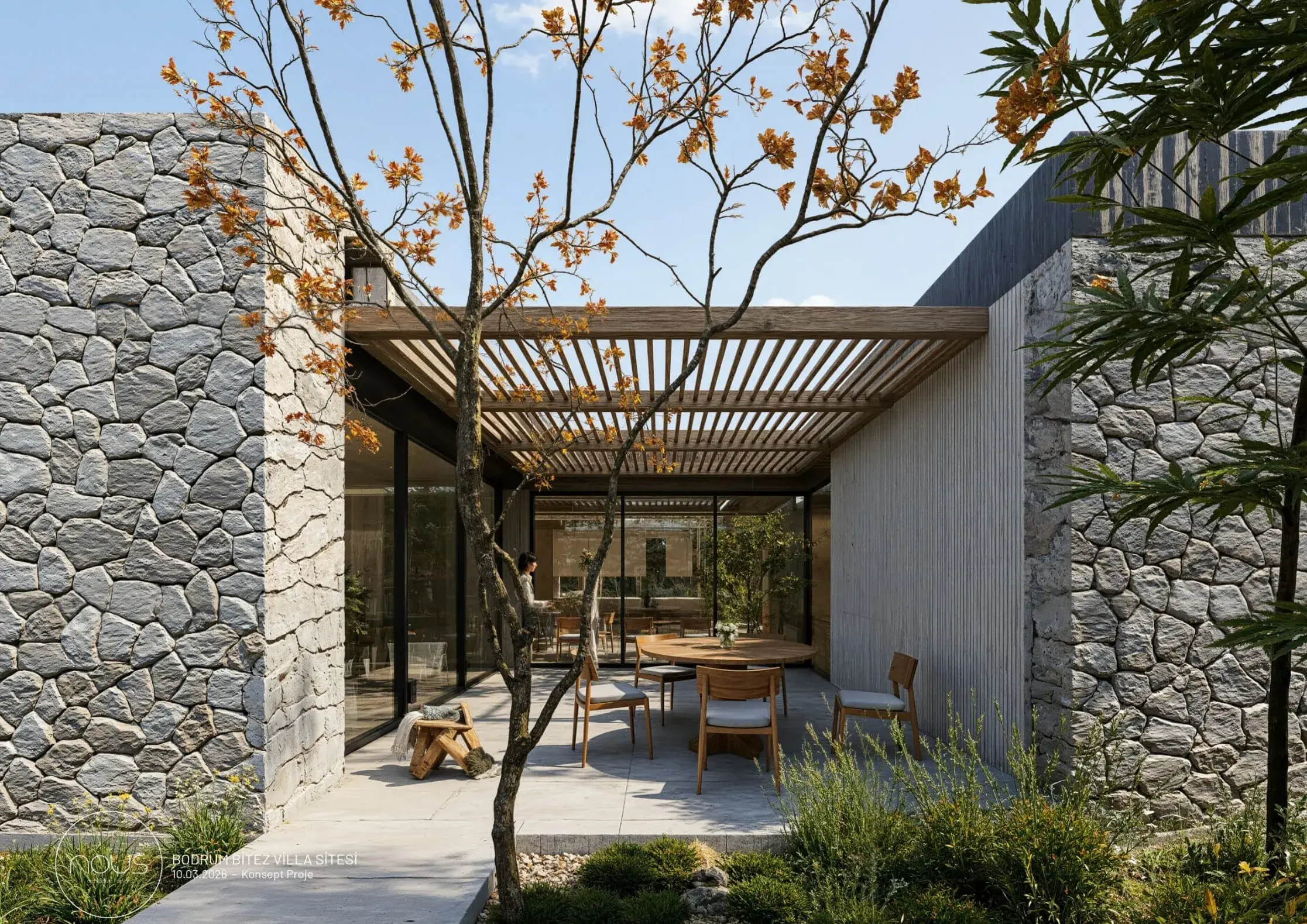
The courtyards, transition sequences, and semi-open areas configured within the design function as living thresholds where light and wind shape the spatial experience, moving beyond being mere circulation components. The spatial organization adopts the principle of “porosity” rather than generating mass density. Each unit maintains its own privacy envelope while articulating into the continuity of the shared landscape, establishing a permeable balance between individual living and collective experience. The distances between structures are defined as sensory corridors through which gaze, daylight, and airflow maintain a continuous stream.
Contemporary Interpretation of Vernacular Data and Tectonic Language
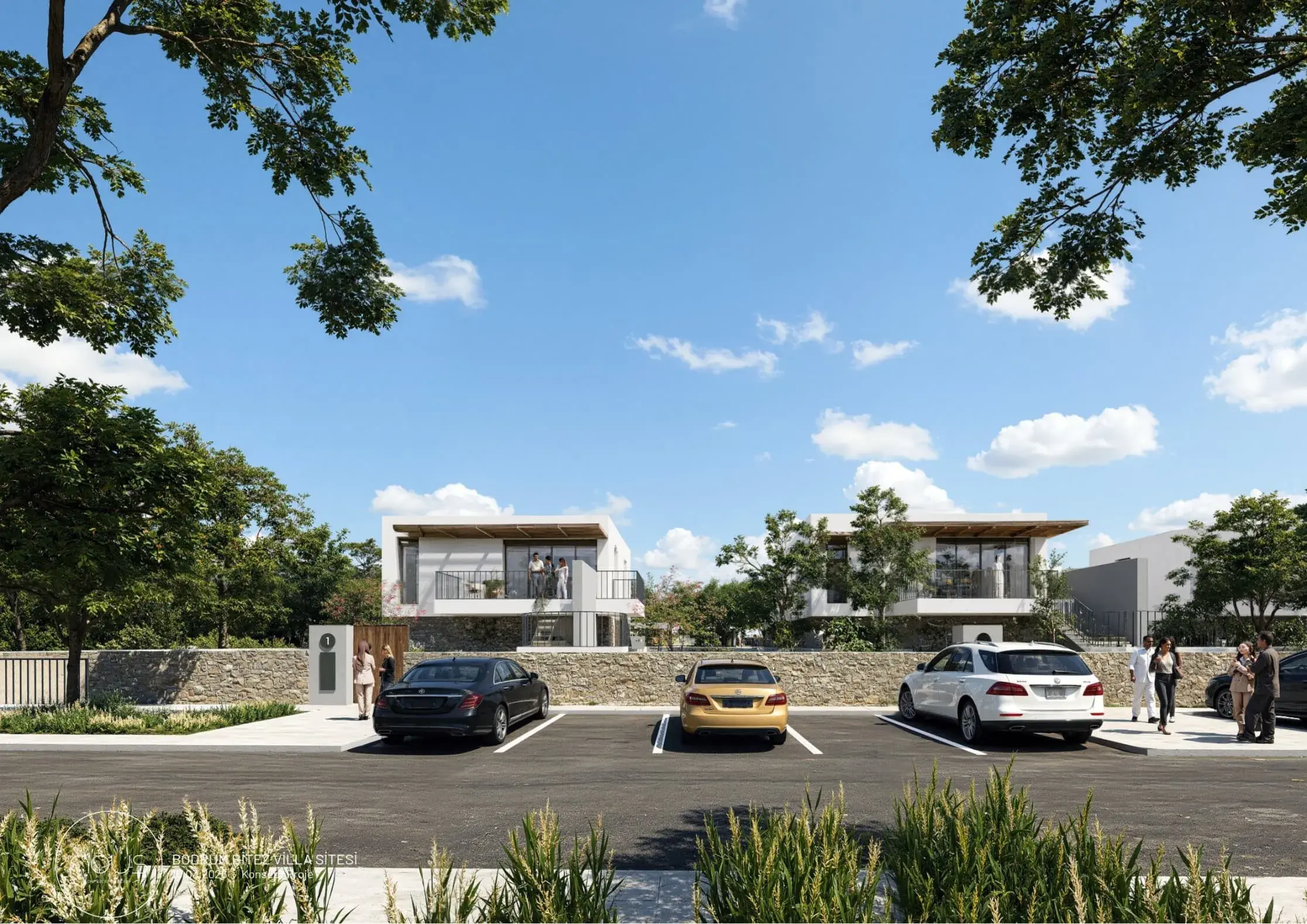
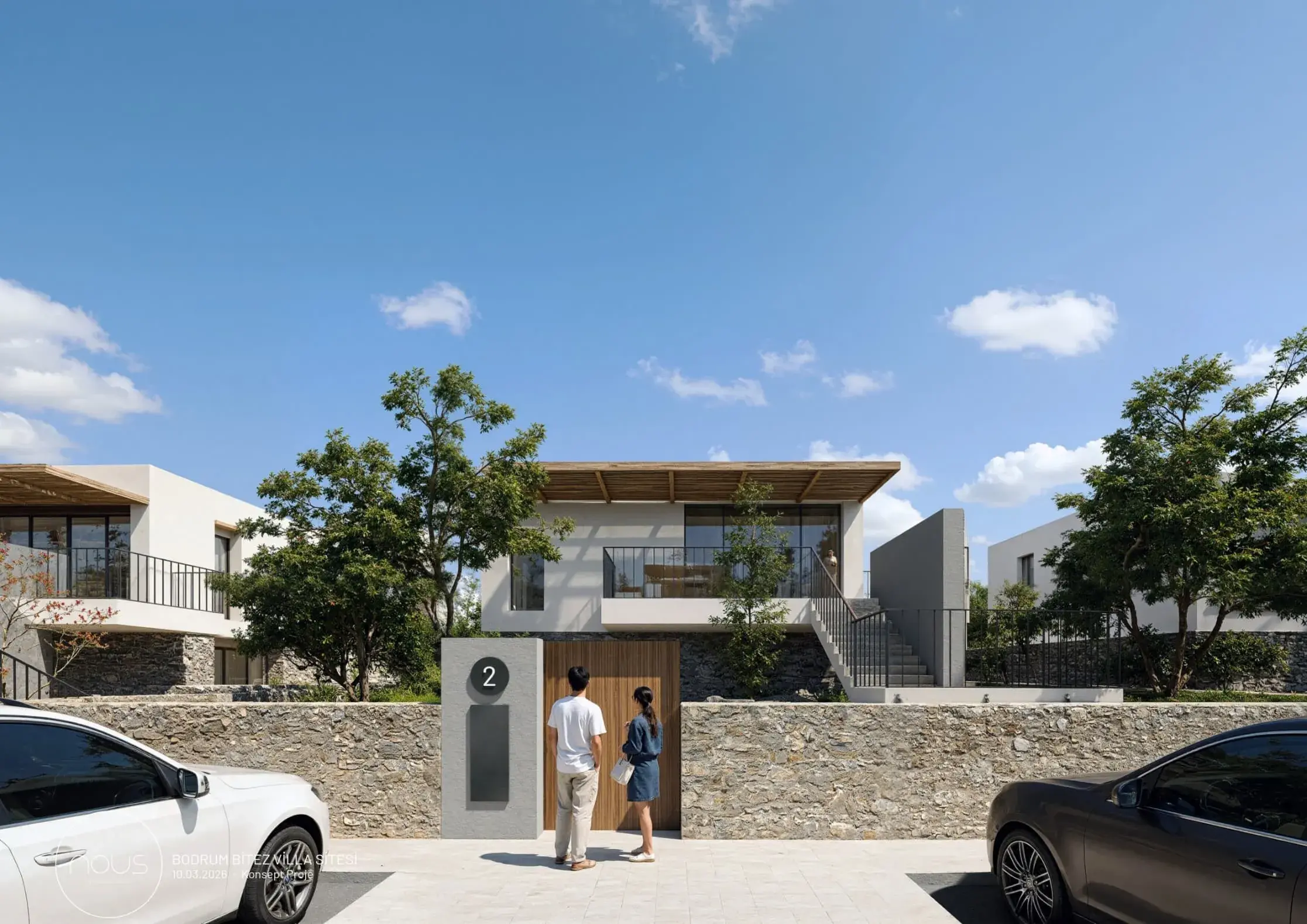
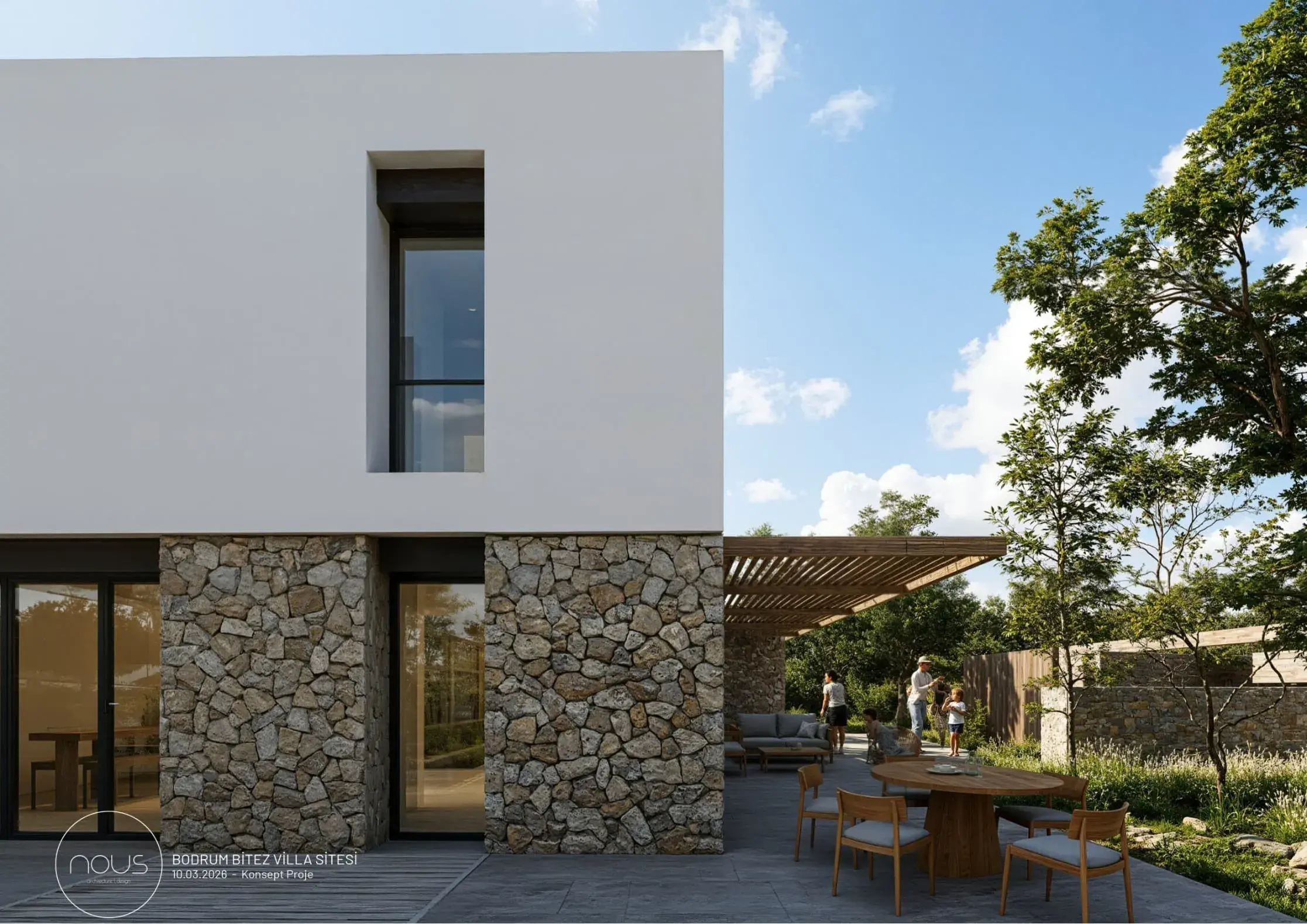
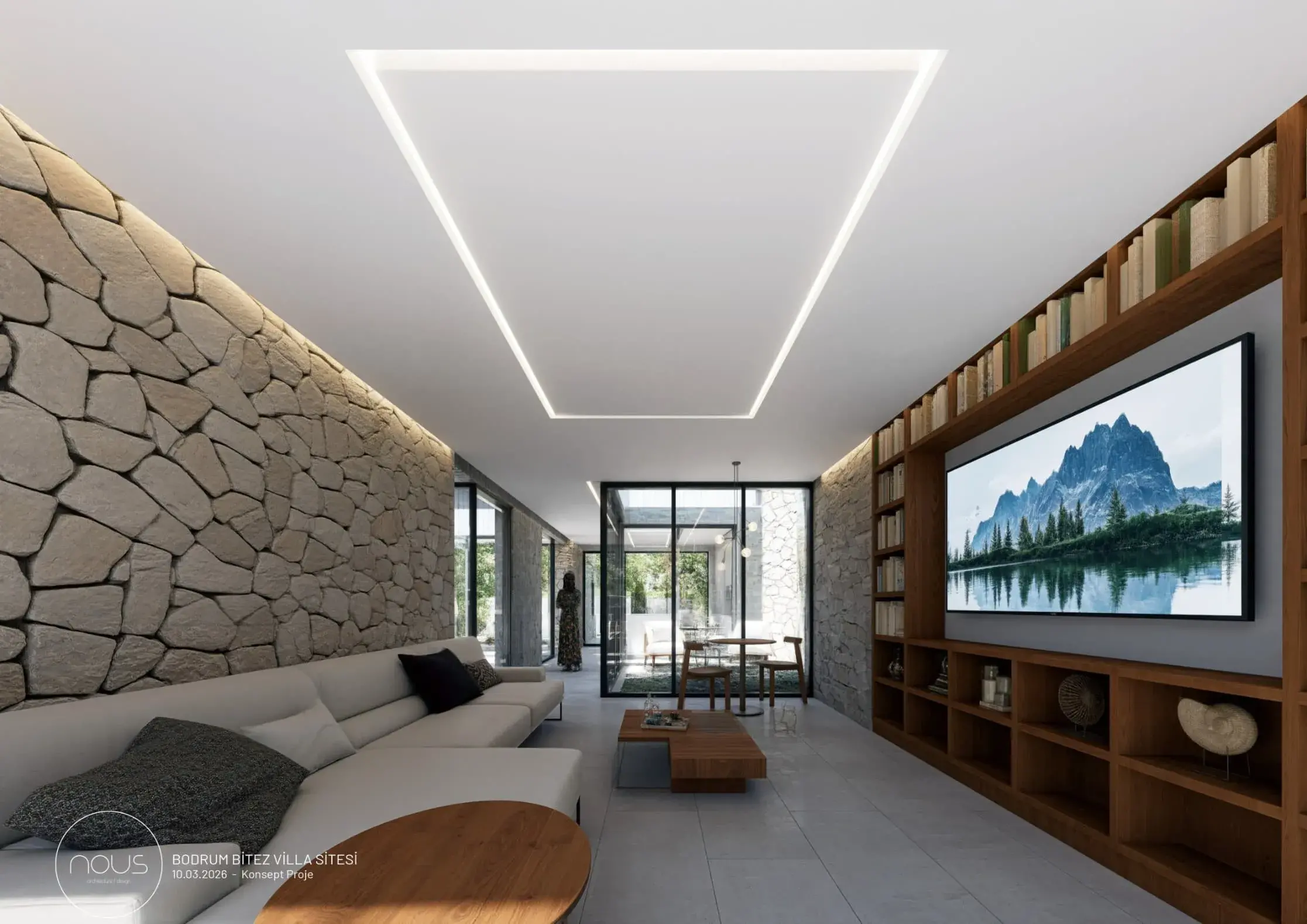
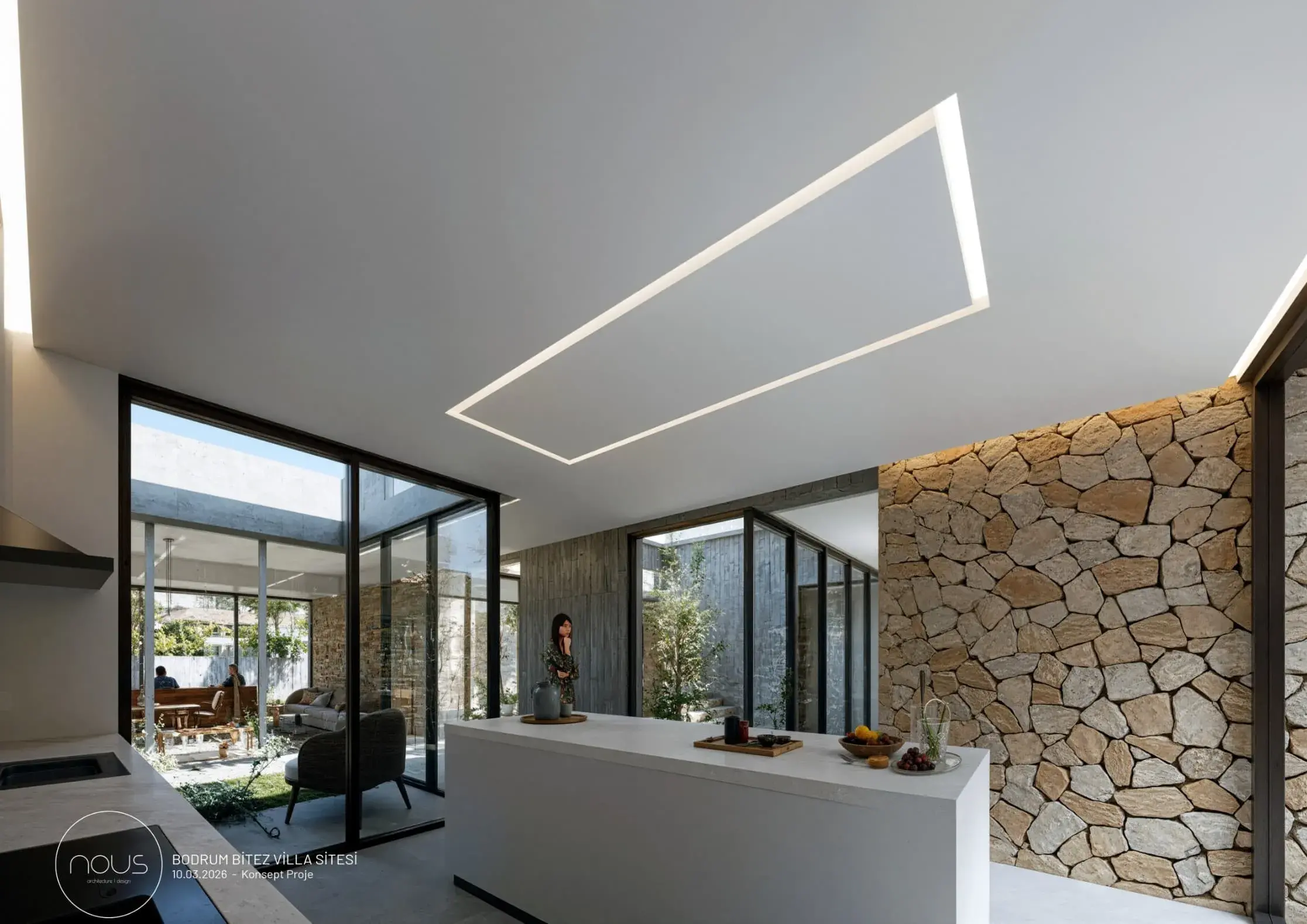
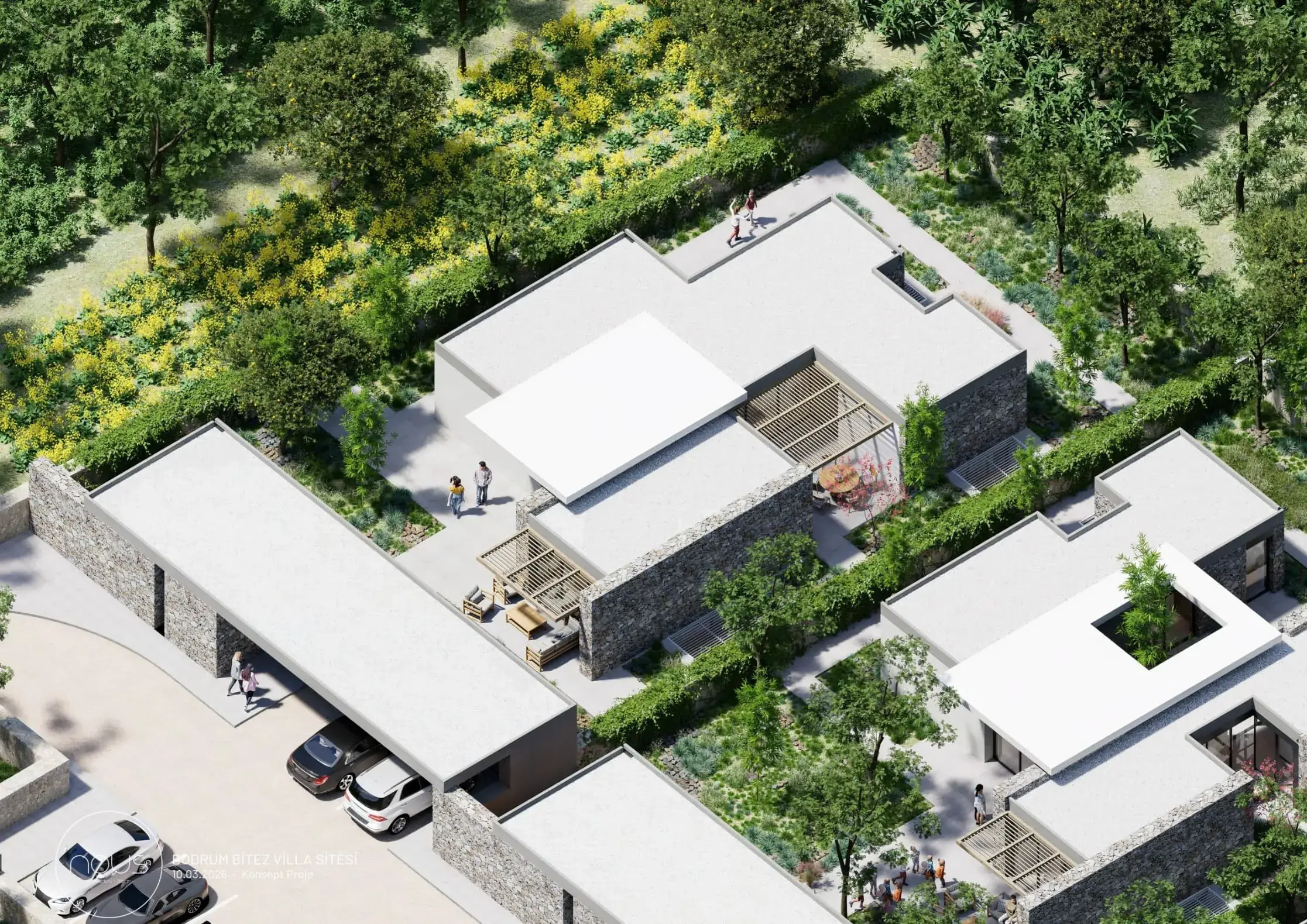
Rather than a superficial imitation of Bodrum’s vernacular architectural typology, the formal exploration re-encodes the climatic intelligence, simplicity, and outdoor living culture of this geography into a contemporary language.
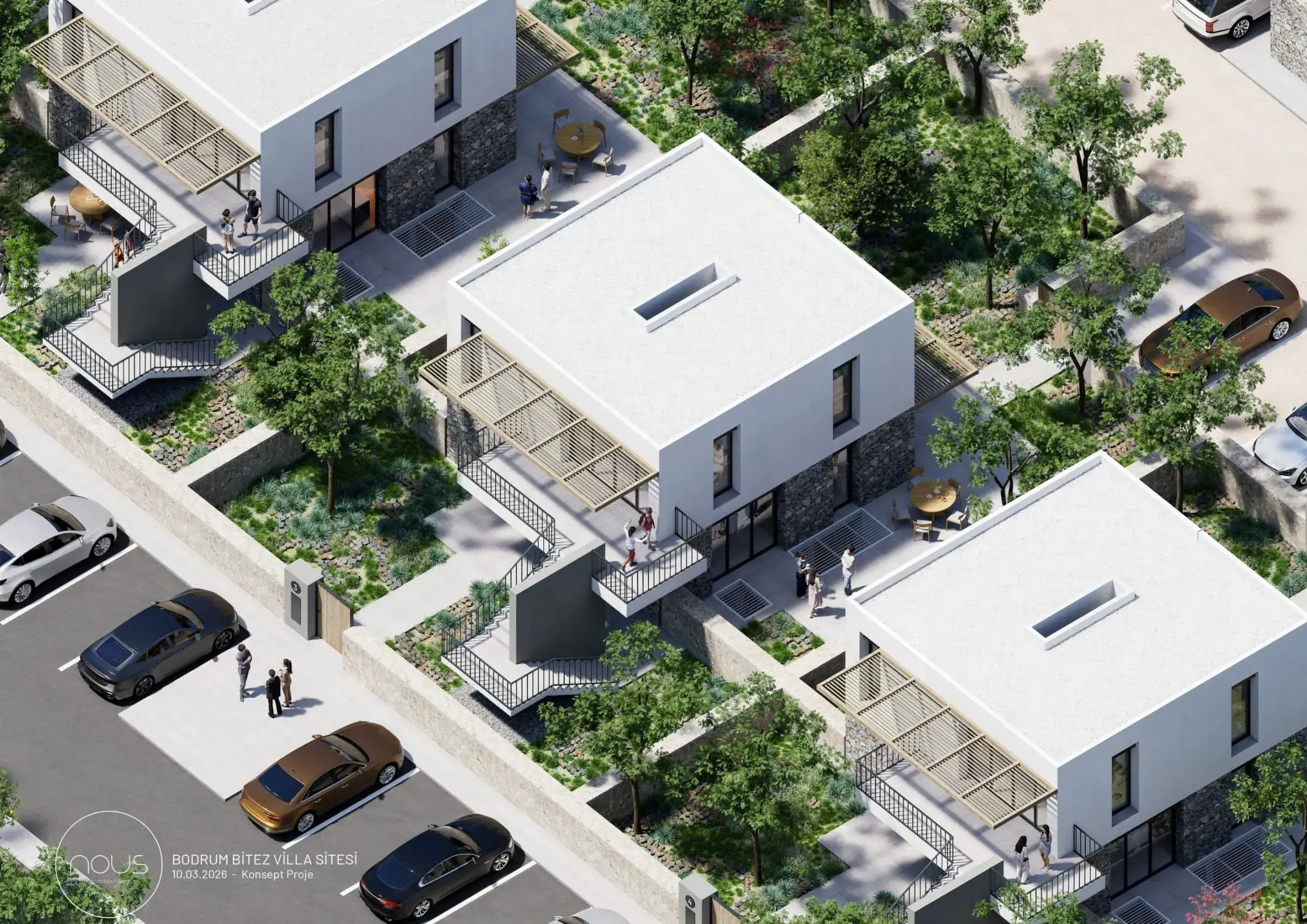
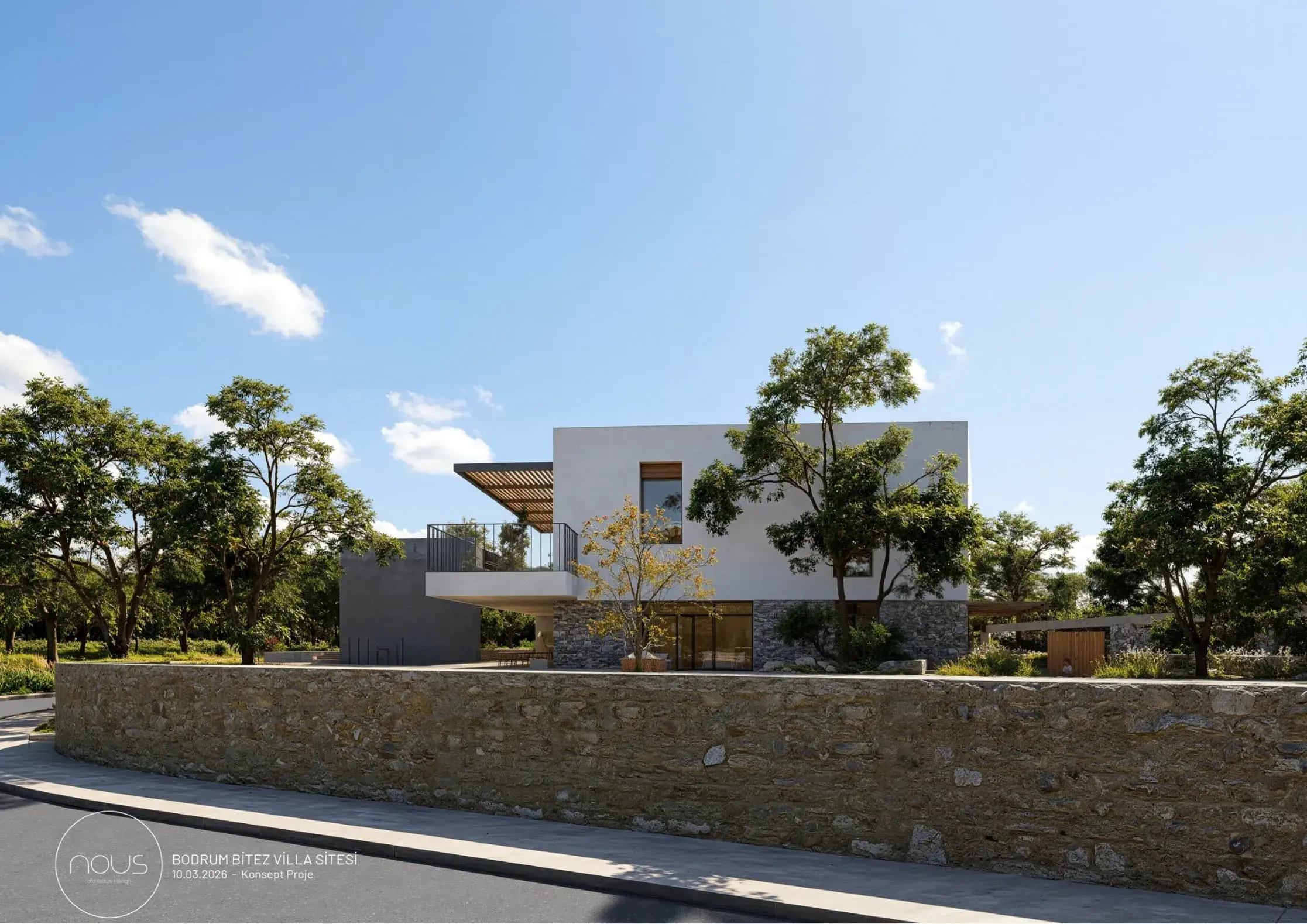
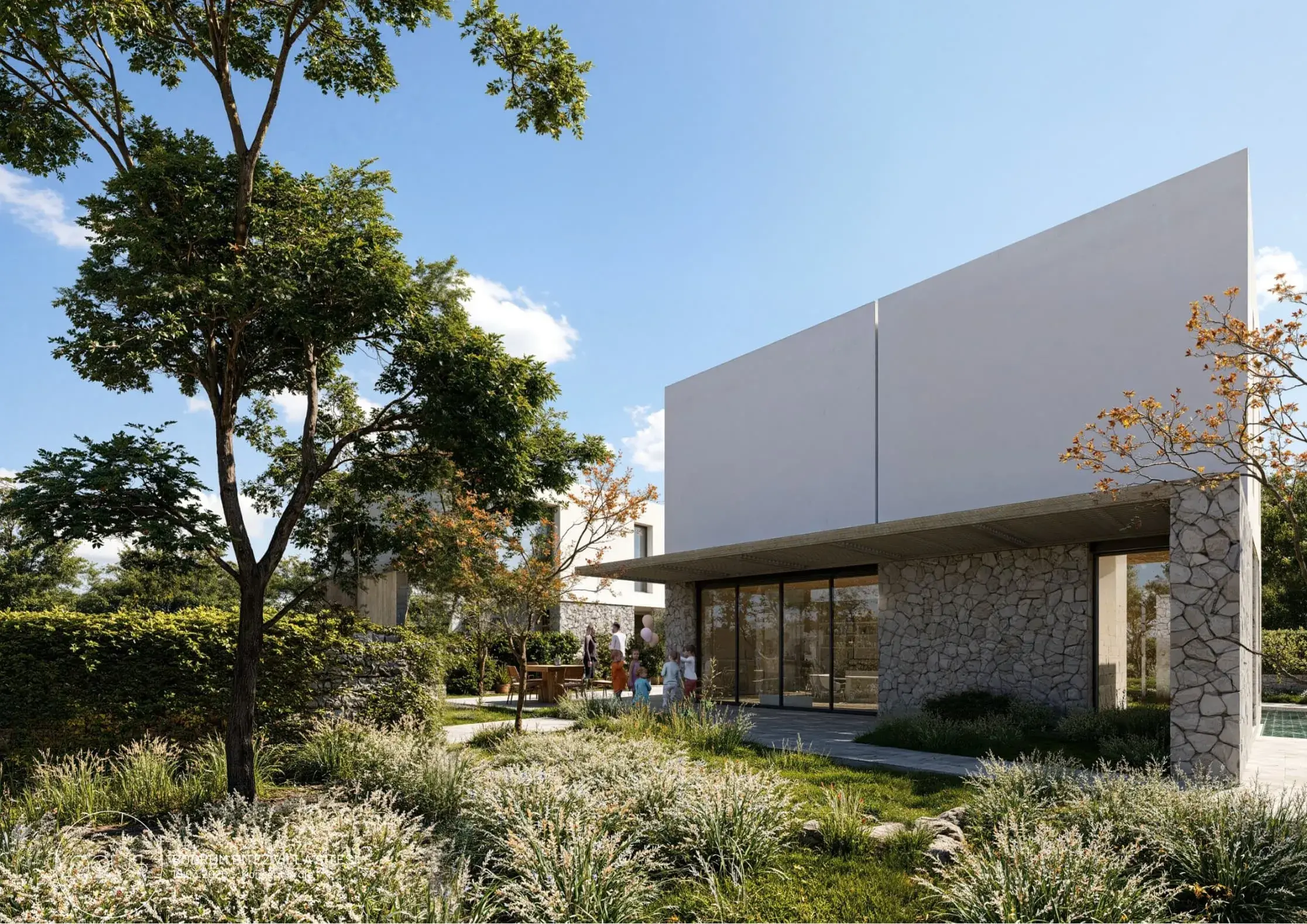
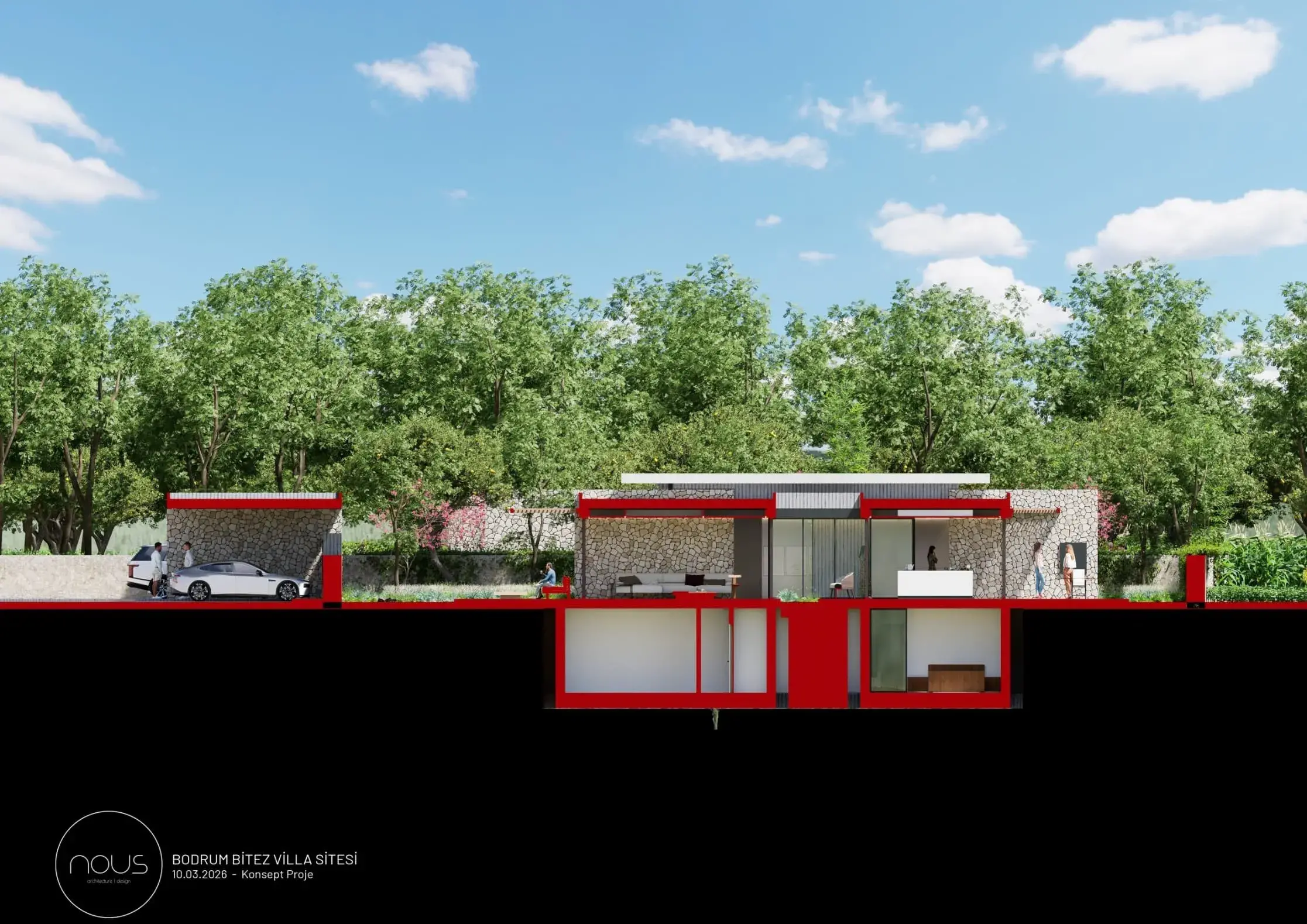
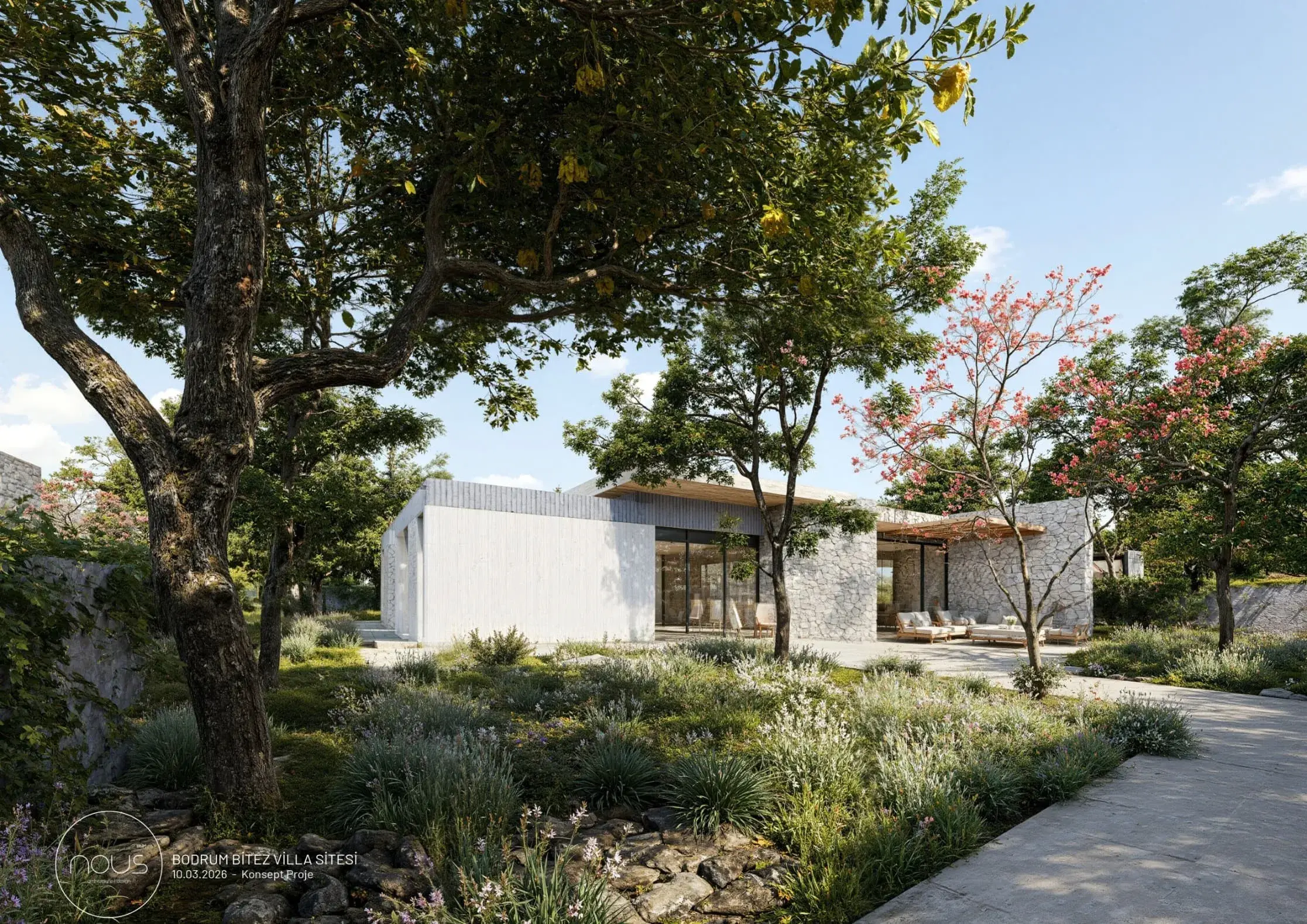
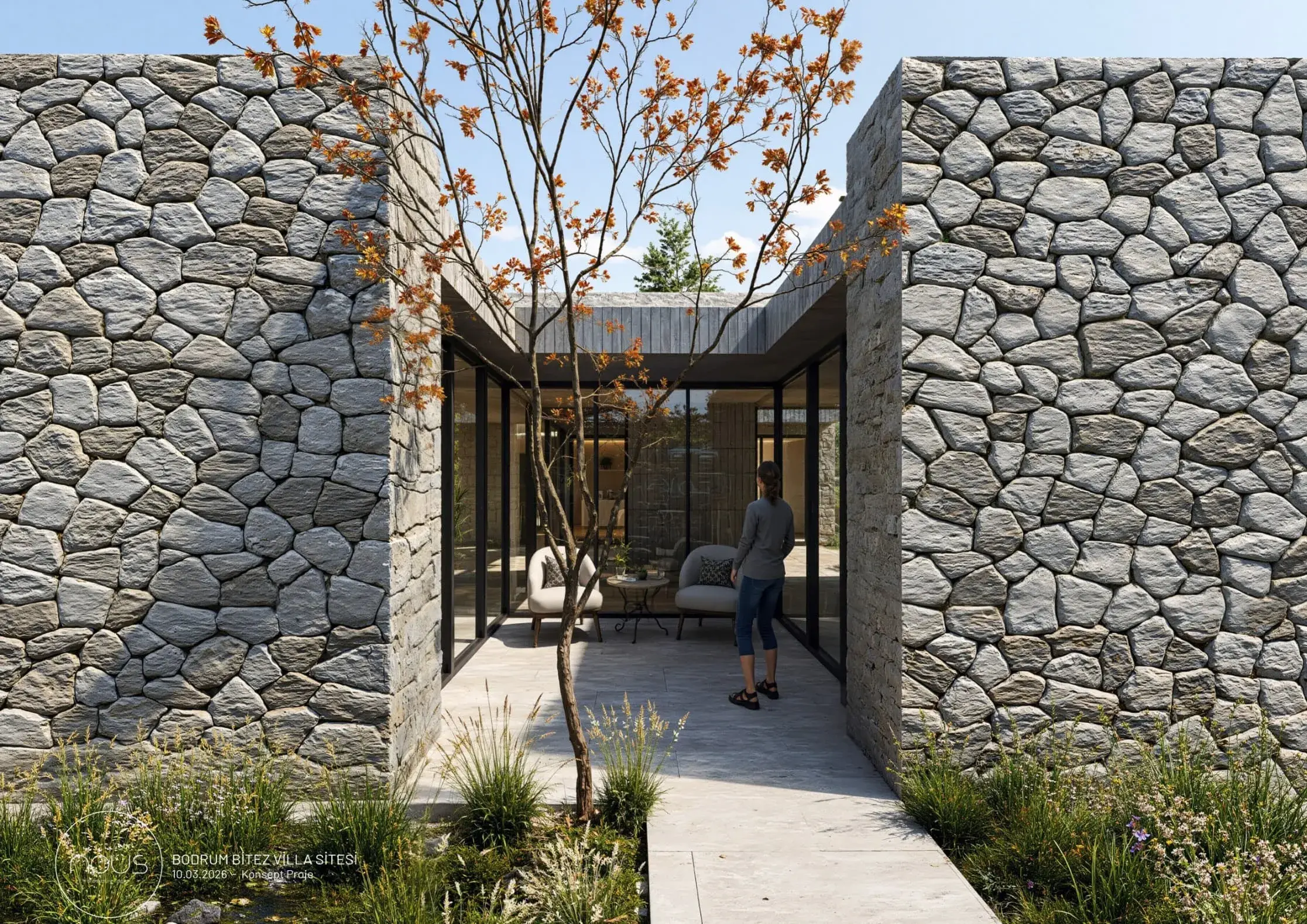
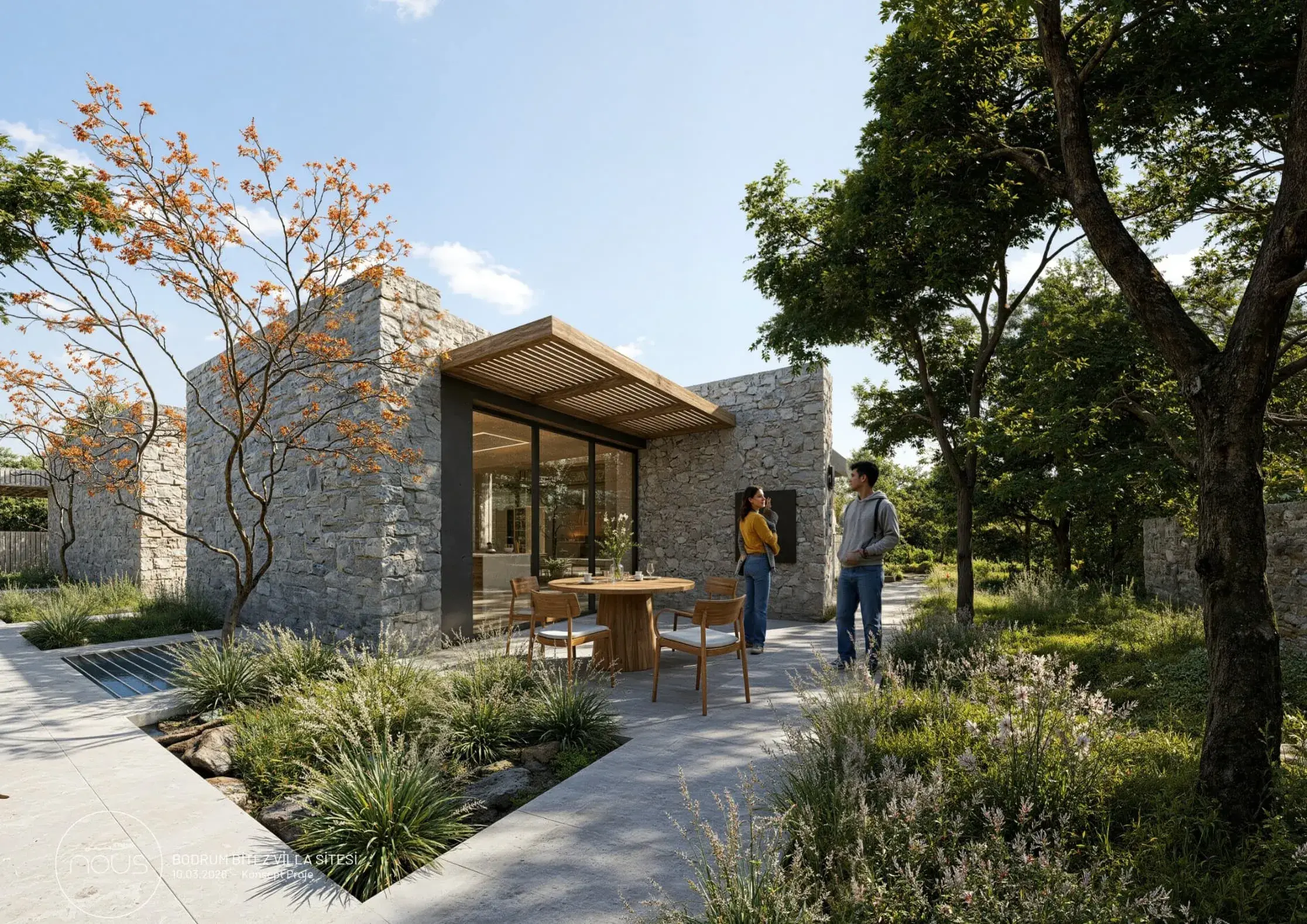
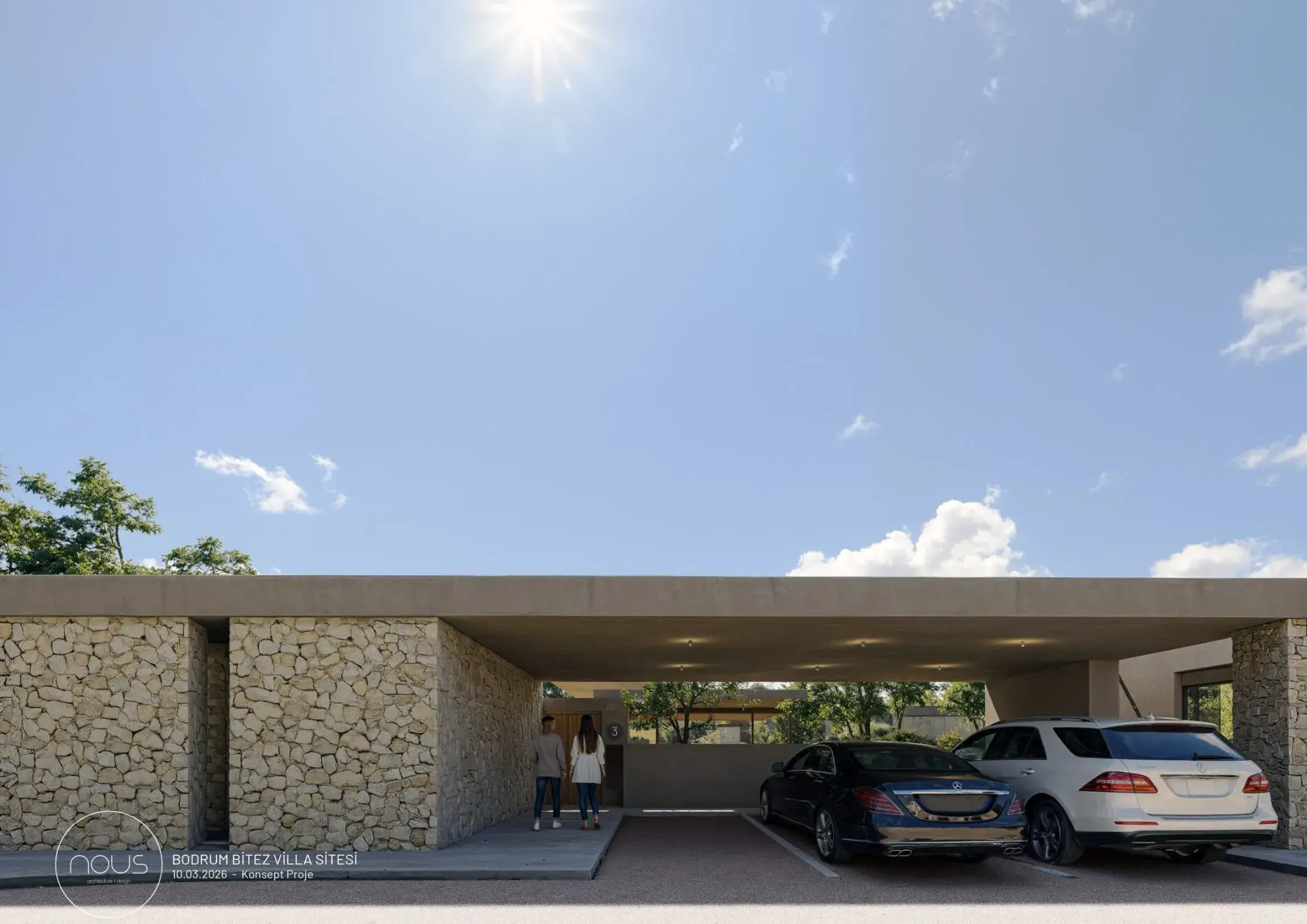
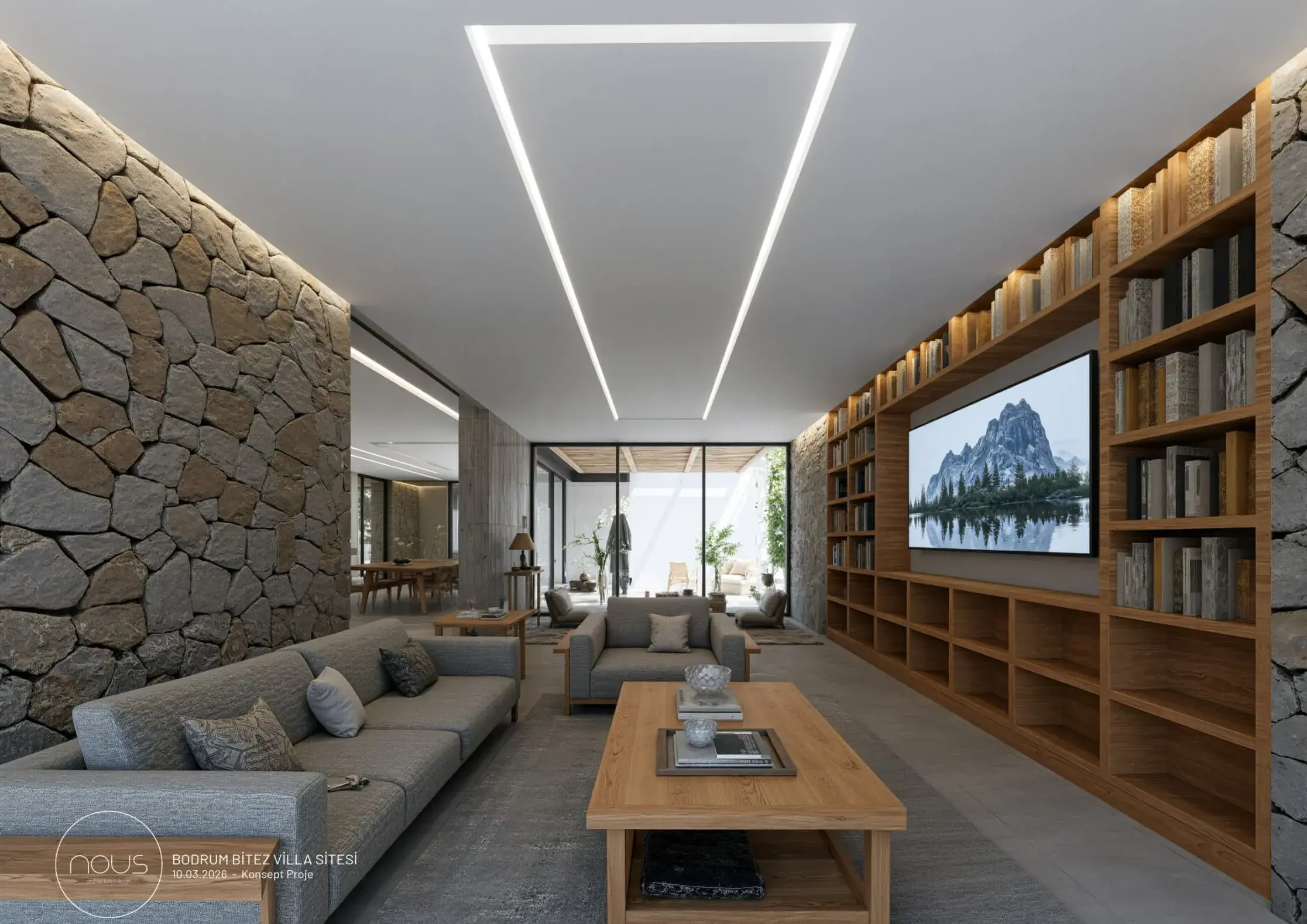
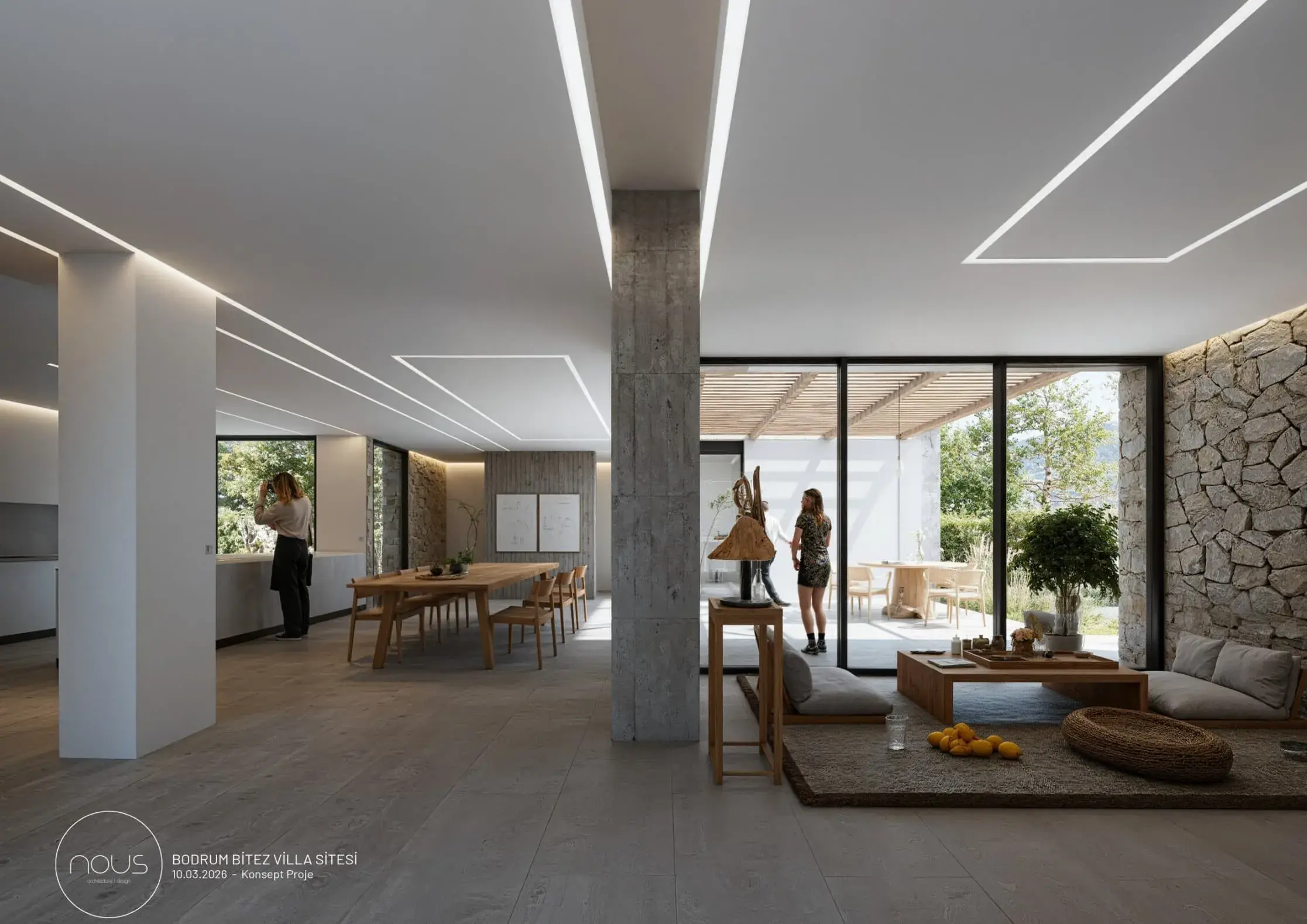
- Stone Walls: Conceived as elements of static weight and continuity that reinforce the sense of belonging to the earth.
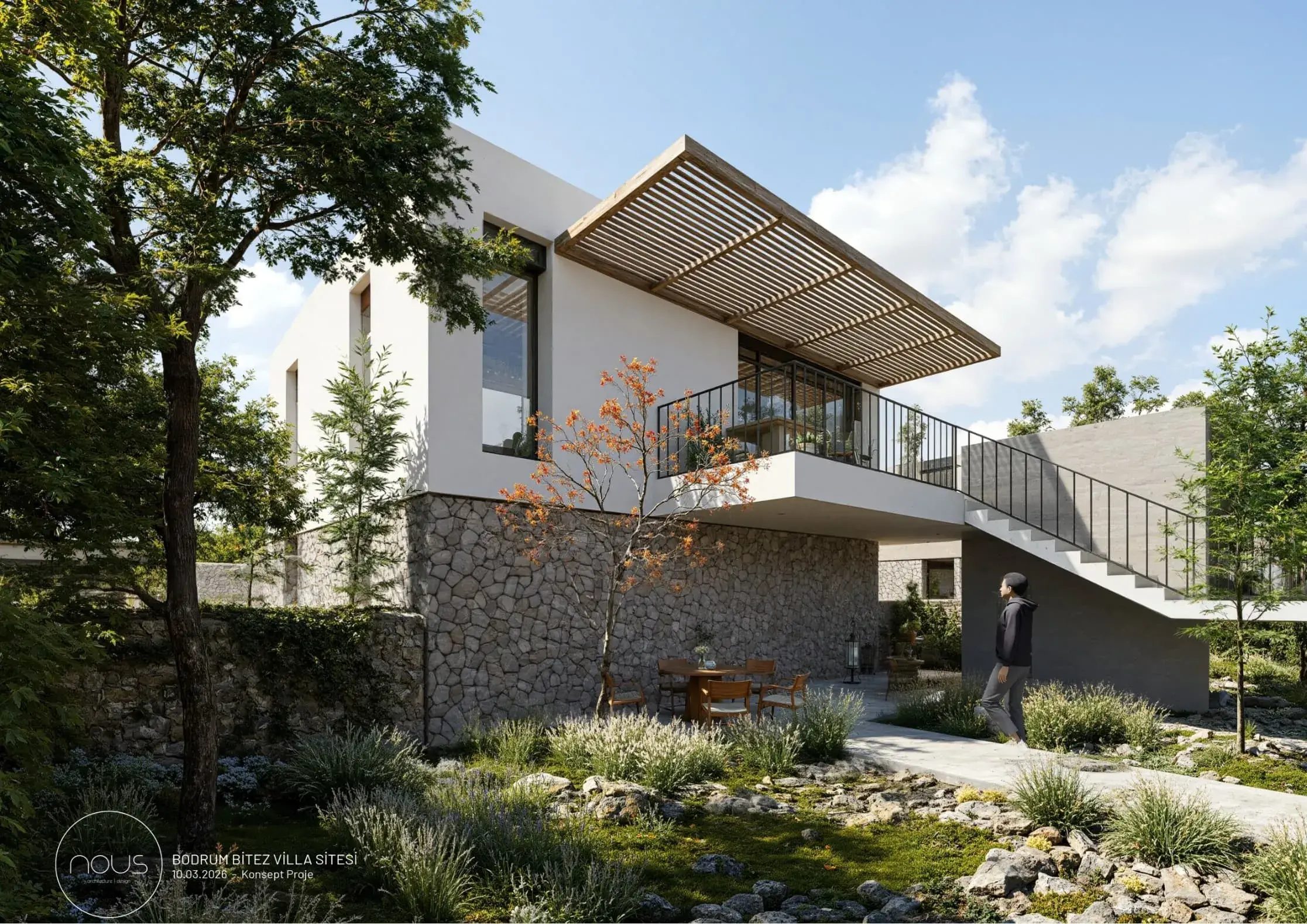
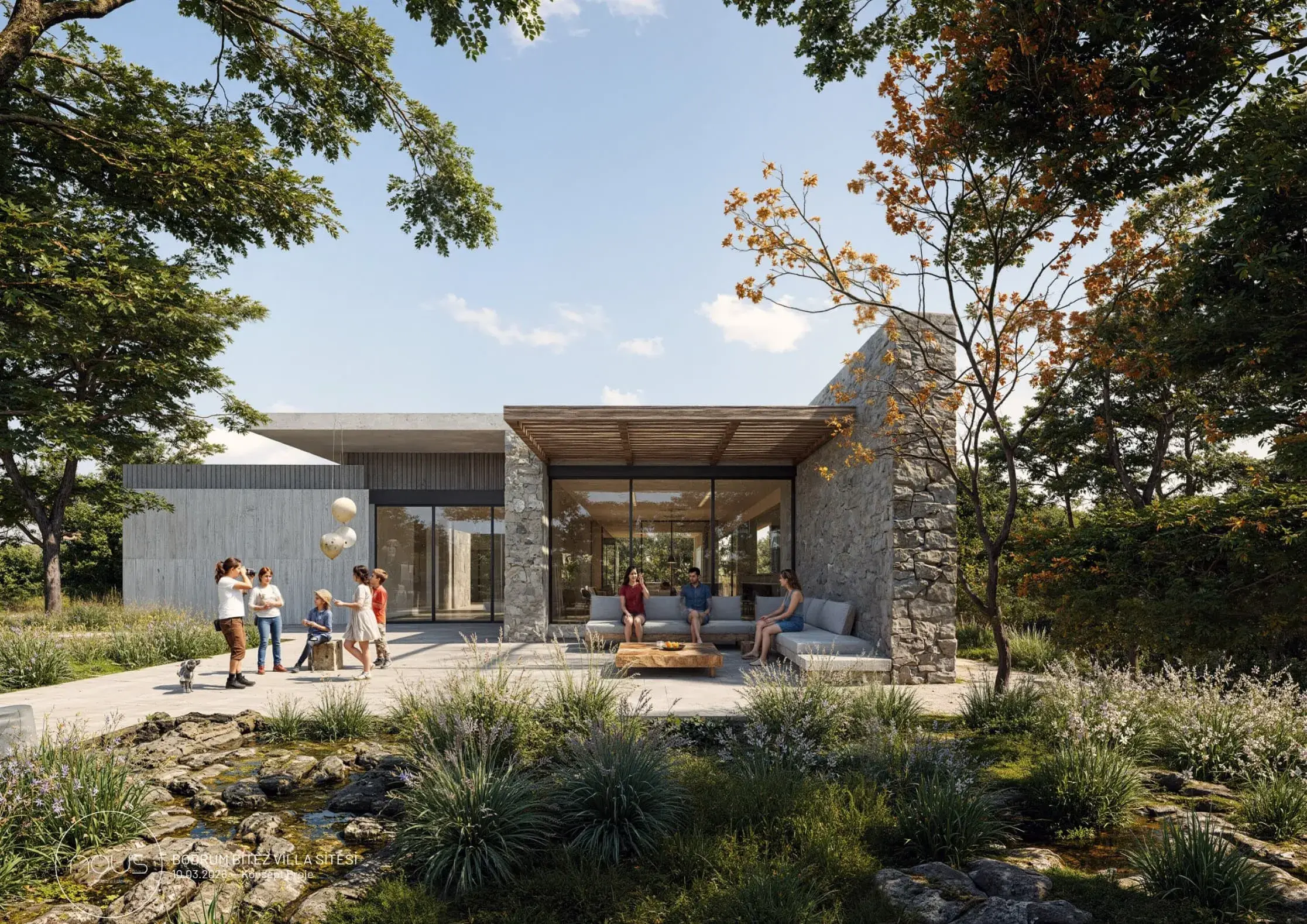
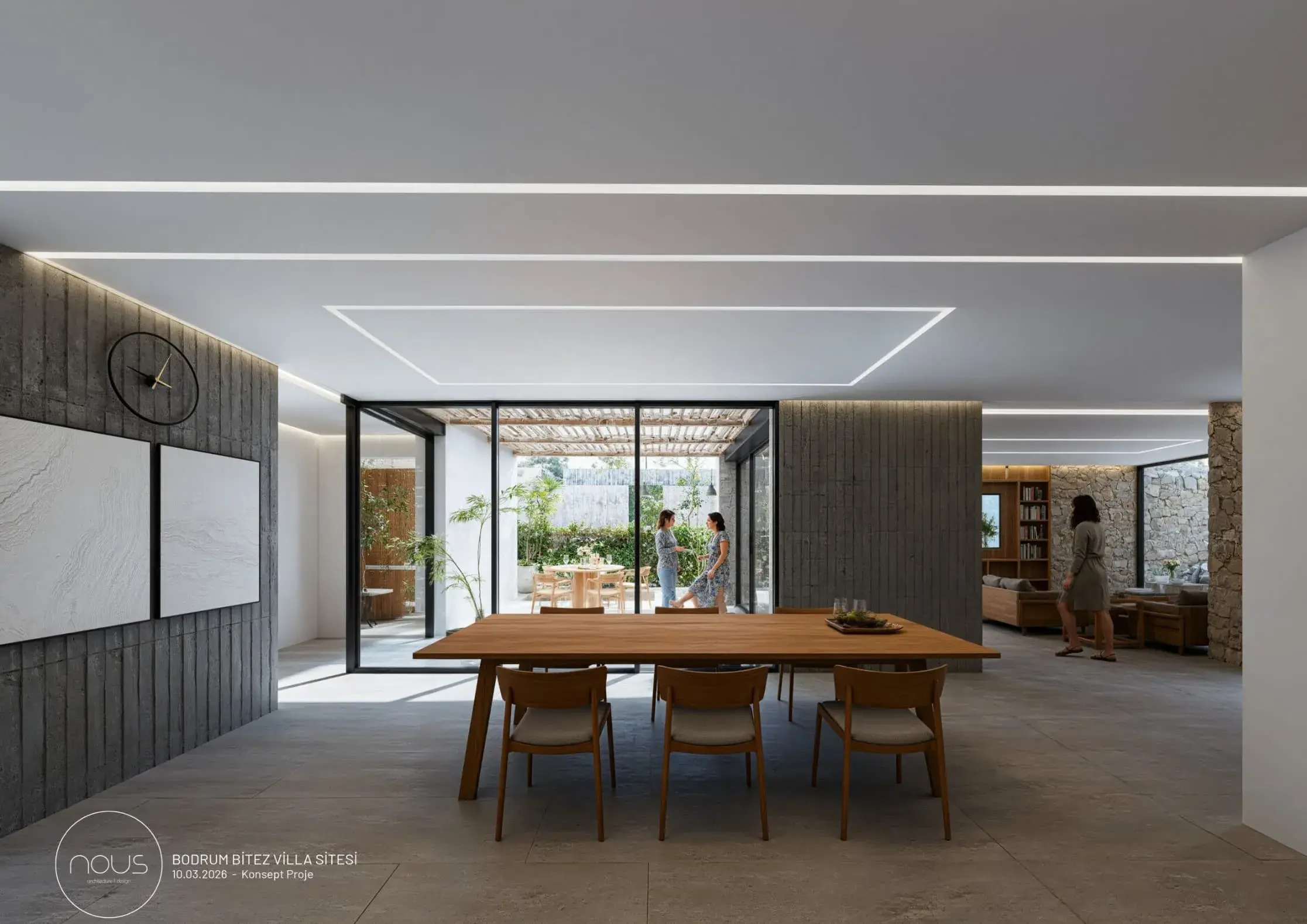
- Lightweight Elements: Timber pergolas and permeable façade layers soften the boundaries of the structure, dematerializing the mass.
- Material Ethics: The selected materials aim for a tectonic layering that matures with its environment, accepting the effects of time (patina) as an aesthetic value.
Spatial Fluidity and Phenomenological Experience
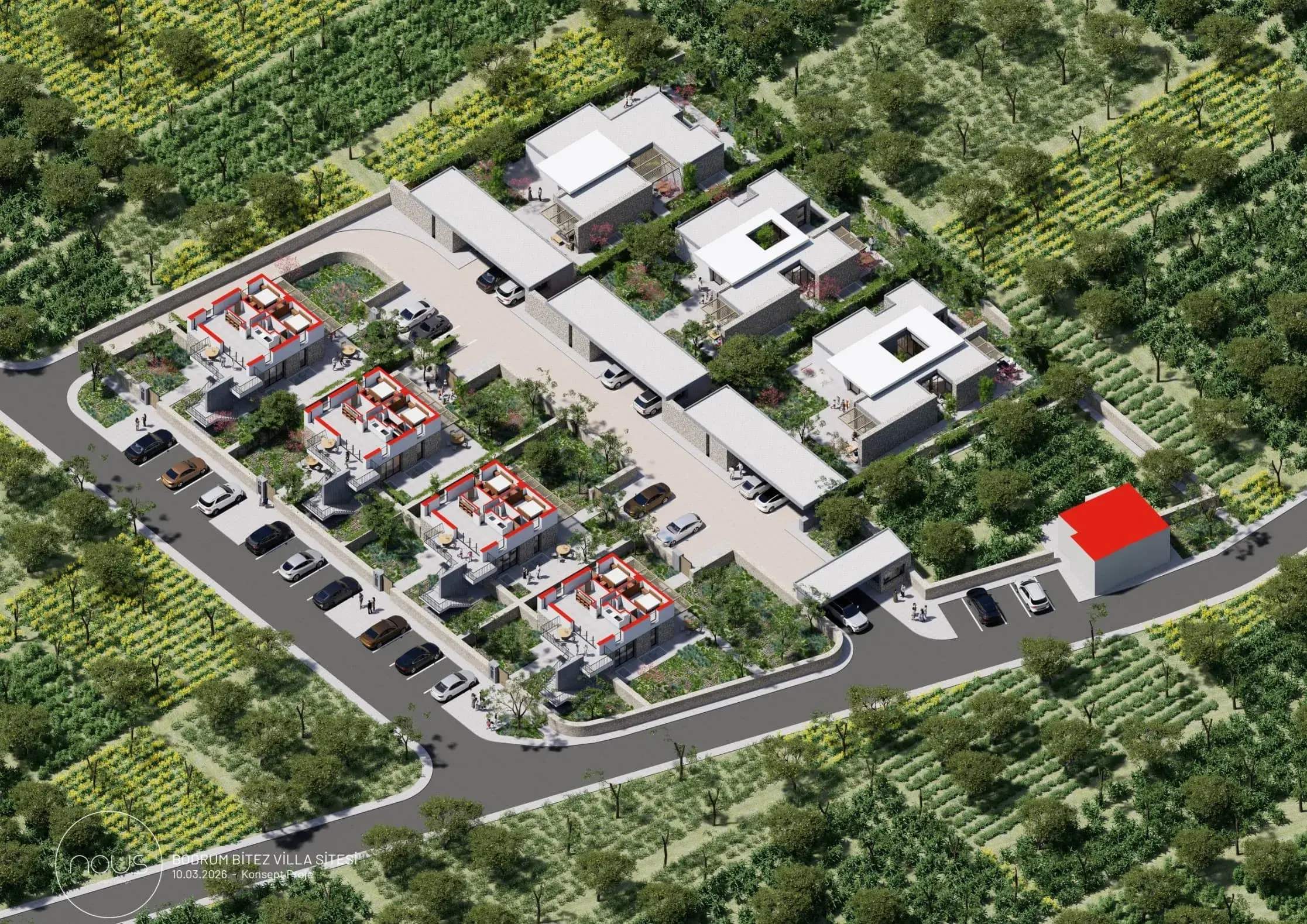
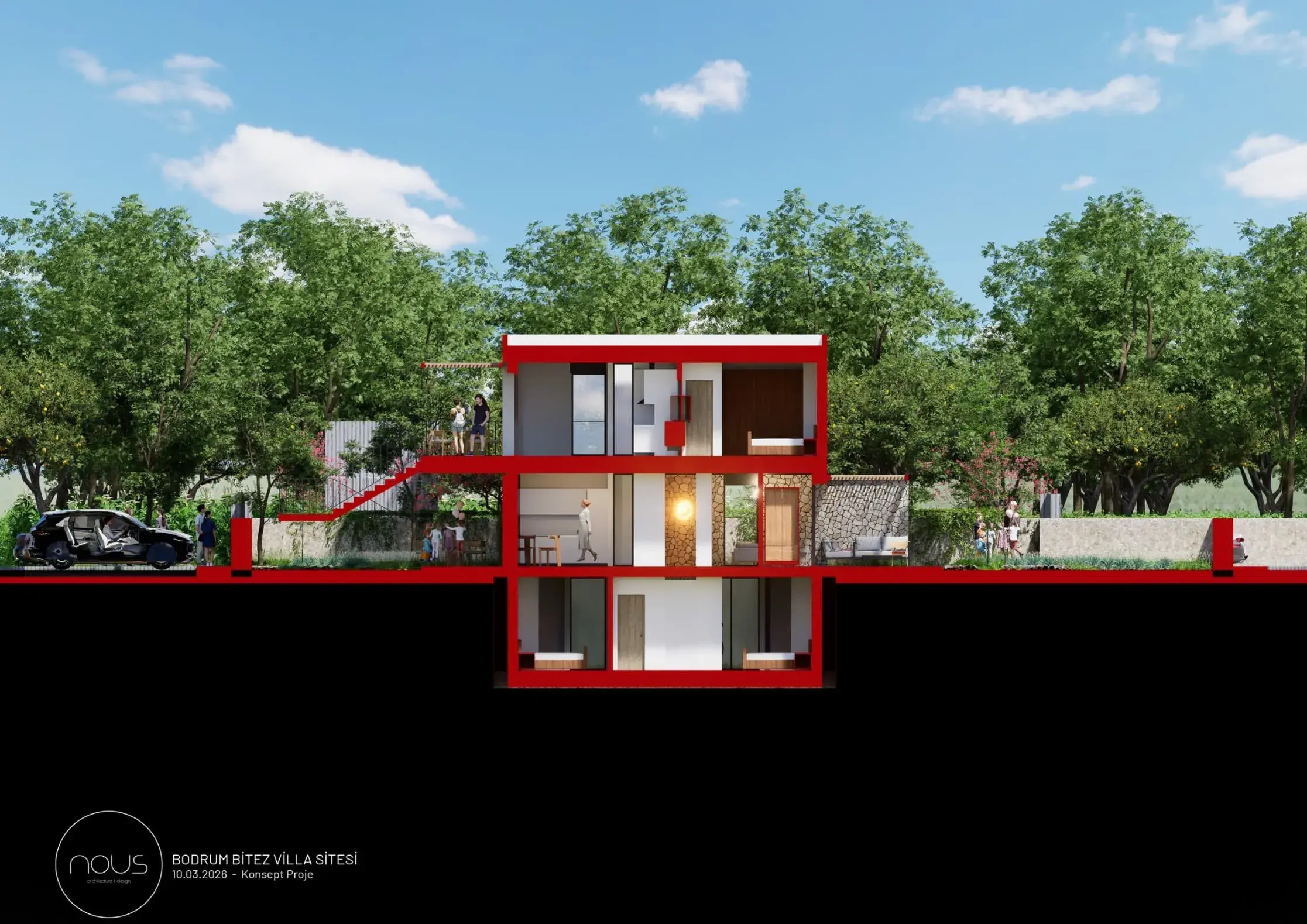
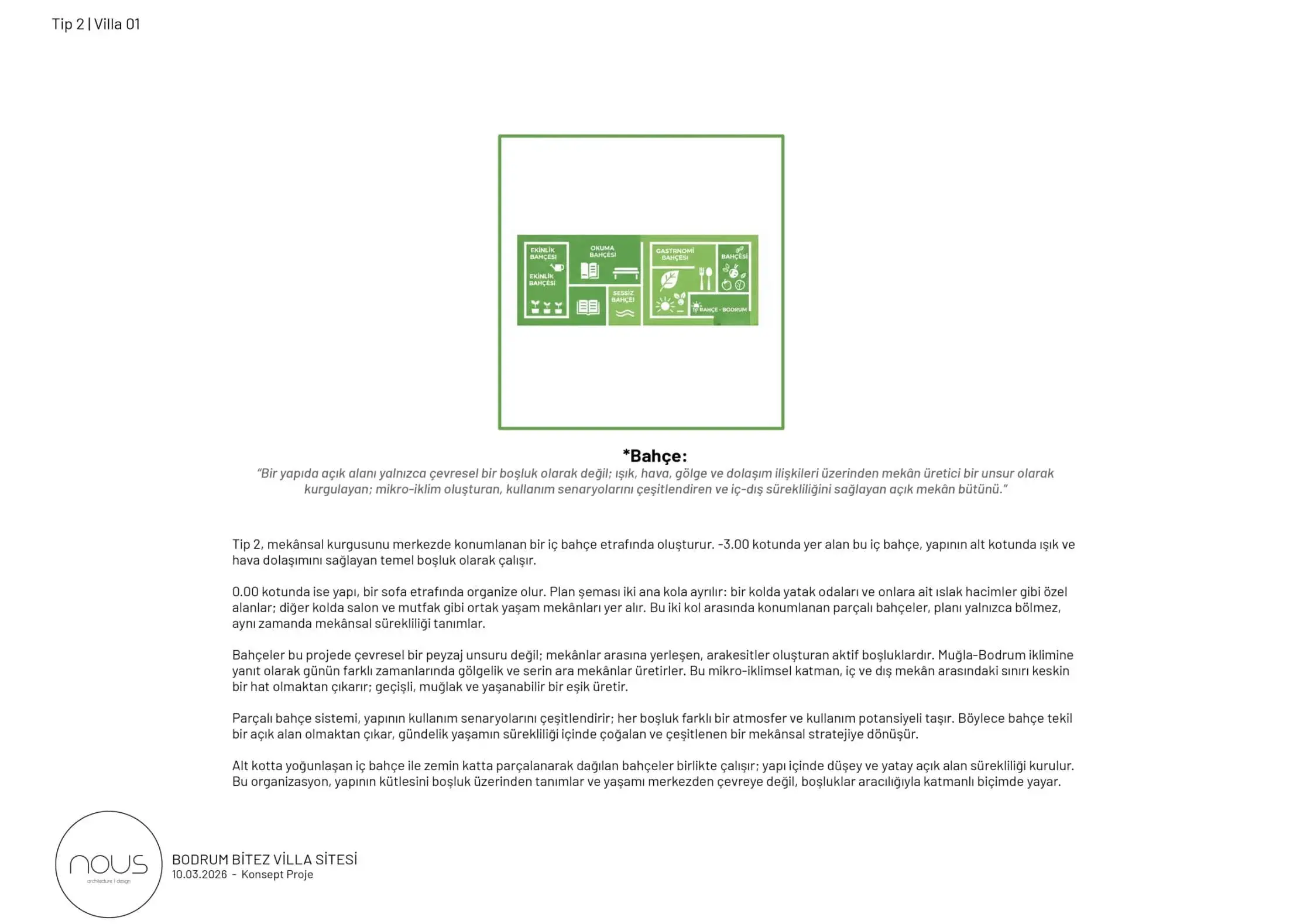
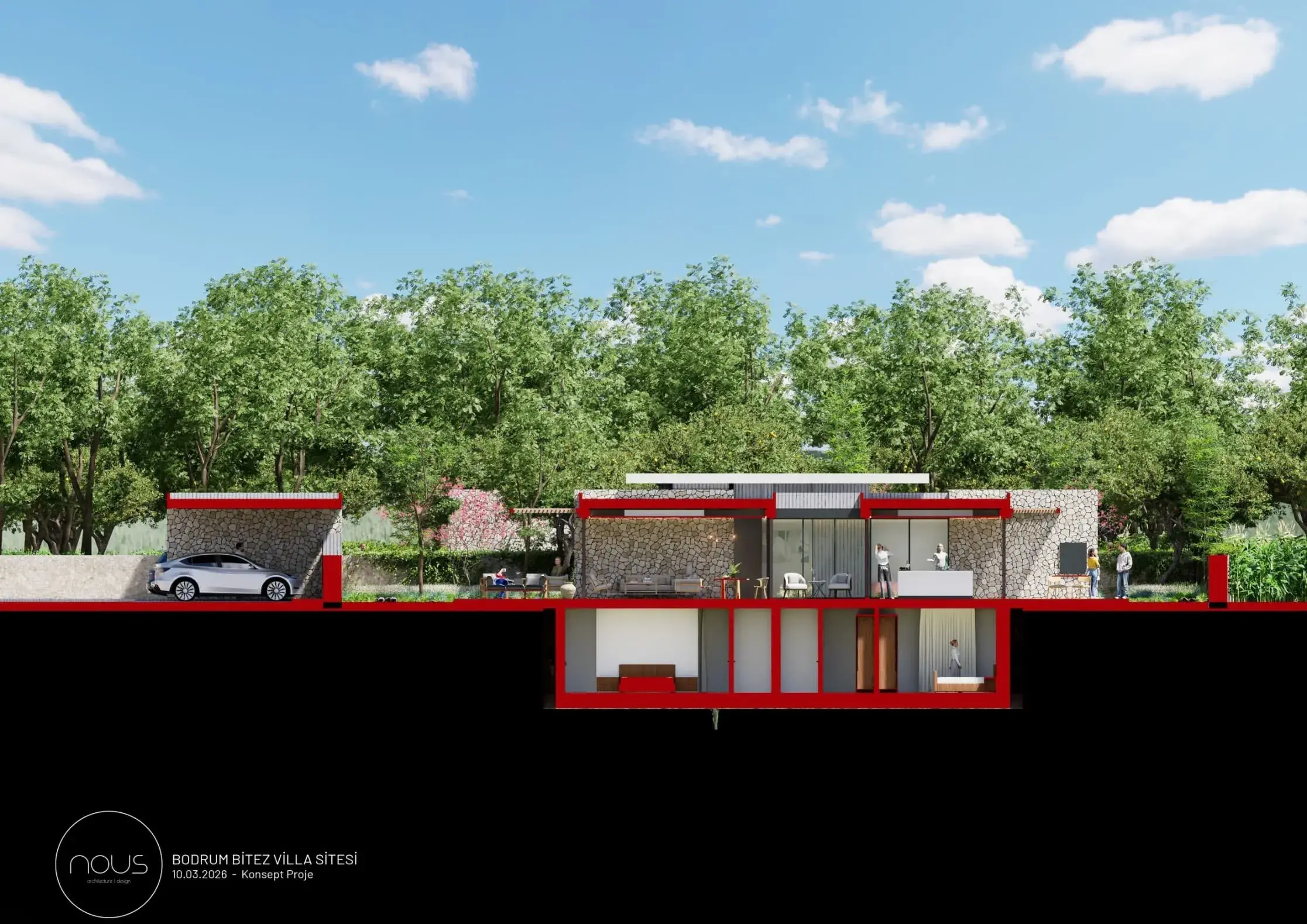
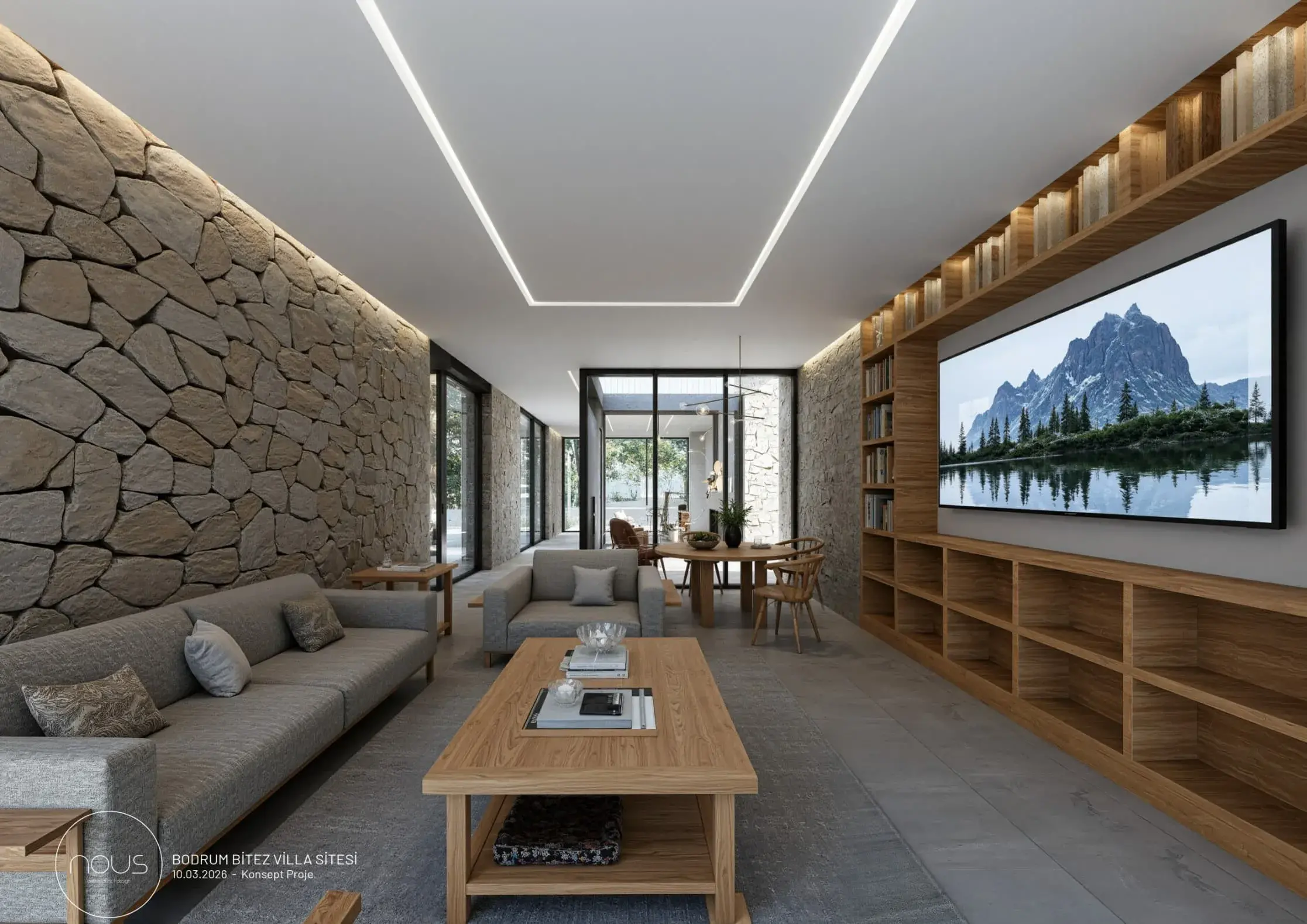
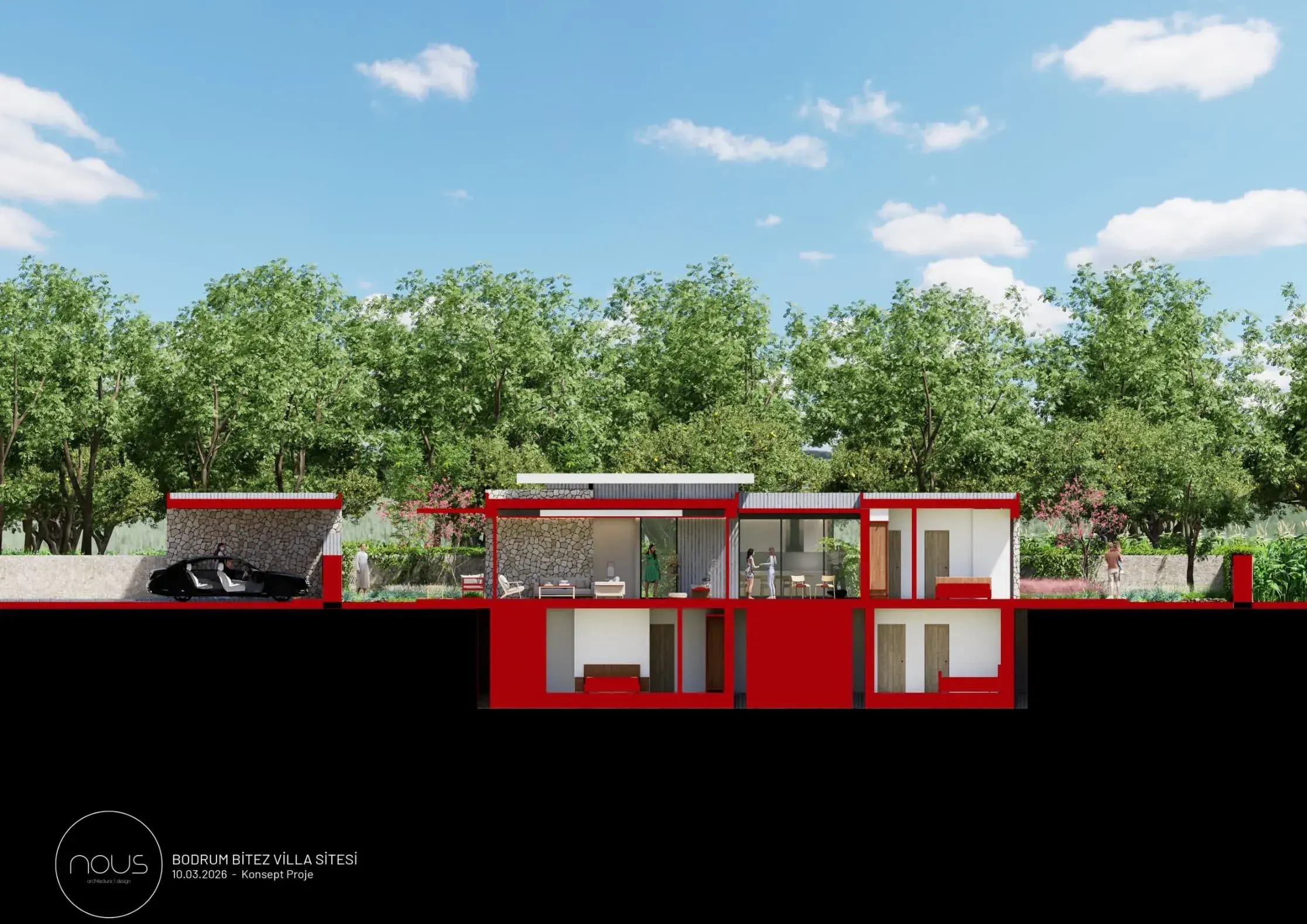
The boundary between interior and exterior is not defined by sharp lines; instead, it is resolved through interconnected spatial layers. Life overflows from enclosed volumes into courtyards, terraces, and shaded transition zones. This fluidity transforms the spatial experience from a static state into a dynamic structure that changes according to the time of day, seasons, and user habits.
Ultimately, the proposed architecture refuses to impose itself as an iconic object. Instead, it functions as a serene interface, a ground, and an interval between human and nature. In this configuration, where architecture steps back to make room for life itself, the true essence lies not within the structural shell, but in the spatial void that remains between those shells—gaining meaning over time.
Project Name
Bitez 208 | 34
Awards
_
Services
Architecture, Interior Design
Typology
Housing
Location
Bodrum, Turkiye
Year
2026
Status
Ongoing
Size
1.885 m²
Client
Deka Construction
Design Team
Cihan Sevindik, Sıddık Güvendi, Sümeyye Özyalçın, Aleyna Alan
Collaborators
–
Photography
–